Saudi coalition says air defenses intercepted ballistic missile launched by Houthi forces
Within a ten-minute window on the afternoon of 13 July 2026, the spokesman for the Saudi-led Coalition to Support Legitimacy in Yemen confirmed that Saudi air defenses faced and dealt with a ballistic missile threat attributed to Houthi forces.
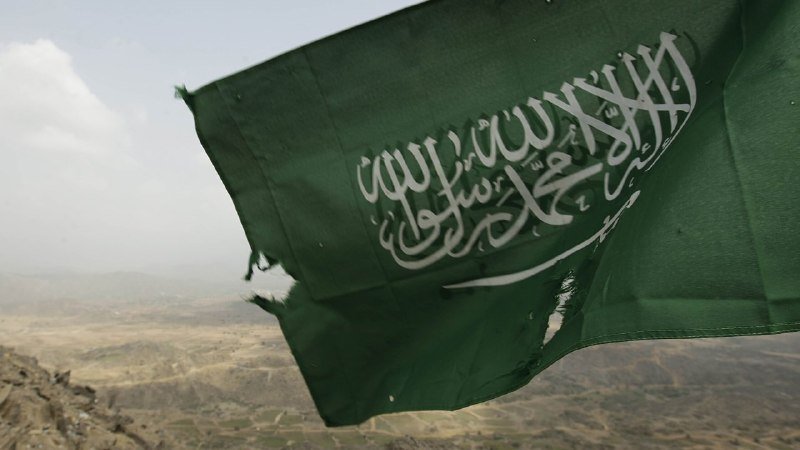
At 17:29 UTC on 13 July 2026, the spokesman for the Saudi-led Coalition to Support Legitimacy in Yemen confirmed that Saudi Arabia's air defense systems had faced a ballistic missile threat. The statement, carried within ten minutes by three separate Telegram channels, framed the event as an attack on Saudi territory repelled by coalition air defenses and attributed the launch to the Houthi movement operating out of northern Yemen.
The reporting matters less for the single intercept than for the pattern it sits inside. A formal coalition statement naming a specific threat class, released through a dedicated spokesperson and propagated in near real time, signals the operational floor the kingdom has set for public acknowledgement: it will name what it shot down, and it will say who fired it. For outside readers, the operative questions are tactical (what was the missile, where did it come from, where was it headed) and structural (what does sustained Houthi long-range fire against Saudi territory say about the state of the Yemen war in 2026, and about the deterrence logic the coalition has run since 2015).
What the coalition said
The Coalition to Support Legitimacy in Yemen is the formal name of the Saudi-led military coalition that intervened in Yemen in March 2015 at the request of President Abdrabbuh Mansur Hadi's government. Its spokesman functions as the single authorised channel for operational readouts. At 17:29 UTC on 13 July 2026, the spokesman's office confirmed that Saudi air defenses had "faced the threat" posed by a ballistic missile. By 17:39 UTC, Telegram channel Liveuamap was quoting the spokesman's full formulation: air defenses "intercepted a ballistic missile threat launched by the Houthi militia." A minute later, the analyst account osintlive, citing Michael A. Horowitz, posted the same official wording, with the air defenses described as having "dealt with a ballistic missile threat."
The three reads are functionally identical. They differ only in emphasis: the Iranian-aligned outlet JahanTasnim led with the phrase "attack on its territory," foregrounding the political claim of aggression; the OSINT accounts led with the operational claim of intercept. None of the three Telegram items cited a number for missiles launched, a launch site, an intended target inside Saudi Arabia, an interception location, or a damage assessment. The coalition's public framing is therefore narrow on this occasion: a named threat class, a named actor, a successful response, no further detail.
The framing on each side
Reporting on Houthi missile activity inside Saudi Arabia has, for years, split between two registers. The Saudi-led coalition tends to treat launches as attacks on sovereign territory requiring a defensive response, sometimes paired with strike-and-pursuit operations across the border. Houthi-aligned channels and Iranian state media tend to treat the same launches as legitimate strikes against a coalition that has, in their framing, blockaded and bombed Yemen since 2015. JahanTasnim's 17:29 UTC post illustrates the latter posture by referring to the coalition as the "military aggressor coalition led by Saudi Arabia," a phrase that inverts the coalition's own self-description.
The contest over naming is part of the contest over the war. The Coalition to Support Legitimacy in Yemen carries the language of international recognition (the Hadi government's request to join the 2015 joint statement by the Gulf Cooperation Council, the UN Security Council's Resolution 2216 the following month). The Houthi side carries the language of resistance against an occupying force. Outside readers who encounter the same intercept through one outlet rather than the other will come away with materially different pictures of who did what to whom. The 13 July intercept, on the evidence available so far, is being read by both.
What the sources do not say
Three things are worth flagging because they are absent rather than present. First, none of the three Telegram items report whether debris fell inside Saudi territory, whether any infrastructure was hit, or whether there were injuries. The coalition's standard practice in earlier intercepts has been to publish such detail through the Saudi Press Agency within hours; no such readout had appeared in the cited channels by 17:40 UTC. Second, the items do not identify the missile variant. Houthi arsenals have included Burkan-family solid-fuel ballistic missiles, cruise missiles derived from the Quds-family designs, and drones, and each category implies a different launch profile and a different interception challenge. Without a variant name, the technical read is open. Third, the items do not name the Saudi air defense system credited with the intercept. Patriot PAC-3, THAAD, and the domestically produced systems marketed under the Saudi Defence Electronics banner have all been cited in past coalition readouts.
These are the gaps a careful reader should hold open until a fuller coalition statement lands. The framing, the official sources, the channel attributions and the timestamps are clean. The operational specifics are not yet on the record.
Why this intercept fits the longer arc
The Yemen war is now in its twelfth year. Open hostilities began in 2015, an uneasy ceasefire has held in stretches since 2022, and Houthi forces have continued to develop and deploy long-range systems throughout. Missile and drone fire against Saudi territory has not been continuous, but it has not stopped. Each successful intercept serves two functions for the coalition. It demonstrates that the air defense architecture Riyadh has spent two decades and tens of billions of dollars assembling is functioning. And it provides political cover for continued participation in a war whose public rationale has narrowed as the casualty count has lengthened. For the Houthi side, each launch that reaches Saudi airspace, intercepted or not, performs the inverse function: it makes the cost of the war visible on the kingdom's own soil.
The 13 July readout sits inside that logic. It was brief because the coalition wanted it brief: a confirmation that the defenses worked, a name attached to the firing side, no invitation to argue about damage. Whether the next intercept of the week carries more detail will say something about whether this was a routine firing or the opening round of a renewed cycle. For now, the official line holds: a ballistic missile was launched, Saudi air defenses dealt with it, the coalition is on the record.
This publication framed the intercept primarily from the Saudi-led coalition's own statement, with the Iranian-aligned framing surfaced in parallel. Where wire copy from Reuters, AFP or Al Jazeera becomes available with damage assessments or missile-variant identifications, Monexus will update this article on the same URL.
Wire provenance
This editorial synthesis draws on the following public wire/social posts:
- https://t.me/JahanTasnim
- https://t.me/liveuamap
- https://t.me/osintlive
- https://en.wikipedia.org/wiki/Coalition_to_Support_Legitimacy_in_Yemen
- https://en.wikipedia.org/wiki/United_Nations_Security_Council_Resolution_2216