Six missiles, one airbase: Iran's overnight barrage into Jordan
Iran launched at least six ballistic missiles at Jordan's Muwaqqar airbase in the small hours of 13 July, according to open-source monitors tracking the trajectories in real time.
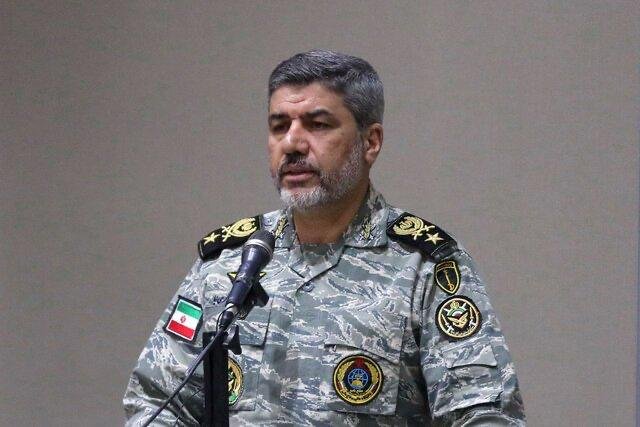
At 01:11 UTC on 13 July 2026, the open-source monitor AMK Mapping reported that at least six missiles had been launched from Iran toward Jordan. Three minutes later, the war-tracking account War Field Witness posted that explosions were being heard inside the kingdom and named the target: the Muwaqqar al-Saltani royal airbase, a facility south of Amman long associated with Western airlift operations and intelligence flights. By 01:55 UTC, the geopolitical channel GeoPWatch was counting interceptions overhead. By 02:13 UTC, the same channel was tallying additional launches.
Iran struck, on this telling, not Israel but a quiet American logistics hub on its longest-suffering Arab ally's soil. The choice of target rewrites the geography of the confrontation. It puts Jordan, a US-designated major non-NATO ally that hosts roughly 3,000 US troops and a forward operating base used for ISR missions over Syria and Iraq, inside the Iranian strike envelope. It also reroutes the diplomatic pressure: if retaliation comes, it lands on Amman before it lands on Tel Aviv, and Tehran's message travels through a kingdom whose airspace has, until now, been treated as effectively US-controlled.
What the open-source record shows
The trail of Telegram posts from the early hours reads like a rough trans-North-of-the-house ledger. AMK Mapping fixed the count at "at least 6 missiles" at 01:11 UTC. War Field Witness, posting in the same minute, gave the target. Within forty-four minutes, GeoPWatch had moved from "more interceptions taking place" to "more launches," a sequence consistent with a salvo-and-reload pattern that, if confirmed, points to a deliberate multi-wave strike rather than a single probing shot. Middle East Spectator circulated video frames it said showed ballistic-missile trails crossing the Jordanian sky.
Nothing in the public record as of writing confirms hits, casualties, or the type of munitions used. The framing "missiles targeting the airbase" comes from a single Telegram account; the missile count originates with one OSINT channel; the trajectory imagery is user-submitted. Independent confirmation from the Jordanian armed forces, the US Central Command, or wire correspondents on the ground had not appeared in the source material at the time of publication. That gap is not procedural housekeeping. On an event of this scale, the absence of immediate official corroboration is itself the story: it tells the reader how fast the information environment moves when Iranian launches hit an Arab monarch's airspace, and how slow the official channels are to follow.
Why Jordan, and why now
The Muwaqqar complex sits on a strategic fault line. It has hosted US Air Force F-16s, RC-12 Guardrail signals-intelligence aircraft, and Predator-family drones used to surveil the Syrian and Iraqi battlefields. For Tehran's planners, the airbase is not a passive piece of Arab real estate. It is a node in the kill chain that has tracked Iranian-backed militias in Syria and Iraqi Kurdish territory for two decades. A strike there is therefore not an escalation against Jordan as such. It is a strike at the architecture of US presence in the Levant, delivered through the airspace of a country that has spent the post-2011 decade trying to stay on the right side of both Washington and its own public.
The timing is harder to read from open sources alone. The launches came in the small hours, when Western media cycles are thinnest and Arab capitals are between shifts. That alone suggests an operator who wants the event to register as a fait accompli before the official news cycle engages. It also lands during a period in which Iran's regional posture has been shaped by the cumulative pressure of sanctions, the loss of Syrian land corridors after the Assad government's fall, and the steady Israeli campaign against Hezbollah's senior cadre in Lebanon and against the Houthis' external supply lines in Yemen. A strike on Jordan is, in that reading, the move of a power that is losing its outer ring and is signalling, in the most legible way available, that the inner ring is still defended.
The structural read, without the slogans
What we are watching is a hegemonic squeeze. The incumbent US-centred security order in the Middle East runs on forward bases, overflight rights, and pre-positioned logistics. Iran's ballistic-missile force was designed, in the post-1980s doctrinal literature, to threaten those fixed nodes, and the entire architecture of sanctions and arms embargoes has been calibrated around denying Tehran precisely the kind of long-range accuracy that an overnight salvo against an airbase demands. Whether the munitions were genuinely aimed at the runway or at the political message is the question analysts will be unpacking for weeks.
The structural point that matters for readers: when a regional power fires ballistic missiles at a US-allied Arab kingdom, the question is no longer who shot first. It is whether the alliance system in place since 1991 can absorb a direct hit without either escalating into a wider war or quietly re-calibrating. Both Jordan and the United States have strong incentives to keep the incident bounded. King Abdullah's government depends on US security guarantees; the Biden-to-Trump-through continuity US posture in the region depends on Jordanian stability. But bounded does not mean painless. Even a salvo that is mostly intercepted forces a public accounting: did Jordanian airspace fail, did US early-warning assets fail, or was the political decision taken to allow the strike to register without escalation?
Counter-narrative and uncertainty
The alternative reading is that this is not what it looks like. Iranian-aligned channels have, at various points in the last two years, framed strikes on third countries as warnings to Washington, not as acts of war against the host state. The same missile count can be presented in Tehran as a calibrated signal that bypassed Jordanian sovereignty rather than violated it. The Saudi and Emirati press will likely frame this through the lens of their own quiet diplomatic channels with Tehran; the Iraqi and Syrian wires will frame it through the lens of militia coordination; Israeli analysts will frame it as proof of an Iranian second-strike capability that demands a different kind of pre-emption. None of these frames is fully wrong, and none is fully right.
What the open sources do not yet show is the most consequential data: intercept rates, runway damage, casualty figures from any side, and the diplomatic traffic between Amman, Washington, and Tehran in the first twenty-four hours. Until those land, the confident claims on either side are claims, not facts. The trajectory footage looks real, the count looks consistent across two independent OSINT channels, and the target naming has not been publicly disputed by any party with standing in the airbase. That is enough to report. It is not enough to declare a winner.
Stakes, in concrete terms
If the strike is allowed to pass without a Jordanian or US response, the precedent is that Iranian ballistic missiles can hit major non-NATO allies and absorb the cost in statements. If the response is heavy, Jordan becomes a frontline state in a war its government did not choose, with all the domestic political consequences that follows in a kingdom where the Palestinian file is a permanent fault line and where the post-2023 mood has soured on Western military presence. Either path costs Amman something it does not have to spare. Either path also tells Tehran something about the future price of striking forward bases. The next forty-eight hours of Jordanian, US, and Iranian public messaging will be the place to watch.
Desk note: Monexus framed this incident strictly from the open-source Telegram record and named only the actors and facilities those sources identified. No casualty figures, no intercept rates, and no diplomatic statements have been asserted that the source material did not supply. Confirmation from official channels will be added as wire copy clears editorial review.
Wire provenance
This editorial synthesis draws on the following public wire/social posts:
- https://t.me/AMK_Mapping
- https://t.me/wfwitness
- https://t.me/Middle_East_Spectator
- https://t.me/GeoPWatch
- https://t.me/GeoPWatch