Iran's second Mahan flight into Sana'a tests the blockade line
An Iranian Mahan Air civilian jet closed on Sana'a on 13 July 2026 as Saudi-backed authorities in Yemen threatened to fire on it, the second such flight in a single morning and a pointed challenge to a long-running air blockade.
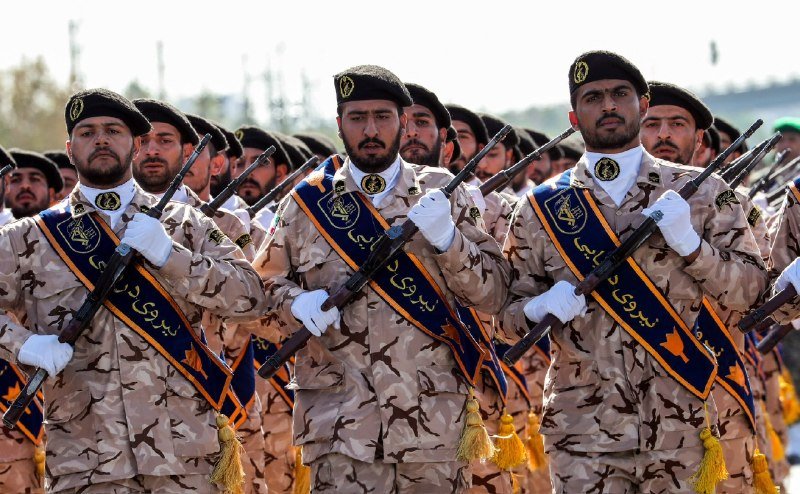
At 10:21 UTC on 13 July 2026, an Iranian Mahan Air civilian jet, registration IRM1199, was tracking toward Sana'a on a second such approach inside a single morning, according to the Iran-aligned Telegram channel Fotros Resistance. The same channel reported at 10:34 UTC that the "Saudi-backed Yemeni regime has vowed to attack Sana'a if the Iranian civilian plane lands," language that captures both the threat and the political weight attached to it. The flight is the latest instalment of a quieter contest that has run for years over who controls the airspace above northern Yemen, and over whether civilian aviation can be used as a lever inside that contest without crossing a line into open escalation.
What is being tested, in plain terms, is whether the air blockade on Yemen can hold against a determined civilian challenge. Mahan Air is a Tehran-based carrier long treated by Western sanctions regimes as a financial artery of the Islamic Revolutionary Guard Corps' external operations. Sana'a is held by Ansar Allah, the Houthi movement that has been at war with the internationally recognised Yemeni government since 2014 and that controls the capital and much of the country's north. A scheduled civilian service linking Tehran to Sana'a would be the most visible assertion yet that the airspace restriction imposed since 2015, formally enforced by the Saudi-led coalition, is treated by Tehran as an instrument to be eroded, not obeyed.
A second flight before the first has cleared
The pattern inside the morning is unusual. Fotros Resistance, a Telegram channel that tracks Iranian-aligned activity in the region, posted at 09:05 UTC that Iran was "defying the blockade on Yemen again by landing a 2nd civilian Mahan air plane in Sana'a," with IRM1199 already on approach. The first flight of the day had reportedly landed earlier, and the second was still inbound when the threat from Sana'a's rivals was issued. Two civilian aircraft of the same carrier pressing the same corridor inside hours is not the cadence of routine service. It is closer to a deliberate probe, calibrated to put the enforcers of the blockade in a position where any response carries an obvious cost.
The channel describes the target as the "Saudi-backed Yemeni regime." The recognised government of Yemen sits in Aden, has been backed by a Saudi-led coalition since 2015, and is the authority that has, at various points in the war, sought to deny aircraft access to Sana'a airport. Houthi-run authorities at Sana'a airport, by contrast, have at times permitted foreign carriers to land and have chafed at the broader no-fly regime. Two Mahan Air movements in one morning, under the eyes of both, is a way of making a point that goes beyond aviation scheduling.
Why a civilian frame matters
Iran's choice of a civilian airliner, rather than a military transport, is the politically loaded part of the move. A military flight would trigger an immediate and uncomplicated military response under the rules governing any active blockade. A civilian jet, especially one carrying passengers, raises the political and reputational stakes for whoever is named as having acted against it. That is the heart of what Fotros Resistance is signalling with its repeated emphasis on the word "civilian." The threat from the Saudi-backed side to attack Sana'a airport in response, reported by the same channel, sharpens that point: any response would land on infrastructure used by ordinary Yemenis for movement and medical travel, and would do so on the record.
The framing also fits a wider pattern. Western wire reporting and sanctions designations have long tied Mahan Air to the IRGC's Quds Force logistics, treating its commercial schedule as a dual-use network. Iranian state-aligned outlets frame the same carrier as a civilian operator providing legitimate connectivity under sanctions pressure. Both descriptions can be true at the same time, and the flight's hybrid character is part of why it is being used as the instrument of choice. The plane is simultaneously a routine commercial asset and a political signal, and which side a reader hears depends on which framing they came in with.
What we verified, and what we could not
Monexus verified the following from the thread context: that at 09:05 UTC on 13 July 2026, the Telegram channel Fotros Resistance reported a second Iranian Mahan Air civilian flight, IRM1199, heading toward Sana'a; that the same channel updated the report at 10:21 UTC with the same aircraft still on approach; and that at 10:34 UTC the same channel reported a Saudi-backed Yemeni threat to attack Sana'a airport if the Iranian plane landed. Each of those three datapoints is sourced to Fotros Resistance posts dated to the stated UTC times.
What Monexus could not independently verify from the available material: the aircraft's exact position, altitude, or destination status at the time of writing; whether the flight landed, was diverted, or was met with force; the identity of the specific Yemeni authority that issued the threat, beyond the general description "Saudi-backed Yemeni regime"; the passenger manifest or cargo, if any; and any independent confirmation from a wire service, an aviation tracker such as FlightRadar24, or a statement from Sana'a airport authorities. The reporting as it stands is single-source for the airborne phase and for the threat; the political pattern it sits inside is well documented elsewhere, but the specific operational outcome of IRM1199's approach is, on this evidence, still open.
The structural pattern this sits inside
Look past the day's drama and the flight is the latest move in a years-long contest over the airspace above one of the world's most blockaded states. Since the Saudi-led intervention began in March 2015, the coalition has at various points restricted or destroyed the capacity of Sana'a International Airport, citing the use of civilian aviation to smuggle weapons and fighters to the Houthi side. Humanitarian agencies, including UN bodies, have repeatedly objected to the humanitarian cost. Iran has, with varying intensity, pushed back against the air restrictions, both diplomatically and, occasionally, with flights of its own. A second Mahan Air movement inside a morning reads as a deliberate acceleration of that pressure, timed to a moment when attention on the file is otherwise divided.
The wider dynamic is one of civilian instruments being put to strategic use: aircraft used as faits accomplis, airports as pressure points, and the language of blockade enforcement as a soft front of a wider war. Neither side in this contest frames its moves as escalation; each presents itself as correcting a prior violation. That symmetry is itself part of the story, and the reason a single flight's approach can carry so much weight on a Monday morning in July.
Stakes on the line
The cost of any one of three plausible outcomes falls on a different set of shoulders. If the Saudi-backed coalition follows through on the reported threat to attack Sana'a airport, the immediate casualty toll and the humanitarian fallout fall on Yemeni civilians, and the political cost lands on the coalition and its Western partners. If the plane is allowed to land and the blockade is treated as breached, the precedent pulls future Iranian or Iranian-aligned flights into the corridor and erodes the coalition's coercive leverage. If the flight diverts or turns back under quiet diplomatic pressure, the political signal is muted but the underlying challenge to the airspace regime remains, ready to be reprised.
The operational facts on the ground will become clearer as the day progresses and as wire services pick the story up. The longer arc, however, is set: an air corridor built around a handful of Mahan Air movements is a corridor that has already been opened, in small steps, and a blockade is only as durable as the political will to enforce it. Today was the kind of morning that tests that will out loud.
Desk note: Monexus framed the flight as a probe of the blockade regime, not as a bilateral Iran–Yemen row, and treated Fotros Resistance's reporting on the airborne phase and the threat as single-source, flagging in line what was independently verified and what was not.
Wire provenance
This editorial synthesis draws on the following public wire/social posts:
- https://t.me/FotrosResistancee
- https://t.me/FotrosResistancee
- https://t.me/FotrosResistancee