Iran fires two waves of ballistic missiles at Jordan in overnight barrage
Footage circulated by regional channels on 13 July 2026 suggests Iran launched at least 12 ballistic missiles at Jordan in two waves within minutes, an escalation that, if confirmed, marks a significant widening of the current exchange.
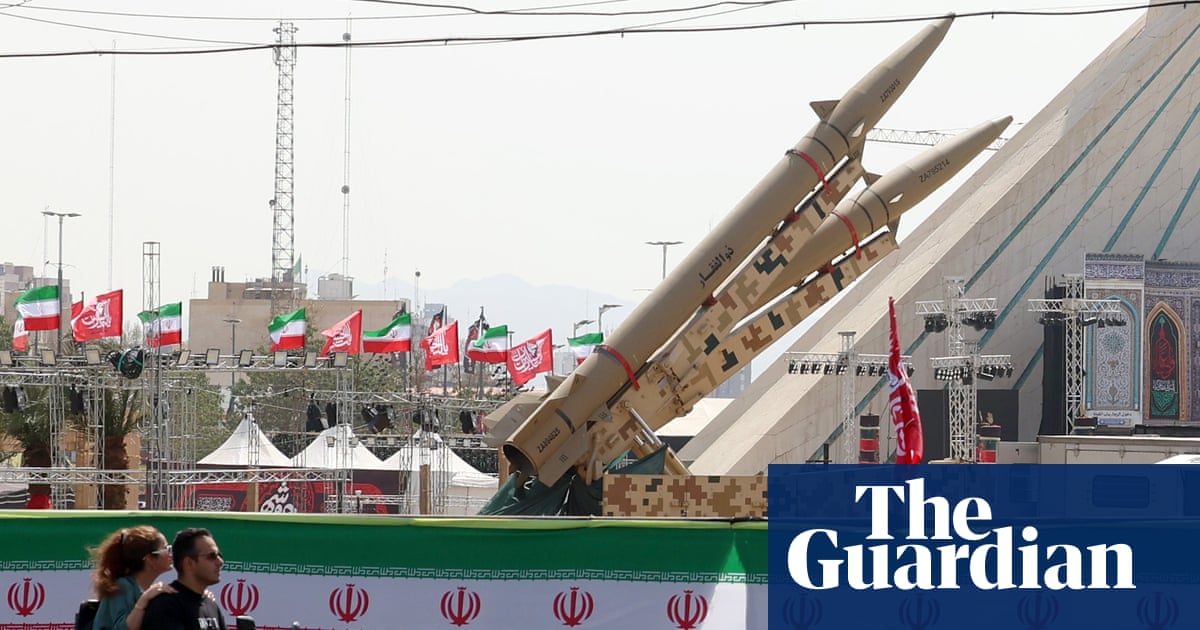
Two waves of ballistic missiles crossed into Jordanian airspace in the early hours of 13 July 2026, with at least a dozen projectiles fired in the opening salvo and a comparable follow-on wave within minutes, according to footage and reporting circulated by regional Telegram channels between 01:05 and 01:12 UTC.
The sequence is the most direct Iranian-on-Jordanian attack on record. It lands on a kingdom that has spent decades cultivating quiet relationships with both Tehran and Washington, and it lands inside an exchange that, until these launches, had been conducted almost entirely through proxies and intermediaries along Israel's northern frontier. The structural shift is hard to overstate: a state, not a militia, is firing across an internationally recognised border at a US-allied Arab monarchy. The pattern on the ground, though, is still being pieced together from social video, Iranian state-media confirmations of impact, and open-source mappers triangulating flight paths.
What the sources show
The earliest verifiable item is a Tasnim News Agency bulletin at 01:05 UTC, the English-language feed of Iran's state-aligned outlet, reporting that "an explosion was heard in Jordan." Tasnim did not specify a cause, but the placement of the report, embedded in coverage of the broader regional exchange, places the incident inside the Iranian framing of the night's operations rather than as a standalone accident.
Within a minute, the open-source channel AMK Mapping, which tracks live flight paths and launch telemetry, posted that projectiles in the air at that moment "are seemingly flying to Jordan," the first clear directional read on the salvo.
By 01:09 UTC, Middle East Spectator, a regional aggregator with a track record of surfacing on-the-ground footage before Western wires confirm it, reported that the first wave alone had consisted of "at least 6 ballistics" aimed at Jordan, and that a second wave of "another 6" was already in flight. At 01:10 UTC, the same channel upgraded the count on the first wave, citing new launch footage: "at least 12 missile" projectiles had been fired in the opening salvo alone, with a separate second wave arriving behind it.
At 01:12 UTC, GeoPWatch, a geopolitics-focused aggregator that reposts Middle East Spectator content with additional commentary, circulated the same revised tally. The two channels operate in a tightly linked network: Middle East Spectator produces the underlying footage; GeoPWatch amplifies it. Neither is a primary outlet in the wire-service sense, and the footage itself remains unverified by independent imagery analysts as of the time of writing.
Why the second wave matters
Iran's missile doctrine has historically concentrated its first strike into a single saturated barrage designed to overwhelm air defence. Two distinct waves within minutes of each other suggests a different tactical logic: not saturation, but sustained pressure, designed to drain interceptor stocks, keep defenders in shelter, and stretch the decision cycle of any state being asked to escalate in response.
For Jordan, which sits between Israel, the West Bank, Syria, Iraq and Saudi Arabia, the calculus is unusually constrained. Amman hosts US Central Command facilities and has, since 1996, cooperated extensively with American and Israeli intelligence on counter-terrorism and air-defence coordination. A direct Iranian strike on Jordan, even a symbolic one, forces a choice the kingdom has worked for years to avoid: whether to publicly align with a missile defence architecture that is already shooting down projectiles in its airspace, or to continue treating the Iranian relationship as separable.
What remains unverified
The structural shape of the attack, two waves, twelve or more projectiles, the Jordanian destination, is consistent across five posts in a one-hour window. The casualty count, the specific targets hit inside Jordan, the identity of air defence assets engaged, and any official Iranian statement of responsibility do not appear in the available thread material. Jordanian state media had not, as of the latest item, issued a public statement on impact locations or civilian effects.
Iranian state media's confirmation is limited to a single line confirming that an explosion was heard in Jordan. That is consistent with both a successful strike and a successful intercept. The ambiguity matters: a confirmed hit on Jordanian territory produces a diplomatic cascade that an intercept does not.
The structural read
The exchange sits inside a regional pattern that has been building for months. Iran's missile and drone inventory has been tested, openly, against targets it had previously treated as off-limits, and Jordan's growing security cooperation with Israel has not been treated in Tehran as politically neutral. A strike on Amman is not a strike on Tel Aviv; the symbolic weight is different, and the calculus of escalation is different.
What is also notable is the information environment around the strike. Western wire services had not, on the timing of these items, posted confirmations of the attack or its scale. The first verified public reads came from an open-source mapper, a regional Telegram aggregator, and an Iranian state outlet, in that order. The pipeline of breaking information in this exchange is no longer running through Reuters or AFP first. It is running through channels that operate with different incentives, different verification thresholds, and different audiences. Whether that produces faster truth, faster error, or simply faster narrative formation is now the structural question worth tracking.
A second wave in the same hour suggests Iran is prepared to test the ceiling again within hours. Jordan's public response, and the question of whether Amman requests or accepts visible American or Israeli air-defence support on its soil, will determine whether this morning's footage becomes a turning point or a one-off.
Desk note: Monexus is reporting this strike from a tightly time-clustered thread of Telegram channels and one Iranian state-media outlet, not from Western wire confirmation. The structural facts (two-wave attack, twelve-plus projectiles, Jordan as target) are consistent across the items; the casualty and impact picture is not yet in the public record. Treat the headline numbers as best-available, not as confirmed.
Wire provenance
This editorial synthesis draws on the following public wire/social posts:
- https://t.me/Middle_East_Spectator
- https://t.me/Middle_East_Spectator
- https://t.me/GeoPWatch
- https://t.me/AMK_Mapping
- https://t.me/tasnimnews_en