Houthis hit Abha airport as Saudi southern strikes escalate
Initial accounts on 13 July 2026 place Abha International Airport in southern Saudi Arabia at the centre of fresh Houthi missile strikes, with air defences activated over the city and follow-on explosions reported in Asir.
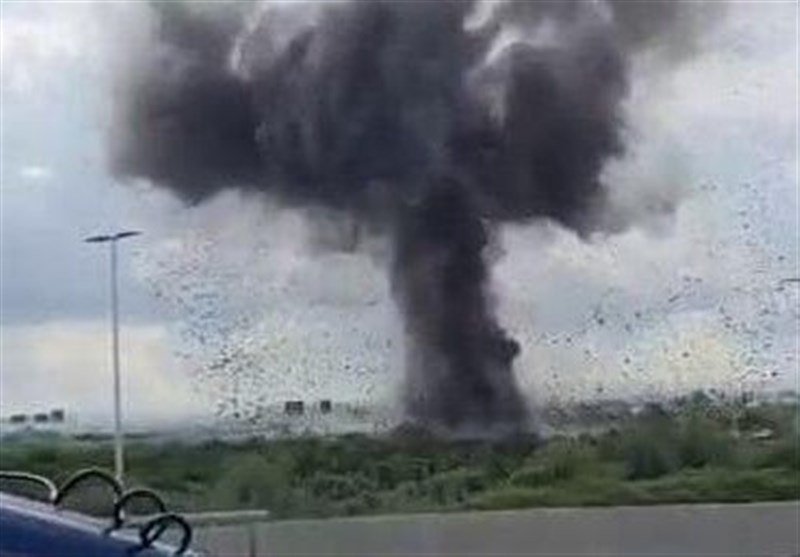
At 16:50 UTC on 13 July 2026, two Telegram channels monitoring the Yemen file began carrying the same line: that Abha International Airport, in the Asir highlands of southern Saudi Arabia, had been struck. Within four minutes, air defences over Abha were reported active; within nine minutes, additional explosions were logged in eastern Abha; within ten, further blasts were being reported across the wider Asir region. The framing of the strike, which began at Abha and widened to the surrounding governorate, suggests a coordinated salvo rather than a single projectile, though that reading rests on the rapid sequencing of initial reports rather than on a confirmed strike count.
What is verifiable from the open-source record is narrower, and worth stating precisely. Initial accounts published by the Yemen-war monitor channel IntelliSlava at 16:50 UTC on 13 July 2026 say Abha airport was struck; a second IntelliSlava post at 16:54 UTC reports air defences activated over the city; a third at 16:59 UTC logs further explosions in eastern Abha; and a fourth at 17:00 UTC extends the geographic frame to the broader Asir region. A parallel posting from the pro-Houthi channel Wfwitness at 16:55 UTC reports Houthi missile launches towards Saudi Arabia and initial explosions in Abha. Iran's Tasnim News, at 16:50 UTC, ran a wire noting "some news sources" reporting an attack on Abha's international airport. None of these sources, taken individually, constitute confirmation by an authority on either the Saudi or Houthi side; read together, they triangulate a single event window.
What the initial accounts actually say
The accounts converge on a tight window between 16:50 and 17:00 UTC, with the airport named as the first point of impact and the wider Asir governorate absorbing follow-on blasts within ten minutes. IntelliSlava's four posts are the most granular on geography, sequencing Abha airport, then Abha city air-defence activity, then eastern Abha, then Asir more broadly. The sequencing matters: a strike that begins at an airport and then spreads to the surrounding governorate is consistent with either a multi-missile salvo or with interception debris falling across a populated zone. The Telegram record does not, on its own, distinguish between the two.
Wfwitness's post attributes the launches explicitly to the Houthis. That attribution is consistent with the channel's editorial posture, which is openly pro-Houthi, and should be treated as a claim by the attackers rather than as independent confirmation. Tasnim News, an outlet affiliated with Iran's Islamic Revolutionary Guard Corps, ran its report in the conditional voice ("some news sources report"), which is the more cautious framing and the one a reader should weight most heavily until the Saudis or the Houthis speak on the record.
The counter-narrative: where the framing splits
There are three plausible reads of the event, and the available sources do not yet adjudicate between them. The first is the simplest: a Houthi missile or drone salvo struck Abha airport and parts of Asir, with Saudi air defences engaging some of the incoming ordnance. This is the framing implied by Wfwitness and is broadly consistent with IntelliSlava's geography.
The second is that Saudi air defences intercepted incoming projectiles over Abha, with the airport and city explosions being debris or interceptor fragments rather than direct hits. The Tasnim framing ("some news sources report an attack") leaves this possibility open without endorsing it.
The third is that the most consequential action is not the strike itself but its timing. Houthi attacks on Saudi infrastructure have, in recent years, often tracked with broader regional escalations rather than purely with the battlefield tempo inside Yemen. A strike on Abha on 13 July 2026, in the middle of summer, may or may not correlate with a diplomatic track the public record has not yet caught up with; the sources do not say.
Structural frame: the Houthi-Saudi front as a running metric
Abha and the Asir airports have been recurrent targets in the long-running Houthi-Saudi air war, which escalated from 2019 with strikes on Saudi oil installations at Abqaiq and Khurais and continued through the de-escalation period that followed the 2022 truce and its collapse. The southern borderlands, where Asir abuts Yemeni governorates, are the operational seam in that conflict: close enough for ballistic missiles and one-way attack drones to reach Saudi population centres without the overflight complications of strikes further north.
The pattern, in plain terms, is a slow-bleed campaign of attrition directed at Saudi civilian and economic infrastructure, calibrated to a Yemeni domestic agenda that runs in parallel to any wider regional agenda. Riyadh's tolerance for that attrition, and its willingness to engage in active defence versus strategic silence, is itself a variable that shapes how often these strikes make the open-source record. A strike on an international airport is harder to suppress than a strike on a remote border post, which is part of why Abha keeps appearing in the public record at all.
What remains uncertain
The public record at the time of writing does not include an on-the-record Saudi statement, an Houthi military spokesman's claim of responsibility, an independent satellite or radar confirmation, or a casualty or damage count from either side. Telegram channels that monitor the war are useful as early-warning sensors, but they are not primary sources; the absence of a Saudi or Houthi official statement is the single biggest gap in the open record. Until at least one side speaks on the record, the strike count, the weapon type, the interception rate, and the casualty count all remain unverified.
A second uncertainty is the wider regional context. Strikes on Saudi southern infrastructure in mid-July do not, on their own, signal a wider escalation; they sit inside a pattern that has run for years. But they can also be a leading indicator of a diplomatic or military shift elsewhere, and the public record at this hour does not let a reader rule that in or out.
The stakes if the pattern continues
If the strike pattern at Abha and Asir is part of a renewed Houthi campaign, the immediate cost falls on Saudi civil aviation, on tourism in the Asir highlands, and on the cross-border population along the frontier. The structural cost falls on the diplomatic track: every renewed strike narrows the space in which Saudi-Houthi de-escalation can resume, and the southern governorates bear the operational cost of that narrowing.
For readers tracking the wider regional file, the practical indicator is whether the Saudi-led coalition and the Houthis issue statements within the next 24 hours, and whether those statements acknowledge, deny, or reframe the strikes. Until then, the open-source record says a strike happened at Abha on 13 July 2026 and the geography widened to Asir within ten minutes. The rest is provisional.
This publication treats Telegram-channel reporting as an early-warning layer, not as primary attribution. Saudi and Houthi official statements, once issued, will supersede the framing in this piece; in their absence, the geographic and temporal convergence of the four IntelliSlava posts, the Wfwitness post, and the Tasnim wire is the strongest evidentiary base available to a reader outside the region.
Wire provenance
This editorial synthesis draws on the following public wire/social posts:
- https://t.me/intelslava
- https://t.me/intelslava
- https://t.me/wfwitness
- https://t.me/intelslava
- https://t.me/intelslava
- https://t.me/tasnimnews_en