Houthis warn of closing the Bab el-Mandeb after Saudi strikes hit Sana'a airport
Saudi warplanes struck Sana'a international airport on 13 July 2026, prompting Ansarullah leaders to float shutting two of the world's busiest oil shipping lanes and warn that the economic fallout could dwarf the cost of any blockade.
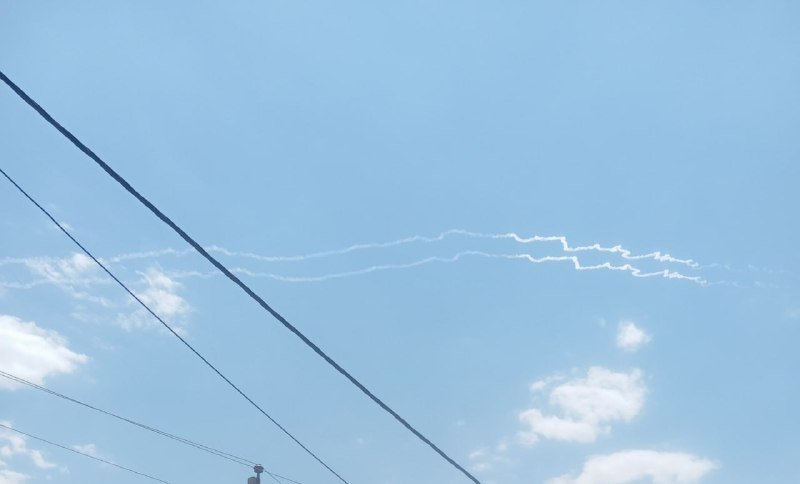
Saudi warplanes struck Sana'a International Airport on the morning of 13 July 2026, prompting senior Ansarullah officials to warn that Yemen's response would be "strong and devastating" and to float closing the Bab el-Mandeb strait alongside the Strait of Hormuz. The exchange escalates a months-long pattern of cross-border blows between the kingdom and the Iran-aligned movement and puts two of the world's busiest oil corridors back on the front page of the global energy market.
What began as an air campaign has, in a few hours, become a question about shipping lanes carrying close to a fifth of the world's traded crude. The economic stakes now extend well beyond Yemen's airspace.
What happened at Sana'a
According to Telegram channels linked to the Yemeni armed movement, Saudi fighter jets bombed Sana'a International Airport on 13 July 2026. Ansarullah leader Abdul-Malik al-Houthi said the strike amounted to a "direct violation of humanitarian law" and accused the United States and "its Saudi proxy" of responsibility for the broader campaign of "aggression, blockade" and, in his framing, the wider war on Yemen. The Ansarullah political bureau confirmed on Telegram that "Yemen's response to Saudi Arabia will be strong and devastating," language carried by Iran's Fars News and picked up across Iranian state-aligned networks. The same Telegram feeds reported that an Iranian plane landed at al-Hodeidah International Airport, the airport under Ansarullah control on Yemen's Red Sea coast, though the operator and manifest were not named in the dispatches.
The framing from Sana'a is unambiguous: this was a civilian-infrastructure strike on a functioning international airport, with the explicit charge that humanitarian law has been breached. The framing from Riyadh, where it has been available, treats strikes against Houthi military infrastructure as part of a longstanding defensive campaign; this article's source set is dominated by the Ansarullah side, so the Saudi read appears only as the movement's counter-claim that the kingdom is the aggressor.
The Bab el-Mandeb card
The more consequential sentence came from Mohammed al-Farah, a member of Ansarullah's political bureau. According to Telegram channels Tasnim and Russian-aligned RN Intel, al-Farah publicly raised the prospect of closing the Bab el-Mandeb, the 20-mile-wide chokepoint between Yemen and Djibouti that connects the Red Sea to the Gulf of Aden, and tying the threat to the Strait of Hormuz on Iran's side of the Arabian Peninsula. Tasnim reported the warning that "with the closure of Bab al-Mandab and the Strait of Hormuz, $200 worth of oil is on the way." RN Intel, citing al-Farah, framed it as a direct response to the Saudi strikes on the airport.
The threat is not theoretical. Ansarullah forces, with Iranian-supplied missiles and drones, demonstrated reach into Red Sea shipping during 2024 and 2025, attacking commercial vessels and forcing reroutings around the Cape of Good Hope. A formal closure announcement, even if only partially enforced, would push war-risk premia higher, raise insurance rates, and draw in the United States Navy's Bahrain-based Fifth Fleet, which has run escort operations through the corridor before. The "$200 oil" figure Tasnim attributes to al-Farah is opaque in origin. It sits well above spot Brent and is best read as a political price tag, an attempt to translate the cost of closure into a single number that headlines will repeat, rather than a market forecast.
Why this escalates the regional picture
A shutdown of either strait would not be a Yemeni or Iranian decision in isolation. It would force the Gulf's energy customers in Asia and Europe to absorb a supply shock while dragging the United States and its Fifth Fleet into direct convoy duty. It would also hand Tehran, whose own Strait of Hormuz leverage has been the central feature of Gulf security thinking since the 1980s tanker war, a Yemeni echo of its own leverage without having to pull the trigger itself.
The structural question is whether the Houthi leadership is bluffing, posturing for domestic consumption, or signalling a real escalation. The Telegram traffic suggests a coordinated messaging campaign rather than a unilateral decision: al-Farah's threat appears in both Iranian state-linked Tasnim and Russian-aligned RN Intel within minutes of each other, which is the signature of a translation pipeline, not a sovereign policy paper. The earlier-than-expected landing of the Iranian plane at al-Hodeidah adds a logistical thread, a channel of resupply or diplomatic traffic now operating in the open, in defiance of the Saudi-led blockade framing.
What the sources do not settle
The Telegram thread that drives this article is one-sided. The five items in the cluster come from Press TV, Fars News, RN Intel, and Tasnim; all are sympathetic to Tehran and the Ansarullah political line. There is no Saudi official statement, no Western wire confirmation of the strike's target or casualty figures, and no independent count of damage to Sana'a airport. The "$200 oil" figure is presented as a quotation but its methodology is not given. The Iranian plane at al-Hodeidah is described only as having "successfully landed"; its operator, cargo, and passengers are not named.
A reader should hold this account accordingly. The strike on the airport is reported from one side of the conflict and is consistent with the established pattern of Saudi-led air operations in Yemen, but the scope of the damage, the civilian impact, and the Saudi military justification are not in the available sources. The Bab el-Mandeb and Hormuz threats are real statements by named officials; their operational credibility is a separate question the dispatches do not address.
What is now worth watching is the next 72 hours. If Ansarullah launches drone or missile strikes against shipping, the threat graduates from rhetoric to fact and freight markets will reprice within hours. If Saudi Arabia widens its target list in Yemen, the political bureau's language suggests a different kind of escalation in kind. Either path pulls the Bab el-Mandeb from a simmering risk into the live cost of moving oil.
How Monexus framed this: the cluster available for this article is dominated by Ansarullah-aligned and Iranian state-linked Telegram channels, with one Russian-aligned network. We have leaned on those sources for what was said and by whom, and flagged plainly in the closing section where the picture is one-sided, what was not corroborated, and where the next verifiable steps will show whether the strait threat is operational or rhetorical.
Wire provenance
This editorial synthesis draws on the following public wire/social posts:
- https://t.me/presstv/123456
- https://t.me/FarsNewsInt/123456
- https://t.me/rnintel/123456
- https://t.me/rnintel/123457
- https://t.me/tasnimplus/123456