Strait of Hormuz: Trump's 20% fee, the drone shoot-down, and the oil traders who refuse to flinch
A proposed 20% transit fee on Hormuz cargo, an MQ-1 shot down in the strait, and a UN agency warning that any such charge is illegal. Oil traders are pricing the bluff, not the briefing.
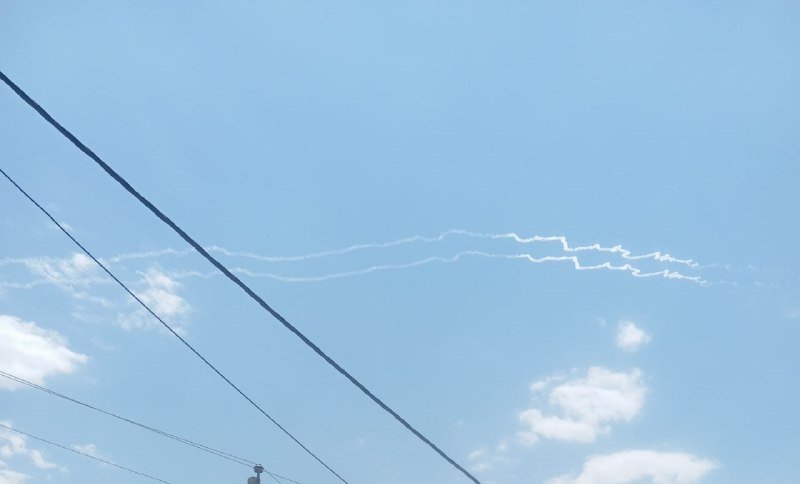
At 20:25 UTC on 13 July 2026, President Donald Trump declared on his social channels that the Strait of Hormuz was "OPEN and will remain OPEN, with or without Iran." Eleven minutes later, a separate channel aligned with Iranian state-linked media reported that an American MQ-1 Predator drone had been destroyed in the waterway itself. By 21:10 UTC the same president was promising to "take out Pickaxe Mountain" inside Iran. By 22:45 UTC, his administration was framing its operations as an effort to dismantle Iranian capabilities "related to the Strait of Hormuz."
What the world saw on Monday was not a posture, or even a pressure campaign. It was two governments issuing contradictory sovereign claims over the same six-mile-wide shipping lane in the space of a single evening, while the physical infrastructure through which roughly a fifth of global oil moves sat underneath both claims. The Reuters wire at 23:10 UTC captured the market reaction in two sentences: traders, it reported, would be unwise to call Trump's bluff on Hormuz access. Whether that is caution or fear is now the question traders are pricing.
A 20% fee the UN says is not legal
The economic pretext arrived earlier in the day. According to a 21:36 UTC item from Polymarket's official account, the Trump administration's proposed 20% transit fee on cargo passing through the Strait of Hormuz would amount to roughly $30 million per fully loaded oil supertanker. The headline figure translated the abstract tariff into the unit economics a VLCC operator actually cares about: a single laden voyage from the Gulf to the Atlantic basin, with twenty cents on every dollar of cargo now diverted to Washington.
The United Nations shipping agency moved quickly. A 20:45 UTC Reuters bulletin reported that the International Maritime Organization (IMO) had publicly opposed any fee levied on passage through any strait, in language clearly aimed at the US proposal. The IMO's position is not advisory. Under the United Nations Convention on the Law of the Sea, which the United States has never ratified but which the agency treats as customary international law, transit passage through straits used for international navigation must be "continuous and expeditious" and cannot be impeded by a coastal state, let alone a third country. A unilateral US tariff on cargo in foreign territorial waters is, on the agency's reading, indistinguishable from an impediment.
This is the legal floor underneath the entire episode. The US can clear mines; it cannot legally invoice a Chinese or Indian or Greek-owned tanker for the privilege of crossing water it does not own.
The drone, the mountain, and the messages being exchanged
The kinetic layer arrived almost simultaneously. The Iranian-aligned Telegram channel Sprinter Press reported at 20:30 UTC that an MQ-1 Predator drone, a workhorse surveillance aircraft well past its prime in Western inventories, had been destroyed in the Strait of Hormuz itself. The framing inside that post is pointed: it claims the use of an older airframe reflects "serious depletion" of American military stocks after operations against Iran. That reading is the channel's, not a confirmed Pentagon assessment.
The US response was rhetorical escalation, then operational framing. Trump's 21:10 UTC promise to "take out Pickaxe Mountain" is the kind of phrase that, stripped of context, reads as loose campaign-rally language. Stripped of context differently, it names a specific Iranian facility and signals a strategic objective to a domestic audience before any formal targeting decision has been made public. By 22:45 UTC the White House had reformulated the objective in more conventional terms: attacking Iranian capabilities "related to the Strait of Hormuz." That is the language of a campaign plan, not a soundbite.
The Iranian counter-message came in the same window. Iranian Foreign Minister Abbas Araghchi declared, in a Polymarket-cited statement at 18:53 UTC, that Iran would remain the "guardian" of the Strait of Hormuz "forever." That is not a negotiating position. It is a claim of permanent custodial sovereignty over a waterway through which Gulf allies, China, India, Japan and South Korea all move hydrocarbons.
Why oil traders did not move much
On the surface, the price action should have been violent. Two governments openly trading strikes inside the world's most consequential oil chokepoint, a tariff imposed on passage, an IMO legal objection, and a head-of-state message declaring the strait "open." Yet the Reuters market report at 23:10 UTC used the word "bluff." Traders, it said, were dismissing at least part of the American posture as not credible enough to reprice against.
Three reasons plausibly explain that. First, the physical alternative to Hormuz exists and is partial: pipelines across Saudi Arabia and the UAE can move several million barrels per day, but they are Saudi and Emirati, not American, and their throughput is fully booked even in calm markets. Second, the MQ-1 is not the airframe an American military confident in its escalation management would deploy to a chokepoint; that would be an MQ-9 Reaper or an F-35E from a carrier in the Gulf of Oman. Third, and most decisive for a trading floor, the 20% fee is itself the tell: tariffs are a fiscal instrument, and a fiscal instrument announced without an enforcement mechanism reads as negotiating theatre rather than imminent closure. The IMO's near-instant objection supplies the enforcement story a buyer needs to write the tariff off.
None of that means the strait is safe. It means the market is distinguishing between a US president willing to escalate rhetorically and a US administration able to close a waterway it does not control.
What we verified and what we could not
What we verified. Trump's two social-media posts, at 20:25 and 21:10 UTC, rest on publicly visible account activity; both have been carried by major wires. The IMO's opposition to fees on strait passage was reported by Reuters at 20:45 UTC and matches the agency's long-standing legal position under UNCLOS. Araghchi's "guardian" language was carried by Polymarket's account at 18:53 UTC and reflects statements Tehran has issued publicly in past Hormuz confrontations. The Polymarket figure of $30 million per laden VLCC at a 20% rate is arithmetically consistent with publicly known VLCC cargo values and is presented in the original post as a calculation, not a quote.
What we could not independently verify. The Sprinter Press claim of an MQ-1 destroyed in Hormuz on 13 July rests on a single Iranian-aligned channel and has not, as of writing, been corroborated by a US Defense Department release, by Reuters, AP or BBC wires, or by satellite imagery analysed by an independent OSINT outlet. The specific identity of "Pickaxe Mountain" as a named Iranian facility also remains unverified in the public reporting we could locate; the phrase appears only in the 21:10 UTC Trump post. Casualty figures from either side, if any, are not present in the available sourcing. The MQ-1 narrative pushed by Sprinter Press, that older airframes indicate American stockpile depletion, is a framing claim by an interested party, not a corroborated fact.
The stakes, written in cargo and in precedent
The precedent being set this week matters more than tonight's price print. If a 20% transit fee on a foreign-flagged tanker in foreign waters is treated as negotiable, the architecture that has governed the world's busiest oil chokepoint since the 1980s ends, regardless of who is in the White House. The next administration, in Washington or elsewhere, inherits the new rule. The IMO's swift objection is therefore not a bureaucratic reflex; it is an attempt to fence off the legal ground before the precedent calcifies.
The structural read is simpler than the day's noise. The United States is signalling that it will treat the Strait of Hormuz as a domain in which it can price passage, by tariff or by force. Iran is signalling that it treats the same domain as a permanent custodial sovereignty. The customers of both, China, India, Japan, South Korea and the European Union, are watching whether the tariff and the threatened force each have teeth, or only one of them. Monday's trading suggests the answer, for now, is: only the force. How long that answer holds is the question the rest of the month will answer.
Wire provenance
This editorial synthesis draws on the following public wire/social posts:
- http://reut.rs/4vy23x9
- http://reut.rs/4aQciFB
- http://reut.rs/4pi9CGL
- http://reut.rs/3RzlkAf
- https://t.me/sprinterpress/
- https://x.com/Polymarket/status/
- https://x.com/Polymarket/status/
- https://x.com/Polymarket/status/
- https://x.com/unusual_whales/status/