Six ships and a strait: how a Hormuz standoff is reshaping the crypto bill's runway
A near-total collapse in traffic through the Strait of Hormuz has collided with a White House push to move the Clarity Act, exposing how geopolitical leverage and digital-asset policy are now running on the same clock.
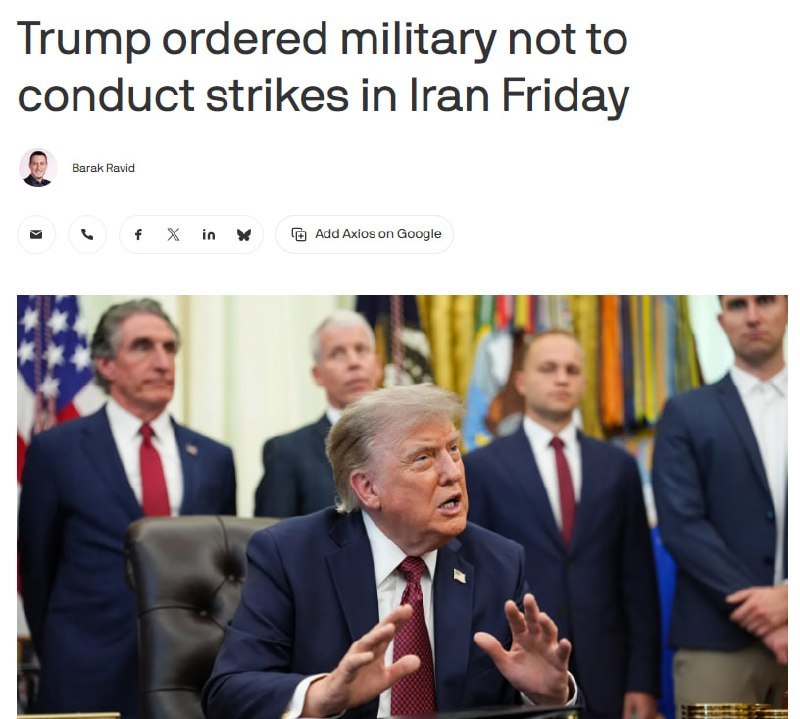
On 13 July 2026, the U.S. State Department and the Iranian foreign ministry spent the same afternoon issuing incompatible statements about one of the world's narrowest oil and gas arteries. Iran announced the Strait of Hormuz was closed "until stability is restored"; the United States replied that the waterway was open to all shipping, according to telegram wire service WatcherGuru. Within hours, just six vessels crossed the strait in a 24-hour window, the same wire reported. By early afternoon UTC, President Donald Trump told reporters the United States was "taking over" the strait and that allied countries would have to pay for the security guarantee; by 14:58 UTC the White House had pivoted to a domestic legislative ask, publicly calling on the Senate to pass the crypto Clarity Act. The two tracks are not a coincidence. The same week that made the strait a kinetic story has made the bill a political one, and the people pushing both are working the same calendar.
The thesis this publication is landing on: the Hormuz crisis has compressed the political runway for U.S. digital-asset legislation. When the world's busiest hydrocarbon corridor becomes a venue for great-power theatre, the financial-system reforms sitting in committee acquire a new urgency, because the same actors who can swing a tanker are the ones writing stablecoin rules and sanctions policy. The Clarity Act, long the prize of the digital-asset lobby, is no longer just a market-structure bill. It is being pitched, at this White House, as a piece of the same architecture that lets the dollar absorb a shock to the world's oil routes.
A strait at six vessels
The shipping data is the part of the story that does not require interpretation. WatcherGuru, tracking maritime traffic through the Strait of Hormuz on 13 July 2026, reported that only six vessels had transited the waterway in the previous 24 hours. A normal day's count for Hormuz is closer to 20 to 21 tankers carrying roughly a fifth of global seaborne oil. The collapse in throughput is the kind of figure that moves freight desks in Singapore, refiners in Rotterdam, and ministries in New Delhi within the same trading session. The U.S. position, as reported by the same wire, is that the strait remains open to all shipping. Iran's position is that it is closed until "stability is restored," a formulation that gives Tehran the option to declare stability either achieved or not, on its own timeline.
What changed inside 24 hours was not the geography but the rhetoric. At 12:17 UTC on 13 July, Trump said the U.S. was "taking over" the Strait of Hormuz. Seven minutes later, he said allied countries would have to pay the U.S. for defending the waterway. The combined message is a public re-pricing of the U.S. security umbrella for global shipping: not free, not multilateral in framing, and not contingent on the politics of any one Middle Eastern capital. That is a position the White House can hold for a week. It is harder to hold when the alternative is a working telephone line with Tehran.
The 11-hour meeting and the changing text
That line appears to exist. Polymarket's wire feed on 13 July, citing Fox News, reported that Trump disclosed the United States held an 11-hour meeting with Iran and that "everything was agreed to" before Tehran began requesting changes specifically related to the Strait of Hormuz. The sequence matters: an outline in principle, followed by textual renegotiation on the chokepoint, is the rhythm of a deal that is structurally close but politically exposed. Iranian negotiators who reopen a single corridor clause tend to do so because the domestic politics of conceding that clause are heavier than the politics of conceding anything else. The strait, for Tehran, is not infrastructure. It is leverage over the Gulf states, an insurance policy against further sanctions pressure, and the visible proof that Iran's geographic position still costs the West something.
Trump's secondary line, that China wants "complete and total control" of crypto and AI, sits awkwardly on top of this. The framing implies a world of rival technological blocs in which digital-asset standards, AI compute and shipping lanes are variants of the same contest. It is also, deliberately or not, a way of recoding domestic regulatory choices as national-security choices. A bill that defines what a stablecoin is, who can issue one, and what kind of reserve backing is required, is easier to pass when the alternative is framed as Chinese capture of the rails.
Why the Clarity Act, why now
The crypto Clarity Act is the legislative vehicle that would split U.S. digital-asset oversight between the Securities and Exchange Commission and the Commodity Futures Trading Commission, clarify which digital tokens count as securities, and set a disclosure regime for stablecoin issuers. Industry lobbying has spent roughly two years positioning the bill as a certainty-of-rules project. The White House pivot on 13 July, urging the Senate to pass it, reframes the same bill as a competitiveness project. The two framings are compatible. They pull in the same direction on Capitol Hill, where lawmakers who do not care about token taxonomy still care about losing ground to Hong Kong, Singapore, Dubai or the People's Bank of China's e-CNY pilot corridor.
This is the structural frame, stated plainly: digital-asset regulation is being absorbed into the same rubric as export controls, sanctions architecture and the security of energy routes. It is no longer a niche fight between a fintech industry and a securities regulator. It is one input, alongside dollar-payment plumbing, central-bank digital currency pilots and Treasury debt issuance, into the question of which jurisdictions will host the next decade of financial plumbing. The Chinese counter-position, when it is voiced, is not that stablecoins are dangerous in the abstract but that non-state issuers of dollar-denominated tokens represent a different kind of dollar-extension than the U.S. Treasury has historically tolerated, and that a fragmented global digital-asset map is in China's interest because it slows the consolidation of a single non-state alternative. That argument deserves airtime even when the source material is a one-line Trump quote.
The runway, the cost and the open question
The political runway for the bill is the same runway the Iran negotiations are running on. If a Hormuz deal lands in the next 30 days, the White House will arrive at the autumn legislative calendar with a foreign-policy win to spend and a market-structure bill to convert into political capital. If the deal collapses and shipping volumes stay near six vessels a day, the focus of the Senate will shift, the cost of any bill that does not directly address sanctions architecture will rise, and stablecoin reserve requirements and disclosure regimes will start to look like luxuries instead of foundations. Either way, the financial-system architecture being negotiated in committee and the energy-corridor architecture being negotiated in the Gulf are now coupled, and the coupling is being made visible by the same press cycle.
What remains genuinely contested is whether the six-ship day is a stress signal or a baseline. The sources do not specify whether the count reflects commercial rerouting around Hormuz, an insurance-driven decision by tanker owners to wait out political risk, or a physical interdiction. They also do not specify what "taking over" the strait operationally means: naval escort, convoy system, intelligence-sharing arrangement, or rhetorical posture. Until those questions are resolved by reporting rather than by statement, the bill's timing is being priced on a number that could be revised in either direction.
How Monexus framed this: where wire reporting treated the Hormuz and Clarity Act stories as separate beats, this publication reads them as a single political-economy event, because the same office is selling both the security of the corridor and the rules of the rails in the same press window.
Wire provenance
This editorial synthesis draws on the following public wire/social posts:
- https://t.me/s/WatcherGuru
- https://t.me/s/WatcherGuru
- https://t.me/s/WatcherGuru
- https://t.me/s/WatcherGuru
- https://t.me/s/WatcherGuru
- https://t.me/s/WatcherGuru