UAE says Iranian missile threat on 12 July 2026 was intercepted outside its borders
Abu Dhabi said an Iranian missile threat detected on the morning of 12 July 2026 sat outside national borders, framing the episode as intercepted rather than struck.
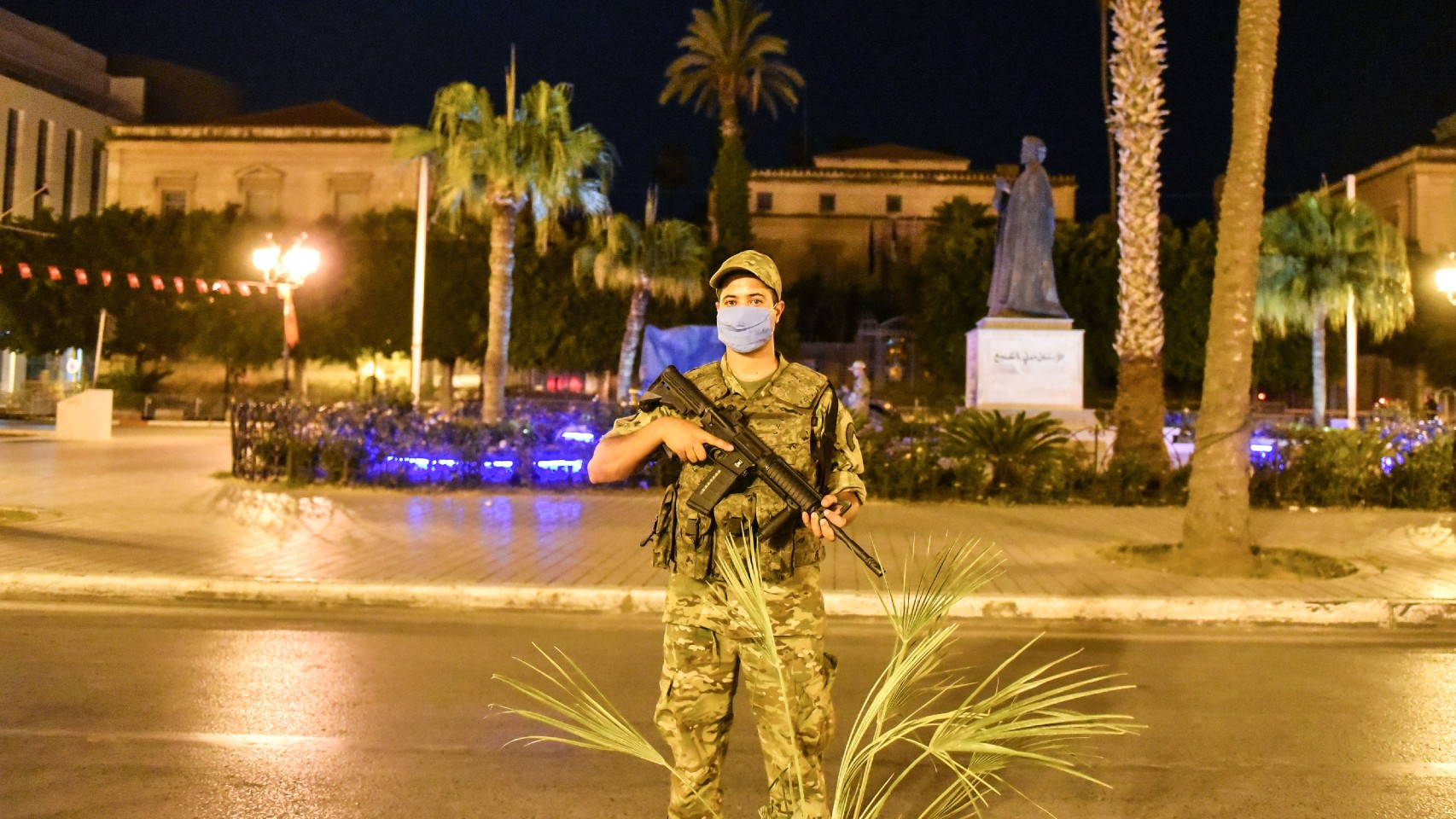
At 07:56 UTC on 12 July 2026, the English-language account of UAE-based outlet English Abuali pushed a one-line alert to its Telegram channel: an Iranian missile threat detected that morning in the United Arab Emirates, the post said, had been situated outside the country's borders. The phrasing, repeated an hour earlier at 07:18 UTC by the outlet's abualiexpress feed, treated the episode as a defensive question of perimeter rather than impact. No interception footage, casualty count, or sovereign attribution was published in the immediate window; the message itself does the framing work, signalling that the UAE is reading the morning as a near-miss rather than a strike.
What was actually said
The wire item is short by design. "The (Iranian) missile threat detected this morning in the United Arab Emirates was outside the country's borders" is the entire claim, restated across two Telegram accounts operated by the same outlet. The English Abuali channel is a UAE-resident English-language node that publishes near-real-time translations of Arabic-language Gulf news; abualiexpress is the outlet's express feed. Both posts ran on 12 July 2026. Neither carried imagery, named officials, or a follow-up readout from the UAE Ministry of Defence or the official WAM news agency within the two windows captured here.
That absence matters. The framing "outside the borders" is a specific diplomatic posture. It positions the UAE as a state that detected, tracked, and judged the inbound axis without crossing into its airspace, which leaves the matter in the language of threat assessment rather than attack. It also leaves Tehran room: a missile on an outward trajectory over open water or in the early boost phase is not necessarily an act of war against the Emirates, and Abu Dhabi is choosing to describe it that way.
Counterpoint: who else is reading the morning
The two Telegram items are the entirety of the sourced material in this cluster. There is no Iranian-side counter-claim in the thread, no Iranian state-media line from PressTV, Tasnim, or IRNA, and no Western wire pickup from Reuters, AP, or Al Jazeera English visible in the captured window. Iranian outlets have, in past Gulf tensions, framed similar episodes as tests of domestic-made missiles or as warnings to Western-aligned capitals; none of that language appears here. The structural counter-narrative, then, is also an absence: a single-source read with no immediate rebuttal. Any analysis built on the UAE framing alone is reading a one-state room.
It is also worth noting that English Abuali is not a state outlet. It is an aggregator-translator that draws on Emirati and Gulf-Wahdat media ecosystems; its use of the word "Iranian" as a categorical descriptor, rather than attributing the threat to a specific Iranian body or proxy, suggests the framing has already been filtered through UAE official language before reaching the channel. Readers outside the Gulf should treat the term "Iranian" as it is used here: an Iranian-origin projectile, not a confirmed Iranian government order.
Structural frame: a Gulf that intercepts early
The interesting bit is not the missile. It is the cadence. Gulf states have spent the last several years building out layered air-and-missile defence, with the UAE a notable buyer of US-made Patriot and THAAD systems, alongside its own domestic intercept work and reported investments in early-warning radar. A statement that emphasises "outside the borders" only makes sense against that backdrop. It assumes the public knows there is something to detect in the first place: a perimeter that holds, a sensor chain that saw the launch profile, and a public-affairs apparatus ready to declare the outcome before footage circulates on social media.
This is the structural shift the UAE is signalling: not that it can be hit, but that the early-warning architecture is now loud enough to be the story. Sovereignty in this corner of the Gulf is increasingly expressed as a claim about detection radius rather than about ground impact. When Abu Dhabi says "outside the borders," it is asserting ownership of the threat picture itself.
Stakes and what to watch
The immediate stakes are de-escalatory. By localising the threat to outside the perimeter, the UAE removes the legal and political trigger for a defensive strike against Iranian territory and gives Tehran a face-saving exit. The cost is credibility: if a future episode is described as inside the borders, the public will read the prior claims against that baseline. The medium-term stakes run through Gulf-Iranian diplomacy, which has been thawing in fits and starts through 2025 and 2026 via Omani, Qatari, and Chinese-mediated channels. Episodes like this one test whether the détente holds at moments of kinetic noise.
Three things to watch. First, whether the UAE Ministry of Defence or WAM publishes a follow-up readout with technical details; absence keeps the framing soft. Second, whether Iranian state media acknowledges the launch at all, which would tell readers whether Tehran considers the incident a public matter. Third, whether the US Central Command or any GCC neighbour (Saudi Arabia, Bahrain, Qatar, Kuwait, Oman) corroborates the UAE's outside-the-borders claim through their own channels. Without that triangulation, the two Telegram items from English Abuali are a single-source scaffold.
Desk note
This piece runs on a deliberately short wire: two Telegram posts from one UAE-resident outlet, neither carrying imagery or named attribution. Monexus publishes the UAE framing as UAE framing, not as established fact, and flags the absence of Iranian, Western-wire, and GCC-state corroboration in the captured window. Where wire reporting picks up later, the read may shift.
Wire provenance
This editorial synthesis draws on the following public wire/social posts:
- https://t.me/englishabuali
- https://t.me/abualiexpress
- https://t.me/englishabuali/217
- https://t.me/abualiexpress/412