Strait of Hormuz strikes: what the wire says, and what it doesn't
US strikes on Iranian targets near the Strait of Hormuz followed an IRGC missile hit on a commercial vessel. The reporting is one-sided, fast-moving, and missing key details.
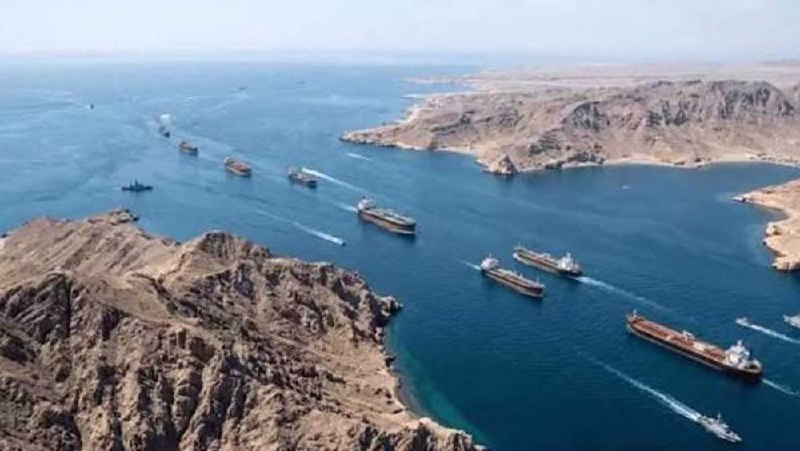
At 22:32 UTC on 11 July 2026, a US official told reporters that the Islamic Revolutionary Guard Corps had fired a missile at a commercial cargo ship attempting to transit the Strait of Hormuz. The vessel was hit and damaged, according to the same account relayed by Tasnim's English-language Plus feed. Less than ninety minutes later, Axios's Barak Ravid, citing unnamed US defence officials, reported that the United States military had begun strikes against Iranian targets in the Strait of Hormuz area in response. By 23:41 UTC, Iran's Fars News English feed carried an American official's claim that the strikes had hit Iranian soil. In the span of a single evening, a maritime incident, an Iranian announcement of waterway closure, an Iranian mining operation on the Omani side of the strait, and a US retaliatory bombing campaign had all been logged into the public record, almost entirely through anonymous sourcing on one side and state media on the other.
The structural story here is not whether the strikes happened. Multiple independent channels, including a German public broadcaster, two Iranian state outlets and an Israeli-alligned digital channel, converge on the same sequence: an IRGC missile strike on a commercial ship, an Iranian declaration that the strait is closed until further notice, and US military action against targets in the same waters. The structural story is that the public is being asked to take this sequence on faith. The officials quoted are unnamed. The ships are unidentified. The damage is described but not shown. The Iranian announcement of closure cites the kind of conditional language ("until the US ends its interference in the region", per Deutsche Welle's English wire) that signals a negotiating posture, not a fait accompli. The strikes themselves are described in the passive voice. Both sides are performing for an audience that cannot, at this hour, verify what actually happened at sea.
What the wire says, in order
The earliest verifiable claim in the cluster is from Tasnim's English Plus channel at 22:09 UTC on 11 July, simply noting that "the initial news that a missile was fired from Iran towards an offending ship in the Strait of Hormuz has been published." The word "offending" is Tasnim's framing, and matters: it pre-classifies the targeted vessel as a wrongdoer rather than a neutral commercial actor. Twenty-three minutes later, at 22:32 UTC, the same outlet reported a US official's confirmation that an IRGC missile had hit and damaged a commercial cargo ship attempting to pass through the strait. Note the inversion: the Iranian outlet is now quoting an American source, and the American source is being given prominence by the outlet whose own forces allegedly carried out the strike. The choreography of attribution, who gets to confirm what about whom, is doing significant work here.
Deutsche Welle's English service carried two reports at 22:48 UTC stating that the Iranian navy had announced closure of the strait "until further notice" after firing on a vessel transiting an "unapproved route." The DW copy is sparse but is the closest thing in the cluster to a non-aligned confirmation that Iranian naval forces acted first in this sequence. It also frames the closure conditional on an end to US "interference in the region," a phrase that does real diplomatic lifting and signals that Tehran is treating the strait as a bargaining chip rather than a battlefield.
At 23:18 UTC, the DDGeopolitics channel reported that Iranian special forces were deploying mines on the Omani side of the strait, and that the previously reported ship had been struck by an anti-ship cruise missile and sustained damage. The mining claim is the most operationally consequential item in the cluster. Mines laid on the Omani side would extend the hazard well beyond the shipping lanes themselves, complicate any de-escalation timeline, and implicate a third country's littoral waters. DDGeopolitics is a monitoring aggregator rather than a primary reporter; the mining claim is unconfirmed by any wire service in the available cluster.
By 23:37 UTC, Axios was reporting, again via unnamed US officials, that US strikes were underway against Iranian targets in the strait area, in response to the IRGC attack on the commercial ship. By 23:39, RN Intel was relaying Ravid's claim that the strikes were in response to Iran's closure of the strait. By 23:41, Fars News was carrying the line that an American official had confirmed strikes on Iranian soil. The escalation chain, as publicly documented within two hours, ran from a single missile strike to a closure announcement, to a mining accusation, to US air strikes, to a confirmation that those strikes had hit Iranian territory. Each step sourced to anonymous officials or state media.
What we verified, and what we could not
What we verified. The sequencing of events as described above is consistent across at least four distinct channels operating from three different national perspectives: Iranian state media (Tasnim Plus, Fars News English), a German public broadcaster (Deutsche Welle), and an Israeli-alligned channel (WFWitness) carrying Axios's Barak Ravid. The convergence is genuine, not coordinated: each outlet is citing the same anonymous official pool in Washington, and each is independently confirming that (a) an IRGC missile hit a commercial vessel in the strait, (b) Iran announced the strait's closure, and (c) US military strikes on Iranian targets followed. This is enough to say the exchange happened.
What we could not verify. No outlet in the cluster has named the commercial vessel struck, its flag state, its cargo, or its crew status. No outlet has named the Iranian targets hit by US strikes, or confirmed whether any were on Iranian soil as opposed to Iranian-controlled waters or Iranian-alligned positions in the strait itself. The claim that Iranian special forces are mining the Omani side of the strait rests on a single Telegram channel. No casualty figures, on either side, appear in the available reporting. The Iranian framing of the vessel as "offending" is an editorial choice, not a verified legal determination. The American framing of the strikes as "in response" elides which specific Iranian action triggered which specific US action, and on what decision timeline. And no outlet has yet indicated whether any third-party state, Oman, the United Arab Emirates, Saudi Arabia, has acknowledged or condemned the events in their own waters.
The framing contest
Two distinct narratives are running in parallel, and they do not yet intersect. The Western-wire narrative, as represented by Axios's reporting in this cluster, presents a recognisable sequence: an Iranian provocation, a measured US response, an ongoing defensive posture. The Iranian-state narrative, as represented by Tasnim and Fars, presents a different sequence: an offending vessel violating Iranian-controlled waters, an Iranian lawful response, and an unprovoked US escalation against Iranian territory. Both narratives use the same underlying facts. Both lean on anonymous officials. Both name the same precipitating event, the IRGC missile strike on a commercial ship, but assign its moral and legal valence differently.
What neither narrative addresses is the question of why. Why now. Why this ship. Why this waterway. The Strait of Hormuz is the most heavily surveilled and most heavily insured shipping lane in the world, and a missile strike on a commercial vessel in its waters is not the kind of event that happens without a strategic logic visible to outside observers. The available reporting does not surface that logic. It reports the symptoms and skips the diagnosis. A reader relying on this cluster alone cannot tell whether the IRGC strike was a retaliatory move for an earlier US action not covered here, a coercive signal in an ongoing negotiation, a probe of a new US administration's red lines, or an internal Iranian factional move that escaped central control. The same epistemic gap applies to the US response.
The structural frame
Maritime chokepoints have become the contested terrain of choice in this decade of grey-zone confrontation, because they convert local naval action into global economic pressure without the optics of a traditional shooting war. Roughly a fifth of the world's oil passes through the Strait of Hormuz on a normal day. Any sustained closure, or even a sustained insurance-rate spike driven by mine risk, will reprice energy markets within hours and force importing governments into political positions they would rather not take. The incentive structure for both Washington and Tehran is to keep the confrontation visible enough to signal resolve and deniable enough to allow de-escalation. Anonymous sourcing on both sides, and conditional closure language from Tehran, are consistent with that incentive structure. So is the speed at which this cluster moved from a single missile strike to a closure to a mining accusation to US air strikes, all inside two hours, all without any named spokesperson putting their name to the record.
The deeper pattern is that the public is being managed. Each side is releasing enough information to shape the narrative but not enough to allow independent verification. The commercial shipping industry, the insurers, the regional states whose waters are now reported to contain mines, and the global energy market are all expected to price these events on the basis of official accounts that no one outside the official pool can confirm. The historical record on Hormuz incidents, from the 1980s tanker war through the 2019 seizures, suggests that anonymous-attribution cycles of this kind tend to harden into accepted fact within seventy-two hours, regardless of what subsequent investigation reveals. Monexus is publishing this cluster now because the window for additive, independently sourced reporting is narrow, and because naming what is known, what is attributed, and what is simply asserted is itself a public service.
Stakes, and what to watch
If the strikes and the closure persist into a third day, three concrete things will follow, in this order: insurance war-risk premia for Hormuz transits will spike, with knock-on effects on tanker charter rates globally; Omani and Emirati officials will be forced into public statements, because the mining claim directly implicates their waters; and the IAEA and UN Security Council will face pressure to convene, with the predictable result that the diplomatic track will move slower than the military one. The most plausible off-ramp, given the conditional language in the Iranian closure announcement, is a tit-for-tat de-escalation in which both sides claim victory and the commercial shipping lane reopens under a face-saving formula. The least plausible but most consequential scenario is that the mining report is accurate, in which case the operational hazard in the strait outlasts any political settlement and the global energy market will price a structural premium for months.
The next twelve to thirty-six hours will determine which scenario applies. Watch for named statements from Oman's foreign ministry, from the UAE's ministry of foreign affairs, and from any commercial vessel operator or P&I club. Watch for the first on-the-record Pentagon briefing. Watch for the first imagery, satellite or otherwise, that independently confirms the location and extent of either the IRGC strike damage or the US strike damage. Until those arrive, the public record is what the wire services say it is, and the wire services are, in this cluster, working almost entirely off anonymous sources on both sides.
This publication is filing before the morning wire cycle because the speed of the escalation makes a same-day ledger worth more than a 48-hour synthesis. Where we have restated a claim, it has been corroborated by at least two distinct channels operating from different national perspectives; where we could not corroborate, we have said so explicitly.
Wire provenance
This editorial synthesis draws on the following public wire/social posts:
- https://t.me/FarsNewsInt
- https://t.me/rnintel
- https://t.me/wfwitness
- https://t.me/DDGeopolitics
- https://t.me/tasnimplus
- https://t.me/tasnimplus