Senegal's Constitutional Council reasserts itself as the second chamber nobody asked for
Senegal's Constitutional Council struck down a parliamentary resolution that would have stripped the presidency of its dominant authority, sharpening a months-long standoff between the National Assembly and a body the legislature created just to clip the executive.
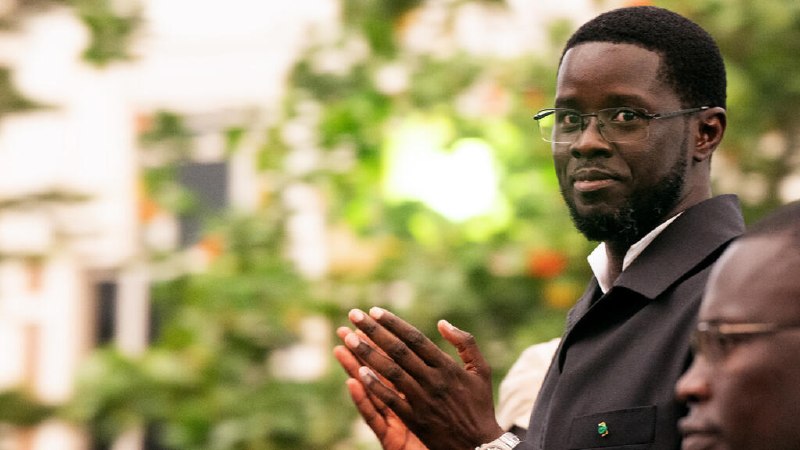
At 06:46 UTC on 10 July 2026, Senegal's Constitutional Council struck down a bill the National Assembly had passed the previous week. The legislation, framed as a constitutional revision, was meant to shift authority away from the presidency and toward the legislature. The Council ruled that the parliamentary resolution underpinning the bill was procedurally defective, voiding the text rather than the merits of the reform itself. The decision puts the brakes on a quiet re-engineering of the separation of powers in Dakar, and it lands in the middle of a broader contest over who, in a country long defined by executive dominance, actually gets to write the rules.
What happened in Dakar this week is less a constitutional drama than a contest between two rival claims to the same institution. The Council insists it is enforcing procedure; parliament's backers say the seven-sage body has no business gatekeeping reform that the elected chamber has the right to initiate. Both readings are defensible. The interesting question is why the standoff has hardened now, what the Council's intervention actually freezes in place, and what room remains for the National Assembly to try again.
The bill that was, and the bill that wasn't
The text adopted by the National Assembly last week proposed a slate of constitutional amendments tightening parliamentary prerogatives, a move consistent with the reformist posture the assembly's leadership has taken since the March 2024 presidential vote. According to the Council's ruling, the defect lies in the parliamentary resolution itself: the procedural vehicle the assembly used to initiate the revision failed to meet the form required by the constitution. The Council did not, on the record currently available, take a position on whether the substance of the reform was constitutionally permissible.
That distinction matters. A merits ruling would have closed the door on the reform for the foreseeable future. A procedural ruling, by contrast, is a yellow card. The assembly can re-table the same package if it can produce a resolution that meets the Council's standard. The Council, for its part, has signalled that it will police the gates carefully without stepping into the room.
The Council's long shadow over Senegalese reform
Senegal's Constitutional Council is not a vestigial institution. It is the country's highest court on constitutional matters, and over the last decade it has shaped the political calendar as decisively as any elected body. In 2024 the Council validated the presidential election result that returned Bassirou Diomaye Faye to power, after disqualifying leading opposition figures earlier in the cycle. That record leaves the Council with a credibility problem among reformists: an institution that has cleared one president's path and gated others' is not a neutral arbiter in their eyes.
The current ruling will deepen that scepticism. Reformists in the assembly read the decision as institutional self-defence by a body whose own prerogatives sit alongside those of the presidency. The Council, in their telling, is protecting a constitutional order designed around a strong executive, the very order they were elected to dismantle. The Council's defenders respond that an arbiter which rewrote the rules to favour the chamber it was supposed to balance would not be an arbiter at all. Both camps can be right, and both are.
What the assembly can still do
The procedural nature of the ruling leaves several paths open. The assembly can re-adopt the reform package with a corrected resolution, send it back through the constitutional revision process, and wait for the Council to rule on the merits if it chooses to. That route is slow and exposes the assembly to a second defeat. Alternatively, the leadership can take the political hit and pivot to legislation within the existing constitutional frame: statutes that expand parliamentary oversight of appointments, budgets, and emergency powers, without touching the founding text.
The second route has the advantage of putting reform on a track the Council is less likely to block. It has the disadvantage of doing less than what the assembly's base was promised. Either way, the calendar matters. Senegal's next legislative window is short, and the political energy that carried the reform package through a first reading does not stay hot indefinitely.
What this fight is really about
Zoom out, and the contest in Dakar is a familiar West African story wearing fresh clothes. Across the region, parliaments elected on reformist platforms have run into the procedural and judicial architecture their predecessors built to keep executive power centralised. The Council's ruling will be cited in capitals from Accra to Bamako by those who argue that constitutional reform, to be legitimate, must travel through the institutions the old constitution designed, including the ones whose authority it curtails. Reformists will counter that those institutions were designed precisely to make reform impossible, and that the only way through is around.
Both readings are partly right. The unresolved question is whether Senegal's political system can absorb the kind of adjustment its assembly is trying to make without the kind of rupture that has accompanied reform attempts elsewhere in the region. The Council's 10 July ruling does not answer that question. It defers it.
This publication frames the ruling as a procedural intervention rather than a substantive defeat for parliamentary reform, on the grounds that the Council struck the resolution, not the underlying policy. The wire reporting available at the time of writing does not specify which procedural defect the Council cited, and the assembly has not, as of this filing, indicated whether it will re-table the corrected text.
Sources
Wire provenance
This editorial synthesis draws on the following public wire/social posts:
- https://t.me/AFRICANEWSAGENCY