Lindsey Graham dies at 71, ending a Senate career that fused hawkish Republicanism with Trump-era realignment
Senator Lindsey Graham of South Carolina died on 11 July 2026 after a brief illness, his office said, closing out a 24-year Senate career that began as a centrist critic of Donald Trump and ended as one of his most reliable foreign-policy allies.
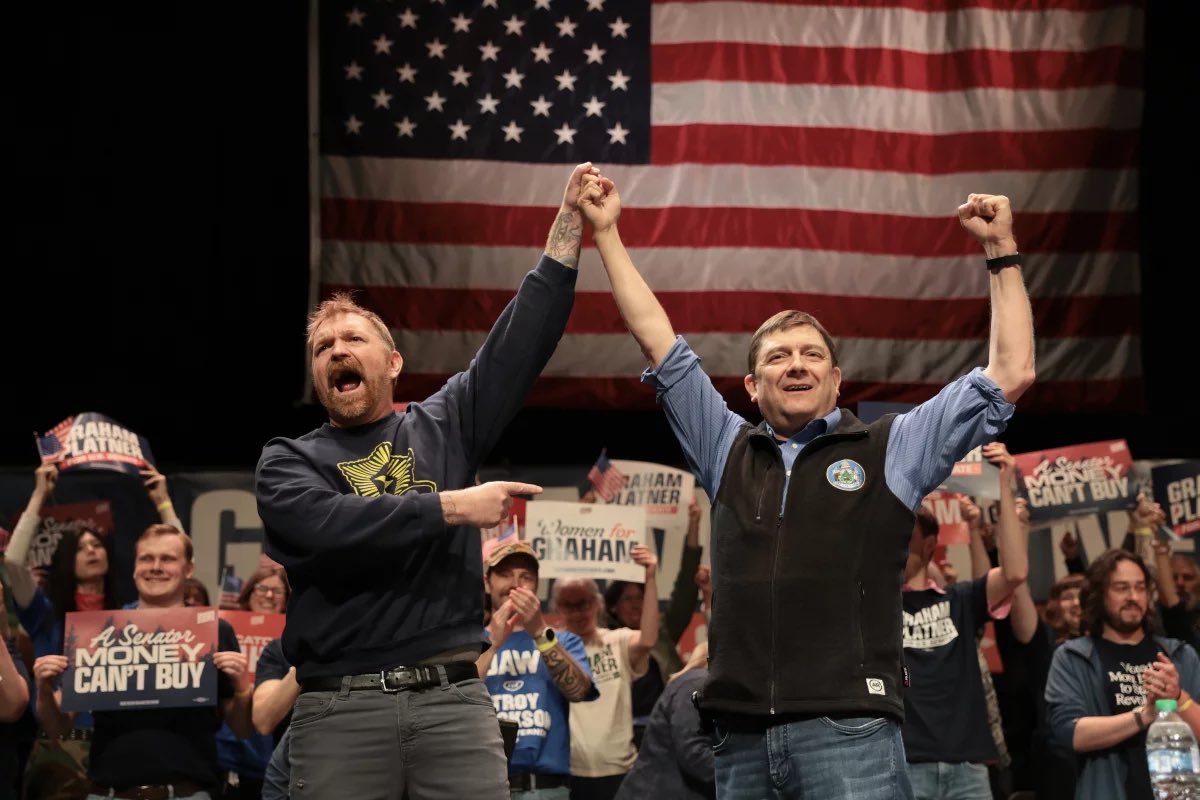
Senator Lindsey Graham of South Carolina died on the evening of 11 July 2026 after a brief and sudden illness, his office said, confirming an announcement carried first by Telegram channels monitoring U.S. political news and within hours by Deutsche Welle's English service. He was 71. The death removes from the Senate one of its most recognisable foreign-policy voices and one of the few Republicans who served across three presidential cycles without interruption.
The South Carolina Republican had held the seat since 2003, when he succeeded Strom Thurmond, the segregationist-turned-Republican whose own six-decade career had ended a year earlier. Graham's tenure covered the George W. Bush wars, the Obama reset, the first Trump administration, the Biden interregnum and the start of Trump's second term. He chaired and later ranked on the Senate Judiciary Committee, sat on the Armed Services and Budget panels, and chaired the Senate subcommittee charged with oversight of the State Department's budget, giving him a platform on every major American military and diplomatic decision of the past two decades.
From country-club Republican to MAGA loyalist
Graham's political identity shifted more visibly than almost any other senator of his cohort. In 2015 and 2016 he was the Republican establishment's most pointed on-camera critic of Donald Trump, calling him a "race-baiting, xenophobic, religious bigot" on CNN during the primary campaign and describing a Trump presidency as a threat to the party's survival. After the 2016 election, Graham reversed course publicly and progressively, becoming one of the Senate's most reliable votes for Trump's judicial appointments, tax cuts and eventually his second impeachment defence.
That arc made him useful to Trump as both validator and explainer. Graham appeared frequently on Sunday talk shows to translate administration positions into cable-ready arguments, and he became a leading congressional advocate for hard-line postures toward Iran, China and Russia. His willingness to spar with Democratic counterparts, sometimes physically, on the Senate floor and on television gave the Trump White House a coverage asset that the administration rarely had to coach.
Foreign policy as a personal signature
Where Graham distinguished himself was on national security. He travelled repeatedly to Ukraine after the 2022 Russian invasion, made multiple visits to Israel after the October 2023 Hamas attack, and was among the most vocal Senate proponents of expanded U.S. arms transfers to both. He co-sponsored bipartisan sanctions packages targeting Iranian oil exports and was a leading voice for conditioning aid on democratic reforms in countries receiving American support.
In the Middle East file, Graham was instrumental in pressing the administration to maintain pressure on Iran's missile and proxy networks. In the European file, his position hardened in parallel with broader Republican sentiment against any negotiated settlement that left Russian forces in control of seized Ukrainian territory. In the Western Hemisphere, he pressed for tighter sanctions on the Maduro government in Venezuela and for a more confrontational posture toward Mexico's ruling Morena party on migration enforcement.
The same instinct that produced those positions also produced friction inside his own caucus. Graham clashed with libertarian-minded Republicans over defence-spending levels and with isolationist voices who argued the United States was over-extended. That tension was less visible than his fights with Democrats, but it shaped the internal arithmetic of every foreign-policy markup that crossed his desk.
What the immediate political vacuum looks like
A South Carolina Senate vacancy is filled by gubernatorial appointment under state law, with a special election to follow at the next regularly scheduled general election. Governor Henry McMaster, a Republican and longtime Graham ally, will name a replacement who will almost certainly hold the seat through the remainder of the current Congress. The appointment will not change the chamber's partisan balance, but it will change the texture of the Senate Foreign Relations and Armed Services Committees at a moment when both panels are managing active authorisations.
Inside the South Carolina Republican Party, the succession question is more delicate. Graham had spent two decades consolidating the state's centre-right donor class around his profile: hawkish on security, permissive on cultural issues, transactional on trade. The bench of potential successors is thinner than in neighbouring states, and the early names surfacing in regional press suggest a contest between figures closer to the populist wing of the party and those still anchored in the Bush-era chamber-of-commerce tradition that Graham inherited from Thurmond.
Counterpoint: a career that did not always match its billing
Graham's defenders cast him as a substantive policy operator whose evolution toward Trump reflected a pragmatic reading of the party's centre of gravity. His critics read the same trajectory as surrender: the country-club lawyer who once denounced Trump on national television becoming the senator most associated with defending him. Both readings hold evidence, and neither fully captures the full record, particularly on the judicial confirmations that reshaped the federal bench for a generation and on the foreign-aid votes that defined the early phase of the Ukraine war.
What is harder to dispute is the absence of comparable consensus figures in the current Senate Republican conference. The bench of senators willing to operate across the aisle on national-security questions, while also commanding attention from the Trump-aligned media ecosystem, is thin. Graham occupied that junction alone; his departure leaves a gap that no obvious successor is positioned to fill.
What we verified and what remains uncertain
Deutsche Welle's English wire confirmed the death, Graham's age, the cause described by his office as a brief and sudden illness, and his status as a Trump ally. The Telegram channels @rnintel and @osintlive carried the initial reports, with @osintlive citing a Twitter/X post from OSINTdefender as the originating social-media item. The sources reviewed do not specify the nature of the illness, do not name a hospital or attending physician, and do not include a statement from the Graham family beyond the office's brief announcement. Funeral arrangements, the timing of any gubernatorial appointment, and the positions of potential successors on the early foreign-policy agenda for the remainder of the 119th Congress are not addressed in the source material reviewed.
Stakes
The substantive impact of Graham's death is less about any single vote than about voice and leverage. On authorisations for continued arms transfers to Ukraine and Israel, on sanctions packages targeting Iranian oil revenues, and on the recurring fights over the State Department and foreign-operations budgets, Graham functioned as a willing spokesperson for positions that might otherwise have been carried by committee staff or floor managers. In the short term, those fights will proceed; in the medium term, the administration's effort to keep Republican senators on message for its foreign-policy priorities loses one of its most effective translators. South Carolina voters, meanwhile, will choose in due course whether the seat Graham held for nearly a quarter-century remains defined by the kind of bipartisan, hawkish Republicanism he once embodied, or whether it follows the rest of the party toward a posture his 2015 self would have found unrecognisable.
Desk note: Monexus is reporting Graham's death from the wire and Telegram channels that carried the initial announcement, anchored by Deutsche Welle's English confirmation. We have not added biographical material beyond what those sources establish, and we flag the thinness of detail around cause and successor politics as the next reporting cycle fills in.
Wire provenance
This editorial synthesis draws on the following public wire/social posts:
- https://t.me/osintlive
- https://t.me/rnintel
- https://twitter.com/sentdefender/status/2076190889622352346/photo/1