Three border posts and an offshore platform: Kuwait opens a new front
Kuwait's Ministry of Defence confirmed material damage at three northern land checkpoints and a Kuwait Oil Company offshore platform. The accusations fly, the footage circulates, and the Gulf's quiet decade looks over.
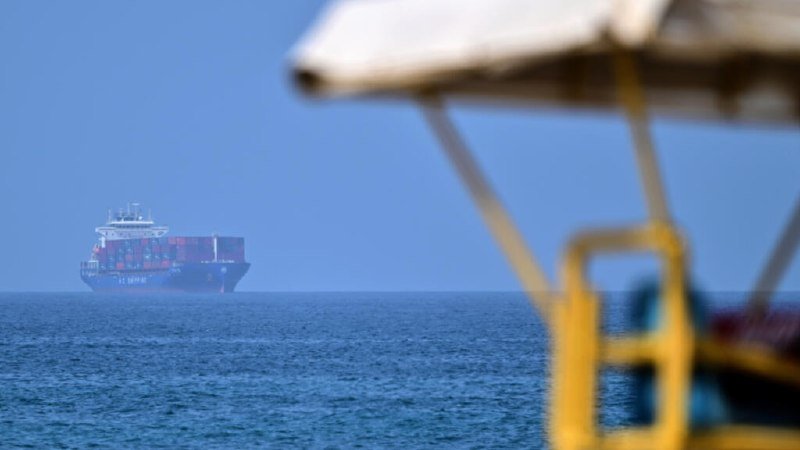
Three northern land border centres and a Kuwait Oil Company offshore drilling platform came under attack on 12 July 2026, the Kuwaiti Ministry of Defence confirmed in language that left little room for ambiguity: a "criminal and aggressive assault" producing "material damage." Footage circulated on Telegram within minutes showing a burning object near the Gulf coastline, the kind of clip that reorders a region's news cycle before the official readout is fully parsed.
Kuwait has spent the better part of two decades cultivating a reputation as the quiet Gulf state. The smallest of the six GCC monarchies by most measures that count, it has played mediator rather than principal, host rather than combatant, banker of last resort rather than battlefield. That posture is now a casualty of someone else's escalation. On the published record so far, Kuwait has been hit on two distinct vectors in a single afternoon: a land front along the Iraqi frontier in the north, and an energy target offshore in the Gulf. Whoever is responsible has effectively told Riyadh, Doha and Abu Dhabi that there is no longer a geography they can claim is off-limits.
A land front and an oil target at the same hour
The official Kuwaiti statement, relayed at 16:44 and 16:45 UTC by Telegram channels including GeoPWatch and OSINTdefender, names three northern land border centres inside Kuwait and one offshore drilling platform affiliated with Kuwait Oil Company (KOC) as targets attacked "earlier" in the day. By 18:07 UTC, channel wfwitness re-circulated the same line: three northern land border centres struck, one offshore platform targeted, material damage recorded at the land sites. Fars News, an Iranian outlet, posted the same wording verbatim within the same minute, a synchronisation worth its own paragraph.
Kuwait's land border with Iraq runs through terrain that has witnessed a great deal of crossfire in living memory. The 2019 sabotage of Saudi Aramco's Abqaiq and Khurais facilities briefly pulled the Gulf into a war scare, but Kuwait's own infrastructure was untouched. The offshore KOC platform sits much closer to the contested waters of the Gulf than any Kuwaiti land target does to the Iraqi frontier, which is the structural anomaly of the day's reporting. One attack vector requires staging and overflight or cross-border ground movement; the other can be reached by boat, by drone, or by unmanned surface vessel from multiple launch points in the northern Gulf. The fact that both were hit inside a single operational window is the story.
The framing fight starts immediately
Within the hour of the Kuwaiti statement, the visual frame for the day's coverage had already calcified on Telegram. Iranian state-adjacent outlets led with the Ministry of Defence wording as fact. Channels in the open-source intelligence ecosystem added two qualifiers that matter: one, that no party had publicly claimed responsibility at the time of the readout; two, that the circulating footage showed a burning object whose identity had not been independently confirmed. The Western-wire machinery that normally adjudicates these moments was conspicuous by its absence from the source set; the immediate narrative was being built in the Gulf and in Tehran's information space, not in London or Washington.
That asymmetry is the political point. A Gulf state being attacked twice in one afternoon, with the accusations implicit in the language of the victim, is the kind of moment that produces a faits-accompli narrative faster than any foreign ministry can craft a denial. By the time Reuters or the BBC finish their sourcing calls, the first impression has already been set: a Gulf Arab state has been hit, the Geography suggests Iran, and the rest of the story is attempted exculpation. Kuwait has now been put in a position where it has to either escalate attribution or absorb the attack without naming an adversary, both uncomfortable choices.
What a quiet Gulf loses
For two decades, Kuwait has offered something the rest of the Gulf does not: a parliament that argues on television, an opposition that wins seats, and a foreign policy that gets to act as honest broker precisely because no one expects it to fight. That capital, accumulated patiently since 1991, is what an attack on KOC infrastructure spends. The state-owned oil company is not a private asset; it is the national balance sheet. Any sustained campaign against Gulf energy infrastructure forces Saudi Arabia, the UAE and Kuwait into a posture they had explicitly avoided: coordinating a missile-and-drone shield with Washington, and accepting the political costs of doing so on Gulf-state terms rather than American ones.
There is also the question of the Iraqi frontier. Kuwait's three northern checkpoints sit in a corridor that runs through terrain long used by armed groups of multiple sponsorships. If these attacks are the work of Tehran-aligned proxies rather than the Islamic Republic itself, the calculus does not soften; it hardens, because it implies a permissive environment for cross-border operations in a country Baghdad insists it controls. Either reading leaves the Kuwaiti government with a problem it cannot solve by statement alone.
Stakes for the next seventy-two hours
The next markers are procedural. Kuwait will almost certainly convene a National Security Council session and request a joint assessment with Saudi Arabia and the UAE through the Gulf Cooperation Council's joint command. Energy markets will react to any sustained damage to KOC's offshore production; the company runs a domestic network that is small by Saudi Aramco standards but consequential for Kuwaiti fiscal arithmetic. Theous Iranian outlets will continue to amplify the official Kuwaiti wording as a baseline of factual reporting while awaiting, from Tehran, a denial that may or may not come. Western ministries will be asked, by their Gulf partners, to attribute. The question is whether that attribution is offered in seventy-two hours or in seven weeks, and whether it carries sanctions relief as a subtext.
What the sources do not yet establish is who fired, and what the targets list of three checkpoints and one platform reveals about operational intent. The day's reporting leaves that ledger open. Until attribution is independently corroborated and the targeting pattern is mapped across the Gulf's oil and border installations, the more honest reading is that Kuwait has been hit twice in one afternoon by someone, and that the Gulf's quiet decade is over regardless of who is held to account.
Desk note: Monexus is treating the Kuwaiti Ministry of Defence wording as the primary factual baseline for this article, per the available source set. Iranian state media is cited as a synchronous outlet for the same text, not as an independent confirmation. Attribution will be updated when a verified party is named.
Wire provenance
This editorial synthesis draws on the following public wire/social posts:
- https://t.me/GeoPWatch
- https://t.me/OSINTdefender
- https://t.me/Farsna
- https://t.me/wfwitness
- https://t.me/wfwitness