Ruto's narrowing runway: the fixers, soldiers and gatekeepers around the 2027 vote
With the 2027 general election now inside a 12-month horizon, President William Ruto is leaning on a tight cadre of fixers, security operatives and political gatekeepers to hold a coalition together that a newly unified opposition is doing its best to prise apart.
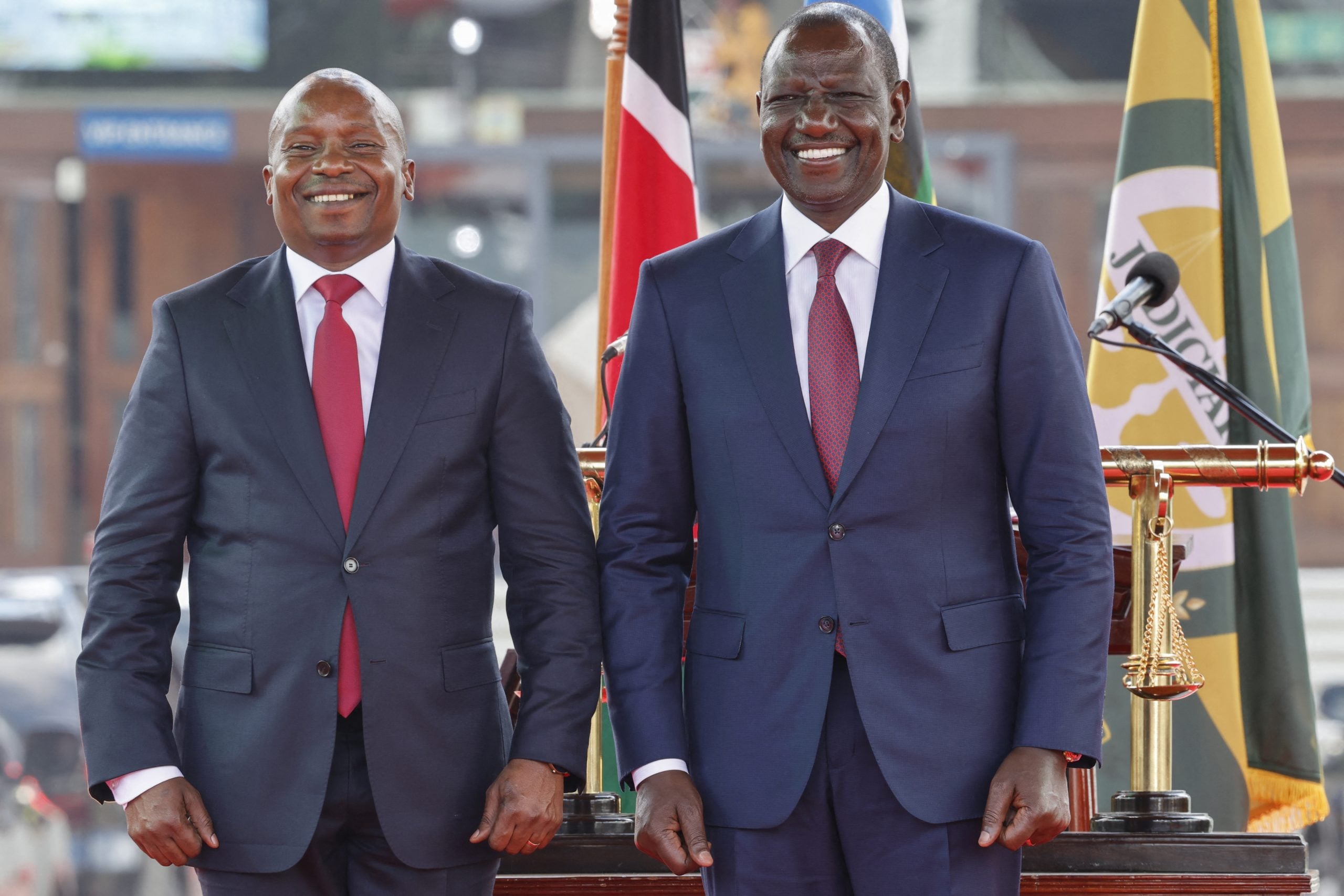
On the morning the opposition announced it would campaign as one front, President William Ruto's inner circle did what Kenyan incumbent machines have done for three decades: it consolidated around the levers that matter. With Kenya's next general election now sitting inside a 12-month horizon and an unusually broad opposition coalition publicly committed to fielding a single presidential candidate, the battle around State House is moving off television and into the smaller, less televised rooms where candidacies are actually built or buried.
The Africa Report's 12 July 2026 feature on Ruto's inner circle draws a portrait of a presidency that is buying time by concentrating influence: political fixers who manage parliamentary arithmetic, retired and serving security officers who hold the soft-power portfolios, and a younger tier of gatekeepers who screen access to the presidency itself. The framing is not flattering, but it is also not new. It is the recognisable Kenyan incumbent playbook, adapted to a moment in which the opposition has, for the first time since the 2022 cycle, presented a credible coalition rather than a fractured field.
The fixers
Ruto's political operation has always been defined less by ideology than by an exceptional capacity for arithmetic. Inside the brief from The Africa Report, the role of the fixers is precisely that: keeping the coalitions-of-convenience stitched together, brokering the small parliamentary deals that decide which committee chairs get which seats, and converting campaign promises into the kind of budget lines that MPs can take credit for back in their constituencies. Several of those figures cut their teeth in the 2022 campaign and have been retained, in some cases against the public advice of advisers who argued for a generational refresh. The retention is itself a tell: in Nairobi's political economy, the people who delivered the last victory tend to be the ones trusted to deliver the next one, even when the political terrain has shifted under their feet.
The opposition's task, structurally, is harder. A unified presidential candidate is the headline; a unified parliamentary operation is the actual contest. Kenyan general elections are decided in dozens of constituency races whose outcomes hinge on local patron networks, and those networks are exactly where Ruto's fixers have spent the last three years planting flagpoles.
The soldiers
The Africa Report foregrounds the role of serving and former security officers in the inner circle, and it is the part of the picture most likely to draw scrutiny. In Nairobi and beyond, the phrase "security establishment" covers a sprawling estate: the National Security Council, the National Intelligence Service, the Administration Police, the elite units within the Kenya Police Service, and the chain-of-command overlap with Kenya Defence Forces deployments in the country's north-east and in regional operations in the eastern Democratic Republic of Congo. The president chairs the National Security Council directly; the gatekeeping function around that chair is therefore a gatekeeping function around who sees what, when.
The risk this poses for the 2027 cycle is not that the security services will overtly rig a ballot. It is that the kind of administrative friction that can be invisible to outside observers, irregular voter-register cleaning in opposition-leaning counties, the slow rotation of returning officers, the timing of security operations that swallow campaign windows, are within the discretionary envelope of officers who now sit inside the president's daily orbit. The opposition's complaint, articulated repeatedly since the 2022 aftermath, has been less about the integrity of polling day and more about the integrity of the six months before it. That is precisely the terrain the security cohort controls.
The gatekeepers
The third layer is the one the public sees least: a younger group of aides who manage presidential access. In the Africa Report reporting, several of them are described as carrying portfolios that overshoot their official job titles, brokering meetings with county governors and acting as informal clearing houses for business interests seeking audience. The political logic is familiar from other presidencies in the region: keep the principal shielded from routine traffic so that meetings with politicians become signals, and signals become leverage.
The same structure is also a vulnerability. Gatekeepers become the people whose names recur in corruption allegations that never quite reach the principal. When the Treasury or the Ethics and Anti-Corruption Commission eventually issues a finding, it tends to be a name on this list that surfaces first. Ruto's calculation, presumably, is that the political cost of a fallen gatekeeper is lower than the operational cost of an open door. That calculation has held in earlier Kenyan presidencies. Whether it holds in 2027, against an opposition that has the messaging discipline it has lacked in two previous cycles, is the open question.
The opposition's new shape
The Africa Report frames the contest as Ruto against a coalition that has spent eighteen months doing what Kenyan oppositions have repeatedly promised and rarely delivered: agreeing on a single presidential candidate. The names flagged in the piece include figures from the Azimio la Umoja coalition's successor formations and from the broader anti-Ruto front that includes younger and more sceptical civil-society entrants. The structural point is less who leads the ticket than that the ticket exists at all. A single candidate changes opposition fundraising math, campaign-airtime allocation, and the calculus of any individual MP weighing whether to defect.
It also changes the ruling side's hand. A fractured opposition would let Ruto's machine absorb a roughly 45-percent floor of loyalists and run a turnout-negative campaign, hoping that a divided alternative simply fails to clear the threshold in key counties. A unified opposition forecloses that script.
Stakes and what to watch
If the trajectory in the Africa Report reporting holds, three clocks start running at once. The first is the IEBC voter-register timeline; any meaningful audit and cleaning of the register must, by Kenyan precedent, be substantially complete roughly six months before the vote. The second is the parliamentary calendar around the Finance Act cycle, which sets the discretionary spending envelope that incumbents use to reward loyalty. The third is the opposition coalition's internal deadline for naming its flag-bearer; a delay past the third quarter of the year would compress the campaign window in a way that favours the better-resourced side.
What remains genuinely uncertain is how the security establishment behaves under pressure that is more sustained than 2022. The reporting flags the concern but does not, and could not, document specific operational decisions for the 2027 cycle. That ledger is precisely the one Kenyan voters will be watching as the calendar turns toward 2027.
How Monexus framed this vs the wire: the Africa Report's original is a Nairobi insider-profile piece on personalities; this article reframes the same material around the structural contest, fixers as parliamentary gatekeepers, soldiers as administrative-leverage holders, gatekeepers as corruption-asymmetric screens, and reads the opposition coalition's unification as the central variable that changes the incumbent's arithmetic.
Wire provenance
This editorial synthesis draws on the following public wire/social posts:
- https://en.wikipedia.org/wiki/2027_Kenyan_general_election
- https://en.wikipedia.org/wiki/William_Ruto
- https://en.wikipedia.org/wiki/Azimio_la_Umoja-One_Kenya_Coalition
- https://en.wikipedia.org/wiki/Independent_Electoral_and_Boundaries_Commission_(Kenya)