IRGC claims missile strike on US Navy logistics hub in Duqm, Oman; no independent confirmation
Iran's IRGC says it hit a US Navy logistics and refuelling facility at the Omani port of Duqm with ballistic missiles. As of 04:38 UTC on 12 July 2026, no independent confirmation had emerged.
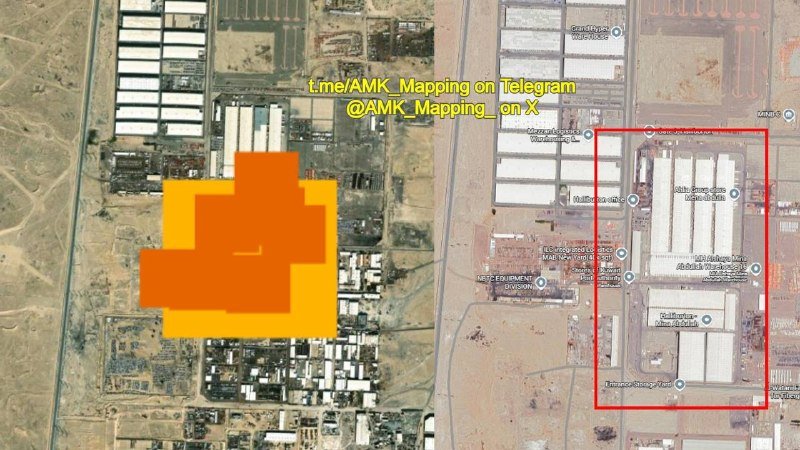
At 04:00 UTC on 12 July 2026, Iranian state media outlet IRIB, quoting the Islamic Revolutionary Guard Corps (IRGC), reported that Iran had struck the supply, logistics and refuelling station of the United States Navy at the Omani port of Duqm with ballistic missiles. Within thirty-eight minutes, the claim had propagated across at least four Telegram channels, including Middle East Spectator, AMK Mapping, Open Source Intel and GeoPolWatch. As of 04:38 UTC, none of those channels or their upstream sources had produced satellite imagery, Pentagon confirmation, or Omani government acknowledgement of impact. The single source for the assertion remained the IRGC itself, relayed through IRIB.
The story, as it stands, is one claim and no corroboration. That distinction is the entire story.
A logistics node that matters
Duqm is not a random target on the Arabian Sea. The Omani port has hosted a United States Navy logistics arrangement under a 2014 agreement with Muscat, and has been described in reporting carried by Middle East Spectator as "the main logistics port for the U.S. Navy" in the region. The IRGC's own framing, as carried by IRIB and aggregated by AMK Mapping, singled out three categories of target: supply, logistics, and refuelling. The phrasing matters because those categories describe a forward-staging hub rather than a warship in open water. A logistics node is the kind of fixed, shore-based facility that is both legally and militarily distinct from a vessel at sea. Hitting it would represent an escalation of category, not just of rhetoric.
Open Source Intel's 04:38 UTC item flagged exactly this asymmetry: the IRGC has claimed damage, but "there is currently no independent confirmation of the claim." The phrase is the operative one. Independent confirmation, in this context, would mean Pentagon readouts, Omani government statements, commercial satellite imagery, or on-the-ground reporting from Duqm itself. None has appeared in the four channels carrying the story.
What Iran says, what the channels carried
The claim originated in Tehran. IRIB, quoting the IRGC, reported a strike with ballistic missiles on the US Navy logistics and refuelling station at Duqm. AMK Mapping republished the IRIB framing twice in roughly ninety minutes. Middle East Spectator attached the qualifier "in a surprise attack" and emphasised the logistical function of the facility. War and Frontline Witness ("wfwitness") went further, asserting in its 04:08 UTC post that "the IRGC critically damaged U.S. vessels in the port of Duqm, Oman, in addition to support facilities," citing IRIB. That single sentence introduces a new claim (damage to vessels) absent from the original IRIB text carried by the other three channels.
The drift between channels is itself the story. Four Telegram accounts are working from the same upstream IRIB feed and producing subtly different emphases: one stresses surprise, one adds vessel damage, one supplies tactical context, one supplies the epistemic warning. None independently verify. This is how single-source state-media claims travel outward: the headline replicates, the framing multiplies, and the verification question gets thinner the further the claim travels.
The verification gap
The structural pattern here is a familiar one. A state actor announces a strike against a higher-profile target; the announcement passes through state media; sympathetic aggregators amplify; mainstream wire desks wait for confirmation from the target's own government, the host country, or open-source imagery. In this case, the wait is ongoing. There is no read from US Central Command in the thread material, no Muscat statement, no Planet Labs or Maxar imagery circulated in the channels that broke the story, no Omani ministry of defence tweet. The Pentagon has not been heard from.
For now, the practical question is not whether Iran has the capability to threaten a logistics node at Duqm; it does, and ballistic missile strikes into the Arabian Peninsula have been demonstrated before. The question is whether this particular announcement corresponds to a kinetic event on the ground at 04:00 UTC. Until an independent source confirms or denies, the only honest line is: claimed, not verified.
Why the claim still matters, even unverified
Iran does not need the strike to have landed for the announcement to land politically. Even as a non-confirmed claim, it tests several things at once. It tests Oman's willingness to publicly confirm or deny an attack on its own soil, which would constrain Muscat's diplomatic posture. It tests the Pentagon's escalation thresholds: is a strike on a third-country logistics node used by US forces treated as an attack on US forces, or as an act against Oman's sovereign territory to be resolved through Manama, Muscat and Tehran? It tests the regional communication order: will the Gulf states coordinate a denial, will they stay silent, will they each issue their own version?
That is why a single Iranian state-media announcement, even one without satellite or official corroboration, is worth tracking. It is a probe, not a fact. The reporting task over the next hours is straightforward: locate the Omani foreign ministry readout, the Pentagon press availability, the imagery if any appears, and the casualty-and-damage statement from either side. Until those exist, the only honest attribution is "Iranian state media, quoting the IRGC, claims." The reader can decide how much weight to give that.
What remains uncertain
The sources do not specify the time of impact separately from the time of announcement. They do not specify missile type, salvo size, point of origin, or Omani reaction. They do not specify whether US personnel were present at Duqm at 04:00 UTC, nor whether the naval logistics facility is currently staffed and operational, nor whether it is colocated with civilian port infrastructure that any strike would inevitably involve. War and Frontline Witness's addition of "vessels critically damaged" appears in only one of the four channels and is not present in the IRIB text that the other three relay. That single line is unverified even within the source set. Treat it as a separate, lower-confidence claim until something else corroborates it.
Desk note: Monexus leads this story on the IRIB-IRGC announcement rather than on any Western wire because the Western wire has not yet reported the event. The reporting frame treats the Iranian claim as a claim, not as an established fact, and explicitly flags the absence of independent confirmation. Where the channels disagree on tone (surprise attack, vessel damage, tactical context), that disagreement is preserved rather than smoothed over.
Wire provenance
This editorial synthesis draws on the following public wire/social posts:
- https://t.me/AMK_Mapping
- https://t.me/AMK_Mapping
- https://t.me/Middle_East_Spectator
- https://t.me/Middle_East_Spectator
- https://t.me/wfwitness
- https://t.me/GeoPWatch