Iraq's prime minister heads to Washington with oil and gas on the agenda
Baghdad sends a heavyweight delegation to the US capital on 13 July, with memorandums of understanding in the energy sector the expected centrepiece of talks.
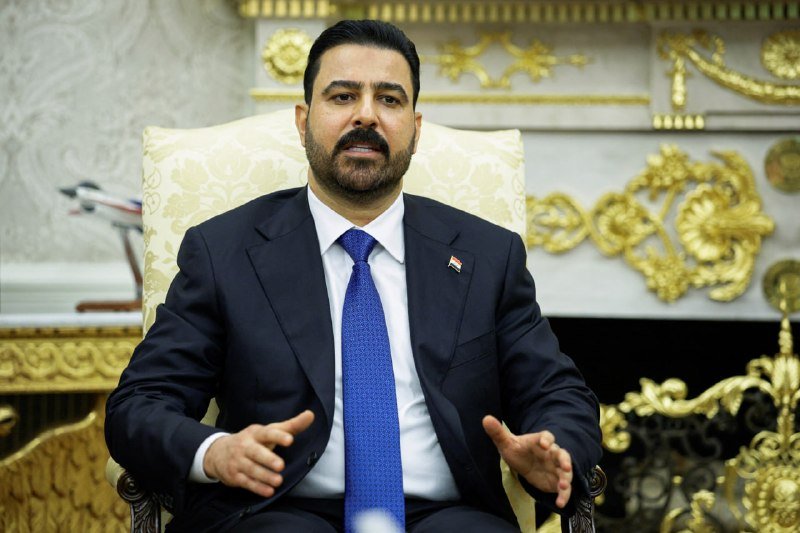
Baghdad is dispatching Prime Minister Mohammed Shia' al-Sudani to Washington on Monday, 13 July 2026, for an official visit framed by his government as an economic and energy mission. The Iraqi prime minister's office confirmed the trip at roughly 07:35 UTC on 12 July through the spokesperson, with the Reuters news wire carrying the bulletin from Beirut some ten minutes later. The visit is expected to centre on memoranda of understanding with US companies in the oil and gas sector, according to the four Telegram channels that surfaced the announcement in the hours before the Reuters write-through.
The shape of the delegation
The Iraqi readout, repeated by both Reuters and the Beirut-based Al-Alam Arabic service, describes a "high-level delegation" rather than a working-level energy team. The composition matters. Iraq's negotiations with international oil majors have historically been conducted by the Oil Ministry in Basra, not by a prime ministerial entourage in Washington. A prime-minister-level visit signals that the file has moved up the chain: either the commercial terms on offer have become politically sensitive, or Baghdad wants the symbolism of a head-of-government engagement to unlock concessions that ministerial-level talks have not.
The four source wires carrying the announcement are consistent on the headline but thin on substance. None of them names the US companies expected to sign, the blocks under discussion, or the financial scale of the proposed memoranda. That is the first concrete gap a reader should register: the announcement exists; the ledger behind it does not, yet.
Why the energy file, why now
Iraq remains one of the world's most hydrocarbon-dependent economies, with oil receipts accounting for the overwhelming share of state revenue and roughly nine-tenths of export earnings under the IMF's most recent Article IV consultation. Any deal that brings US majors back into upstream licensing rounds, or that ties Iraqi gas development to LNG off-take and pipeline export to the Mediterranean via the Turkish corridor, would touch the country's fiscal trajectory for the next decade.
Two structural pressures sharpen the timing. First, the federal government in Baghdad and the Kurdistan Regional Government have been working through a stalled hydrocarbons law that determines how revenue is split and which ministry signs contracts. A bilateral channel with Washington that bypasses that domestic deadlock is, for Baghdad, an attractive parallel track. Second, US strategic interest in Iraqi gas specifically flared after the post-2023 disruptions to European supply: Iraqi gas tied into the existing pipeline network through Turkey has been one of the few medium-term volumes that could plausibly reach Mediterranean terminals without a multi-year build-out.
What the framing leaves out
The Iraqi government's own account of the trip emphasises economic deliverables. The US side, by contrast, has not yet published a read-out preview, and the supplied source material records only the Iraqi announcement, the Reuters wire confirmation, and the two Arabic-language echoes carried by Al-Alam and the Iranian-government-aligned "Witness" channel.
Two alternative readings deserve airtime. The first is that the visit functions as much as a security file as an energy file: Iraq hosts Coalition assets and the Iran-aligned militia ecosystem against which Washington has run a sanctions architecture since 2020, and any prime-ministerial visit is a venue where those issues are tabled whether or not they appear in the public schedule. The second is the framing in Iranian state-adjacent media, which has carried the announcement through channels such as Al-Alam and the pro-Tehran "Witness" feed without an explicit counter-spin, suggesting that Tehran views the trip as commercially bounded rather than politically confronting.
What both framings share is the absence of independent confirmation of the specific deals in train. The Telegram aggregator Clash Report carries the boilerplate language about US companies that Iraqi statements have used for years; none of the four sources names a counterpart, a contract area, or a date for signing.
What to watch on 13 July
The first hard test will be the joint read-out. If it names specific US companies and Iraqi contract areas, the trip delivered on the announced file. If it stays at the level of "discussions continue," the working substance either was not ready or was deliberately left for a later Baghdad visit. Either outcome is useful: commercial deals of this scale rarely close in a single session, and the more consequential question for Iraqi fiscal planning is whether a framework signed in Washington unlocks the stalled domestic hydrocarbons file, or simply adds another layer of bilateral paperwork on top of it.
The second test is the political reaction inside Iraq, where the prime minister's relationship with the Iran-aligned Coordination Framework coalition makes any US-oriented energy deal a domestic story, not just a foreign-policy one. The third test is whether any of the announced memoranda touch gas-export routes through Turkey, because that is the corridor where Iraqi volumes meet European demand and where the most consequential commercial economics sit.
The sources do not yet specify which of these tests the trip is built to pass. Monday's read-out will.
Desk note: Monexus framed this on the prime minister's announced economic agenda rather than on the security dimension, because the supplied source material carries only the Iraqi government's economic framing and the wire confirmation of it. We flag the security file in the counter-narrative section so that the omission is recorded, not silent.
Wire provenance
This editorial synthesis draws on the following public wire/social posts:
- http://reut.rs/3R4GPJ6
- https://t.me/ClashReport
- https://t.me/wfwitness
- https://t.me/alalamfa