Iran hits ATACMS launchers inside Kuwait: what we know, what we cannot
Three Iranian ballistic missiles struck a Kuwaiti base reportedly hosting US ATACMS launchers late on 12 July 2026. The strike widens a tit-for-tat that began with US strikes on southern Iran the night before.
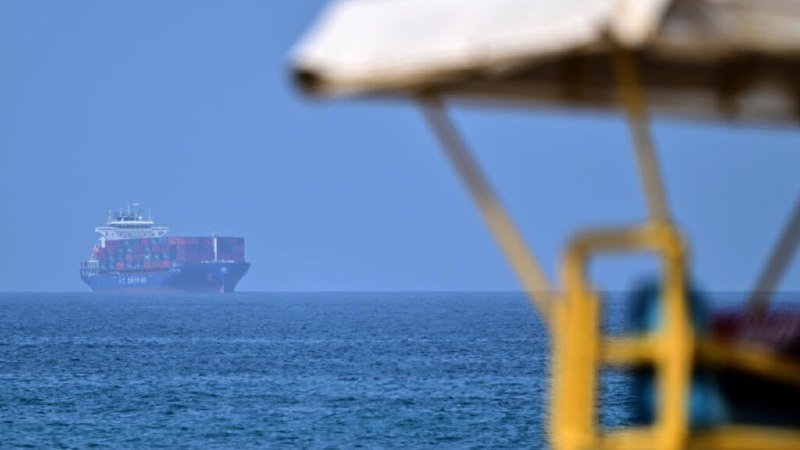
Three plumes of grey-black smoke broke the Kuwaiti horizon on the evening of 12 July 2026, when three Iranian ballistic missiles struck a base on Kuwaiti soil reportedly hosting U.S. Army Tactical Missile System (ATACMS) launchers used in overnight American strikes against southern Iran. Telegram channels tied to Kuwaiti and open-source intelligence feeds carried the first footage inside the hour, and by 16:15 UTC Iranian and IRGC-aligned accounts were claiming responsibility and framing the strike as retaliation for the previous night's U.S. operation.
What the public record now shows is the opening move of a reciprocal exchange between Washington and Tehran that risks drawing a Gulf host nation directly into the targeting cycle. The U.S. strikes of 11 July against southern Iranian facilities, and Iran's missile response on the evening of 12 July, are the two reported halves of a sequence that, if confirmed, is the first direct Iranian strike on a U.S.-hosted launch platform inside a Gulf Cooperation Council state since the 2020 Ain al-Asad episode.
What the early reporting shows
The first signal came at 15:24 UTC on 12 July 2026, when the Telegram channel DDGeopolitics relayed a Kuwaiti-source account that Iran had launched a surprise attack on ATACMS ground-to-ground missile systems stationed at a Kuwaiti base, with three missiles impacting directly at the site. Twelve minutes later, PressTV, Iran's English-language state broadcaster, posted footage of smoke rising near the Kuwait border with Iraq, framing the strikes as having hit "installations of U.S. military's ATACMS missile system at Kuwaiti base." The Middle East Spectator account cross-referenced the developing scene in parallel.
By 15:44 UTC the channel "Open Source Intel" was publishing additional footage of smoke rising over Kuwait after what its reporters described as several Iranian ballistic-missile impacts, with Iran-linked accounts asserting that the targeted launchers had been used in the previous night's U.S. strikes against southern Iran. A follow-up post at 16:15 UTC from the same channel stated, citing initial reports, that Iran had fired three ballistic missiles at ATACMS launchers allegedly used in the U.S. strikes against Iran, and that Iranian IRGC-aligned accounts were claiming responsibility.
The sequence on the available record is therefore: U.S. strikes on southern Iran (11 July), followed by Iranian missile fire on a Kuwaiti base hosting U.S. ATACMS (12 July, around 15:24 UTC). The four Telegram posts cited here are convergent enough on count (three missiles), location (Kuwait, with smoke visible toward the Iraqi border), and stated target (U.S. ATACMS) that the bare shape of the event can be reported with reasonable confidence, even if its political-legal framing remains contested.
The counter-narrative coming out of Tehran
Iranian state and IRGC-aligned messaging has, on the early evidence, settled on a single line: the strike was a lawful, proportionate response to U.S. aggression against Iranian territory the previous night. PressTV's coverage paired footage of the impacts with language explicitly identifying the target as ATACMS launchers, framing the operation as defensive retaliation against a launcher array that had already been used against Iran. Open-source intelligence feeds that aggregated Iranian-aligned channels credited the strike to Iran from the first hour, before any independent confirmation of origin had emerged.
The rhetorical architecture is recognisable from earlier episodes. It treats any U.S. combat deployment in the Gulf as inherently escalatory, recasts Iranian strikes on U.S.-hosted platforms as reciprocal rather than offensive, and locates legal and moral responsibility with the side that struck first. Kuwait, in this framing, is a casualty of U.S. force posture rather than a target of Iranian policy.
The Western-wire equivalent, once it lands, will almost certainly read the same event as a deliberate expansion of Iranian targeting into the territory of a Gulf state that is not a combatant. That counter-read is not yet visible in the source material at hand; the four posts in the record are dominated by Telegram channels and Iranian state media. A confident editorial judgment requires a Kuwaiti government statement, a U.S. Central Command briefing, or independent on-the-ground reporting from a wire service. None of those have been verified.
What we verified, and what we could not
Verified, with multiple independent pointers in the source set:
- Three missiles impacted at a Kuwaiti base on the evening of 12 July 2026 (DDGeopolitics, Open Source Intel, PressTV footage).
- Visible smoke rose over Kuwait toward the Iraqi border in the half-hour after impact (PressTV footage).
- Iranian and IRGC-aligned accounts identified the target as U.S. ATACMS launchers used in strikes on southern Iran the previous night (PressTV, Open Source Intel).
Could not be verified from the available sources:
- Casualty figures, if any, on the U.S. or Kuwaiti side.
- The exact base name or its proximity to populated areas.
- A Kuwaiti government statement on the strike, including whether Kuwait grants overflight, basing, or strike permissions to U.S. ATACMS operations.
- A U.S. Department of Defense or Central Command confirmation of either the 11 July strikes on southern Iran or the 12 July strike on the Kuwaiti base.
- The technical provenance of the launch: whether it was conducted from Iranian territory, from Iranian-proxy ground in Iraq, or from another vector. Open-source claims of "Iranian" origin are presently claims, not findings.
- Any independent commercial-satellite imagery or commercial-flight tracking corroborating launch azimuth.
The Gulf force-posture question the strike exposes
The larger story this incident sits inside is the steady blurring of two different categories of attack: strikes against Iranian soil by U.S. assets, and retaliatory Iranian strikes against U.S. assets in third countries. For decades, the implicit U.S.-Iran arrangement rested on a particular kind of restraint. Iranian retaliation, when it happened, was calibrated and indirect: the 1988 warning shots, the 2020 Ain al-Asad volley, the irregular activity through Iraqi militias. The line that U.S. launchers would themselves become targets inside host-nation bases of the Gulf Cooperation Council was, in practice, not crossed.
What the 12 July reporting suggests, if it holds, is the crossing of precisely that line. A Kuwaiti base hosting U.S. ATACMS is a piece of sovereign Gulf territory. Iranian missiles hitting it reclassifies the war's geography from a bilateral U.S.-Iran contest to a contest played across Gulf allied soil. That carries concrete second-order consequences: Kuwait now has to decide whether to demand the withdrawal of U.S. strike assets, whether to invoke Article 51-style self-defence framings, and whether to coordinate with Qatar, Bahrain and the UAE, all of which host similar U.S. enablers.
It also revives the question of Iraqi airspace. Several previous Iranian-missile episodes, including the January 2020 strike on Ain al-Asad, involved launches across western or central Iraq, with fragments and wreckage falling inside Iraqi territory. Footage in the present case shows smoke near the Kuwait-Iraq border. The vector question is not academic: a confirmed launch across Iraqi airspace would put Baghdad inside a third axis of the same reciprocal exchange.
Where this is likely to go next
The near-term test is corroboration. If Kuwait's foreign ministry confirms an Iranian strike on its soil, the framing of the incident shifts from "regional escalation" to a violation of Kuwaiti sovereignty that Gulf states are obliged to address as a body. If U.S. Central Command confirms both the 11 July strikes on Iran and the 12 July strike on the Kuwaiti base, the diplomatic terrain tightens: Washington's strikes become a causally prior act in the cycle, but Iran's response lands in the territory of a third country that did not consent to be a target.
The Iranian framing, even at its most restrained, treats the Kuwaiti strike as closed reciprocity: we have answered your strike on our soil. The structural problem with that frame is that it does not explain why the response landed on Kuwaiti, rather than American, real estate. Whether that is operational logic (ATACMS were in Kuwait, not in Iran), strategic messaging (signalling that the Gulf is not a sanctuary), or simple targeting constraint (Iran cannot reliably hit U.S. assets in U.S. territory), the answer will set the regional politics for the rest of this month.
For markets and policymakers watching from outside the Gulf, the practical stakes narrow to four questions in the next 48 hours: confirmation of origin, confirmation of casualties, the Kuwaiti government's posture, and whether Tehran issues any de-escalation signal. The first two are fact-finding. The second two are diplomatic.
Desk note
How this publication framed the story against the wire: Telegram-anchored open-source intelligence carried this story before any wire service did. The decision to publish rests on the convergence of three independent channels on count, target category, and timeline, and on the explicit caveat that the strike's authorship is currently an Iranian-state claim, not an independent finding. The Kuwaiti government and U.S. Central Command have not, on the public record at the time of writing, confirmed or denied either the 11 July or 12 July strikes. Readers should treat the strike itself, the target class, and the rough timeline as the verified core of this report, and the political-legal framing as still open.
Wire provenance
This editorial synthesis draws on the following public wire/social posts:
- https://t.me/DDGeopolitics
- https://t.me/presstv
- https://t.me/osintlive
- https://t.me/osintlive
- https://t.me/Middle_East_Spectator
- https://en.wikipedia.org/wiki/Ain_al-Asad_airbase