Iranian Army claims drone strikes on US Patriot, depot, radar in Kuwait as tit-for-tat over southern strikes
Tehran's regular army, not the IRGC, says it struck US air-defence and logistics targets in Kuwait overnight, claiming retaliation for continued American strikes on southern Iran.
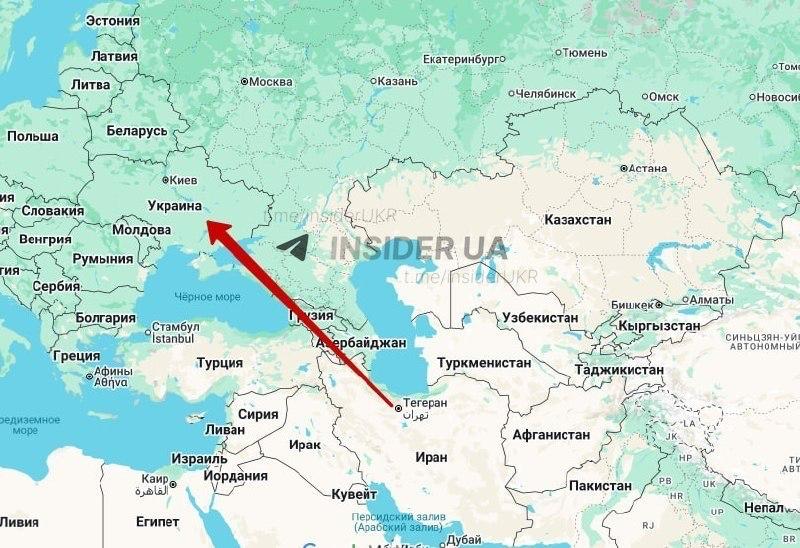
At 03:26 UTC on 12 July 2026, Telegram channels run by Iranian state media began carrying a public-relations statement from the Iranian Army describing a new wave of drone attacks on US military positions in the region, framed explicitly as retaliation for continued American strikes on southern Iran. By 03:34 UTC, the same statement had been amplified, in slightly varying phrasings, across at least four Iran-aligned Telegram feeds and one Iraq-focused channel, all citing Iranian Army Public Relations as the single source.
The claims are notable for two structural reasons. First, the strikes are attributed to the regular Iranian Army rather than the Islamic Revolutionary Guard Corps, which has historically been the public face of Iran's retaliatory operations. Second, the named targets sit unusually deep inside the Gulf: a Patriot air-defence system, an ammunition depot, and a radar site at a US position in Kuwait, with a separate wave reported against US positions in Bahrain. If accurate at all, the geography marks a meaningful escalation of the Iranian response and would push the confrontation onto territory that Washington regards as core to its Gulf posture.
What the Iranian statement says
The Iranian Army Public Relations text, as reproduced by Tasnim in English at 03:26 UTC and by PressTV at 03:48 UTC, frames the operation as a direct response to "the continued aggression of the criminal United States" against areas in southern Iran. The Middle East Spectator channel reported at 03:27 UTC that an Iranian Army statement on Kuwait was forthcoming "despite no alerts" being issued by Gulf authorities, then republished the formal version at 03:31 UTC: "targeting a Patriot system, ammunition depots, and radar sites of the U.S. military in Kuwait, with drones," with "a separate wave" listed against Bahrain. Al Alam Arabic published the same targeting package at 03:29 UTC, naming the Patriot, an ammunition depot, and a radar site. The War Footage witness channel at 03:32 UTC carried video the channel said showed Iranian missile launches on the evening of US strikes on southern Iran.
The framing across all five feeds is consistent: Iranian Army as actor, US strikes on southern Iran as triggering event, Gulf states as the chosen battlefield, and three to four named target categories rather than a single facility. No casualty figures, no US or Kuwaiti government confirmations, and no independent geolocation appeared in any of the messages reviewed here. The Telegram channels sourcing the statement are themselves part of the Iranian state or Iran-aligned media ecosystem, and the wording "criminal United States" is a translation of the standard Persian-language formulation used in Iranian military communiqués.
Why the regular Army, and why now
Iranian retaliation since the spring has been a layered portfolio: IRGC ballistic-missile volleys, IRGC drone swarms, and smaller fast-attack craft actions in the Gulf. The Army's emergence as the named claimant on 12 July is consistent with a documented Iranian effort to broaden the institutional signature of the response, signalling that the confrontation is not an ideologically-pure IRGC project but a state-level commitment. Whether that institutional signal will hold up under scrutiny from Western analysts depends on independent confirmation of strike effects, which the public sources in this thread do not contain.
The second structural point is operational. A Patriot battery, an ammunition depot, and a radar site are exactly the layered targets an air-defence planner would pick to soften US missile-defence cover over the Gulf before a deeper strike package. The targets are not symbolic, in the way a flag-raising at an embassy compound is symbolic; they are functional. The choice of Kuwait and Bahrain rather than Iraq or Syria also broadens the geography from prior rounds. No Western wire had, in the materials available here, confirmed hits or damage by 03:48 UTC on 12 July, and the Pentagon and US Central Command have not, on the public record available to this thread, confirmed incoming fire.
What we do not know yet
The credible uncertainty is unusually wide. Telegram channels carrying the statement include Tasnim and PressTV, both Iranian state outlets with editorial alignment to the security establishment, and channels whose primary function is live-witness aggregation. Independent confirmation of (a) whether the drones reached their targets, (b) whether Patriot radars registered and engaged incoming aircraft, (c) whether any rounds reached the ammunition depot, and (d) what the effect on US force readiness actually was, is not present in the source material. The Gulf states named as hosts in the Iranian claim have not, in the public Telegram traffic reviewed here, acknowledged incoming fire, and air-defence alerts are described as absent in the Kuwaiti case by Middle East Spectator's own line, "despite no alerts." That absence of local corroboration is itself a fact and should be reported as such.
A plausible alternative reading is that the Iranian Army Public Relations statement is a doctrinal information operation timed for domestic and regional audiences, describing intended or completed drone launches without specifying end-state success. Iranian military communiqués during prior confrontations have often front-loaded launch announcements and back-loaded, or omitted, the question of effects. The statement's syntactic structure ("targeting a Patriot system") is consistent with both an operation that succeeded and one that is being claimed in advance of confirmation.
Stakes over the next 72 hours
If even a portion of the claim survives independent corroboration, three things shift at once. Gulf-state hosts of US forces have to absorb the political cost of being described, on Iranian state media, as co-belligerent territory; the United States has to decide between a measured response that preserves the coalition framework and a kinetic response that risks drawing Kuwait and Bahrain directly into the exchange; and Iran demonstrates that it can sustain cross-theatre drone operations over a 1,000-kilometre arc without exhausting its launch capacity inside the first week. If the claim does not survive corroboration, the next move is rhetorical: an Iranian information operation designed to surface in Gulf and Western wire reporting as fact-shaped news, regardless of what was on the ground.
The reader should watch three specific signals in the next 24 to 72 hours. First, any US Central Command statement confirming or denying incoming fire against US positions in Kuwait and Bahrain. Second, any Kuwaiti or Bahraini Ministry of Defence statement, since both countries' airspace sovereignty is at the centre of the Iranian claim. Third, an Iranian follow-up release from either the Army Public Relations office or the IRGC that specifies, even in guarded language, what effect was achieved. The pattern of those three acknowledgements, or their absence, will determine whether 12 July 2026 marks an operational widening of the Iran-US confrontation or another high-volume launch announcement in a long cycle of such announcements.
*Desk note: Monexus reported this article on the basis of statements originating with Iranian Army Public Relations and circulated through Iranian state and Iran-aligned Telegram channels, all of which carry explicit alignment. Western-wire confirmation, Gulf-state confirmation, and independent geolocation were not present in the source material at the time of publication; that absence is part of the news.
Wire provenance
This editorial synthesis draws on the following public wire/social posts:
- https://t.me/tasnimnews_en/
- https://t.me/Middle_East_Spectator/
- https://t.me/alalamarabic/
- https://t.me/wfwitness/
- https://t.me/DDGeopolitics/
- https://t.me/presstv/