Two readings of the Strait, one shipping lane: Washington and Tehran duel over Hormuz
US Central Command insists the waterway is open and that forces are positioned to keep it that way. An adviser to Iran's supreme leader calls it a deterrent 'more important than dozens of atomic bombs.' The contradiction is the story.
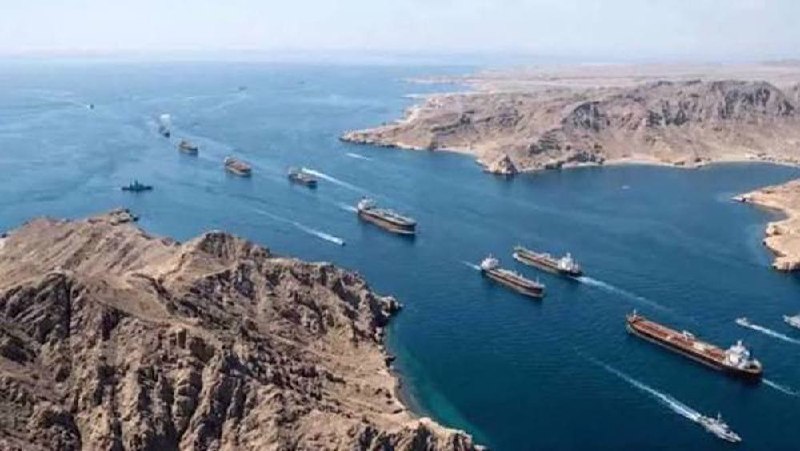
At 12:42 UTC on 12 July 2026, US Central Command (Centcom) put out a short, unambiguous line: the Strait of Hormuz is open to all vessels lawfully transiting the international waterway, and US forces are "positioned and prepared to ensure that freedom of navigation." Ninety-one minutes later, the messaging from the other side of the Gulf arrived. Mohsen Rezaei, an adviser to Iran's supreme leader, called the same body of water "a strategic deterrent" that is "more important than dozens of atomic bombs," adding that Iran "will protect this vital waterway." By mid-afternoon UTC, the gap between those two statements had been reframed, on camera, into a single exchange. Asked by CNN's Jake Tapper whether Iran's declaration that the strait is closed was true, US President Donald Trump replied: "It's open as far as I'm concerned. Don't talk about it. Talk about the reason you asked me to speak."
Two governments are now publicly disagreeing about the operational status of the narrowest chokepoint in the global energy system, and the disagreement itself is the news. Roughly a fifth of the world's seaborne oil passes through the 21-mile-wide shipping lane between Iran and Oman, and the price of a contested strait is paid in insurance premiums, charter rates and the willingness of underwriters to cover tankers at all. The official line from Washington is that nothing has changed. The official line from Tehran is that nothing should be tested.
The chokepoint the world cannot replace
The geography is not in dispute. The Strait of Hormuz links the Persian Gulf to the Gulf of Oman and the Arabian Sea, and is the only sea route out for oil exporters on its northern shore. For Saudi Arabia, the United Arab Emirates, Iraq, Kuwait, Qatar and Iran itself, there is no overland substitute at scale. Pipelines exist, the UAE's Habshan-Fujairah route most prominently, but together they move only a fraction of the volumes that the strait handles on a normal day.
Centcom's statement, carried by the Open Source Intel feed on Telegram, is the kind of message the command issues when it wants the legal status of the waterway to be on the record. "Open to all vessels seeking to lawfully transit" is precise: it asserts the customary international-law right of transit passage, and it puts US naval posture behind that assertion. The phrase "positioned and prepared" is not a threat so much as a description of standing tasking. US Fifth Fleet, headquartered in Bahrain, has run this script for years.
The interesting word is "lawfully." The qualifier reframes the statement from a generic reassurance to a conditional one: lawful transit is protected; anything else becomes a question for the boarding teams and the commanders. That nuance is doing work, and it is the part of the statement most likely to be parsed by tanker operators, P&I clubs and the Lloyd's market before they price the next voyage.
Tehran's deterrent, by name
Rezaei's line, by contrast, is not a legal argument. It is a deterrent claim, delivered in the rhetorical register Iran has used for the strait for at least two decades. Calling Hormuz "more important than dozens of atomic bombs" is a way of saying that closing or threatening to close the waterway is itself the deterrent, not a side effect of one. The strategic logic is the inverse of the nuclear programme: where enrichment is a long, deniable build, the strait is an immediately usable lever.
The "adviser to the supreme leader" title matters. Rezaei is not a mid-level foreign-ministry spokesperson who can be dismissed as a loose cannon. He is a former commander of the Islamic Revolution Guard Corps and a sitting secretary of the Expediency Discernment Council, a body that advises the supreme leader on policy. When he speaks about the strait in those terms, the words carry institutional weight, even if Iran continues to deny any operational decision has been taken to close it.
That ambiguity is the point. Iran has spent years cultivating a posture in which it can credibly claim the strait is closed without ever having to issue the formal order. The seam between that posture and the Centcom statement is where the premium is being priced.
A camera-ready contradiction
The Tapper-Trump exchange, captured in the same Open Source Intel feed at 14:13 UTC, compresses the policy disagreement into a soundbite. Tapper's question states the Iranian claim as fact; Trump's reply states the American position as preference. "It's open as far as I'm concerned" is a confident assertion from the one official in the US system who can speak for the executive branch, but the conditional phrasing leaves room for the possibility that the strait is, in fact, contested on the water, even if the president wishes it weren't.
The instruction to "talk about the reason you asked me to speak" is a redirect, not a denial. The implication is that any Iranian move against shipping should be read as cause, not effect; that is, that Tehran's behaviour is reactive to the broader US posture in the region, and that the burden of explanation lies with those asking about a closure, not with those denying one. For shipowners and underwriters, that is the line they will be reading most carefully tonight.
What the next seventy-two hours will test
The most informative signal in the next three days will not be another statement. It will be the war-risk insurance rate quoted for tankers routing through the strait on Monday morning, and the AIS (automatic identification system) traffic pattern: how many tankers slow, divert, or switch off their transponders at the entrance. The market will price the contradiction faster than either government can close it.
The second signal is whether the Iranian naval posture changes. The Islamic Republic of Iran Navy and the IRGC Navy operate different fleets from different bases. A formal closure, as distinct from a deterrent claim, has historically been telegraphed by the deployment of fast-attack craft, mining exercises, and the broadcast of navigational warnings via maritime authorities. None of that has been reported in the materials available to Monexus at the time of writing.
Until the data moves, the truth of the strait is the truth of two press releases. Washington says the waterway is open, in law and in practice. Tehran says it is a strategic asset, with all the menace that entails. The lane itself, for now, is the place where the two claims meet.
Monexus framed this around the contradiction in the two official statements, not around the more familiar question of whether a closure is imminent. The wire has been quick to report the exchange; the contribution here is to read it against the operational record and the insurance market, where the actual price of a contested strait is set.
Wire provenance
This editorial synthesis draws on the following public wire/social posts:
- https://t.me/s/osintlive
- https://t.me/s/osintlive
- https://t.me/s/osintlive