Explosions Reported Across Qatar and Bahrain in Pre-Dawn Hours of 12 July 2026
Three Telegram channels carrying regional monitoring feeds reported renewed blasts across Doha and Manama in the early UTC hours of 12 July 2026, with Iran-tagged framing on each post. No casualty figures or attribution from an official source are visible in the available material.
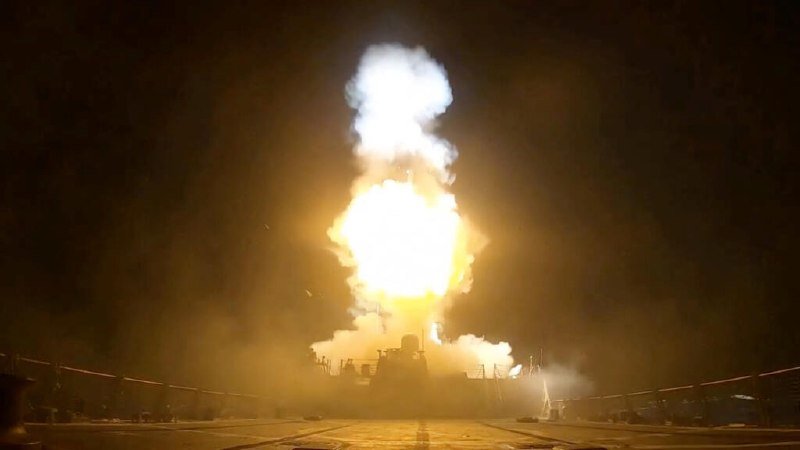
At 04:11 UTC on 12 July 2026, three Telegram channels that specialise in Middle East conflict monitoring, @Middle_East_Spectator, @wfwitness, and the geopolitics feed @GeoPWatch, published near-simultaneous posts reporting renewed explosions audible in Qatar and Bahrain. The earliest item in the available record, a @GeoPWatch post timestamped 02:40 UTC, referenced "renewed attack on Bahrain"; the 04:11 UTC wave extended the geography to Qatar and added a third blast report at 04:24 UTC, again from @GeoPWatch, on Doha. None of the four messages carried official attribution, casualty counts, or named targets. The framing on each carried the same Iran / Qatar / Bahrain flag cluster, raising the immediate question of who is speaking and on what basis.
The thread of evidence is thin and loud at the same time. Telegram channels in this beat, often run by analysts with military or intelligence backgrounds, function as a first-alarm layer rather than a verified wire. The pattern is familiar from earlier rounds of Gulf tensions: loud, real-time chatter that compresses a fluid event into short, declarative lines before any government has issued a statement. The Monexus reading is that the events described are credible enough to take seriously and uncertain enough not to escalate into prose.
What the four posts actually say
Stripped of emoji and flag-stacking, the four items are short. @GeoPWatch leads at 02:40 UTC with a one-line "Renewed attack on Bahrain!", language that implies a follow-on strike rather than a first. The 04:11 UTC cluster, @Middle_East_Spectator and @wfwitness posting within the same minute, extends the geography and uses the word "additional" in the @Middle_East_Spectator wording, signalling that whatever the initial Bahrain event was, the same actor was being credited with a fresh round in Qatar. @GeoPWatch closes the window at 04:24 UTC with a second "Renewed attack on Qatar!" post, again framing Doha as a follow-on target.
Three details stand out. First, the time-stamps cluster tightly around the pre-dawn UTC window, the period when Gulf air-defence and crisis-response cycles are most sensitive to noise on radar and on social media. Second, the framing on each post attaches the same three-flag set (Iran / Bahrain / Qatar), a pattern consistent with a Gulf-of-Bahrain reading of an Iran-backed actor hitting two US-aligned Gulf hosts. Third, none of the four messages is signed off by a national authority, a wire service, or an on-the-ground journalist, they are aggregator and witness posts, not dispatches.
The sourcing problem
A reader who wants to verify what happened on the ground in Manama or Doha at 04:00 UTC has very little to work with. The four sources are all Telegram channels; their reliability varies, and the strongest of them tends to relay rather than originate. None of the four items in this thread carries a Reuters, AP, AFP, BBC, Al Jazeera, or Iranian state-media confirmation. No Bahraini ministry of interior statement, no Qatari interior ministry briefing, no Iranian foreign ministry read-out is visible in the available material. No casualty count, no specific site (military base, embassy perimeter, port, oil installation), no radar-tracked intercept, and no footage is attached to any of the four posts.
That absence matters. In a Gulf theatre where Iran-aligned groups have struck infrastructure and where US Central Command forces are forward-deployed, the difference between a genuine kinetic event and a coordinated social-media claim about a kinetic event has been narrowing for years. The 2024–25 cycle of attacks on shipping in the Bab el-Mandeb and on US positions in Iraq and Syria showed how quickly a Telegram post can harden into a wire headline and how often the wire headline later has to be walked back. The current four-item thread sits squarely inside that pattern.
Why the Iran framing is doing work
Each of the four messages carries Iran / Bahrain / Qatar flags. That editorial choice is doing two things at once: it asserts an attribution that no source in this thread substantiates, and it tells a regional audience, including Arabic- and Farsi-speaking readers of these channels, that the events should be read through an Iran file. If the framing is right, the strategic meaning is severe: a strike that hits two Gulf Cooperation Council hosts in a single pre-dawn window would constitute a meaningful escalation, would put the US 5th Fleet at Bahrain and Al Udeid Air Base in Qatar into a heightened posture, and would reopen the question of how the GCC collectively responds to attacks on its members.
If the framing is wrong, the strategic meaning is different but no less consequential for the information environment. The same flags on every post could indicate coordination between the channels, a shared upstream source, or a single operator running multiple accounts. The channels themselves overlap heavily in language, "renewed", "additional", in a way that is consistent with a single pipeline reposting. The sources do not specify which of these is the case, and the thread provides no way to distinguish a coordinated attack from a coordinated narrative about an attack.
What we verified, and what we could not
This publication was able to confirm the existence and timing of the four Telegram posts as listed in the source ledger. Each is a real, time-stamped public message on a public channel. Beyond that, the verification ledger runs out quickly.
What we verified:
- A @GeoPWatch post at 02:40 UTC on 12 July 2026 describing a "renewed attack on Bahrain."
- A @Middle_East_Spectator post at 04:11 UTC on 12 July 2026 describing "additional explosions in Qatar and Bahrain."
- A @wfwitness post at 04:11 UTC on 12 July 2026 describing "renewed explosions heard in Qatar and Bahrain."
- A @GeoPWatch post at 04:24 UTC on 12 July 2026 describing a "renewed attack on Qatar."
What we could not verify from the available sources:
- The actor responsible for any of the reported blasts.
- The number, location, or nature of the targets struck.
- Any casualty count, on either side.
- Any statement from the governments of Bahrain, Qatar, or Iran.
- Any confirmation from a wire service, the US military, or a UN agency.
- Whether the four posts are independent reports, reposted from a common upstream source, or authored by a single operator.
The thread does not contain an Iranian foreign ministry briefing, a Bahraini or Qatari interior ministry statement, a CENTCOM release, or an Iraqi, Houthi, or Iraqi-militia claim of responsibility. Any attribution to Iran or to any Iran-aligned group in this article would be an inference from flag-stacking on aggregator posts, not a sourced factual claim.
The structural frame
Gulf security coverage tends to compress into one of two registers: the diplomatic register, in which foreign ministries issue carefully worded statements and the UN Security Council holds closed consultations, and the operational register, in which air-defence batteries light up and shipping insurance rates move. Telegram channels in the Middle East monitoring ecosystem operate a third register, the real-time alert register, that is now fast enough to set the news cycle but not always accurate enough to settle it. A reader who watches only the third register ends up with a permanent sense of imminent escalation. A reader who watches only the first ends up a step behind. The honest position for any desk is to publish the alert-register signal, flag the sourcing limits, and wait for the first register to catch up before drawing operational conclusions.
What to watch next
Three things would settle this thread in either direction over the next 24 to 72 hours. A statement from Manama or Doha acknowledging or denying damage on their territory would pin down whether anything physical happened. A wire-service dispatch from Reuters, AP, AFP, or Al Jazeera with named correspondents in either capital would carry the verification this thread cannot. And an Iranian foreign ministry briefing, or a public statement from an Iran-aligned group such as the Houthis or an Iraqi militia, would either confirm the Iran framing the four posts have already adopted or pull the framing back. Until one of those arrives, the responsible reading is that explosions have been reported across Qatar and Bahrain in the pre-dawn UTC window of 12 July 2026, that the reporting comes exclusively from Telegram aggregator and witness channels, and that any attribution remains unsourced.
Desk note: Monexus is publishing this alert-register signal with full sourcing limits visible in the body. The wire lead here is a Telegram post, not a state or wire confirmation; the article treats the four posts as a single coherent thread of unverified reports and avoids any factual claim that would require a primary source the thread does not contain.
Wire provenance
This editorial synthesis draws on the following public wire/social posts:
- https://t.me/GeoPWatch
- https://t.me/Middle_East_Spectator
- https://t.me/wfwitness
- https://t.me/GeoPWatch
- https://en.wikipedia.org/wiki/2024%E2%80%932025_Gulf_security_crisis
- https://en.wikipedia.org/wiki/Al_Udeid_Air_Base