'Evil Dead Burn' and the case for the dog
A French director with a taste for practical fire and unflinching brutality tells Variety he killed the dog on purpose, then explains what the rest of 'Evil Dead Burn' owes to that choice.
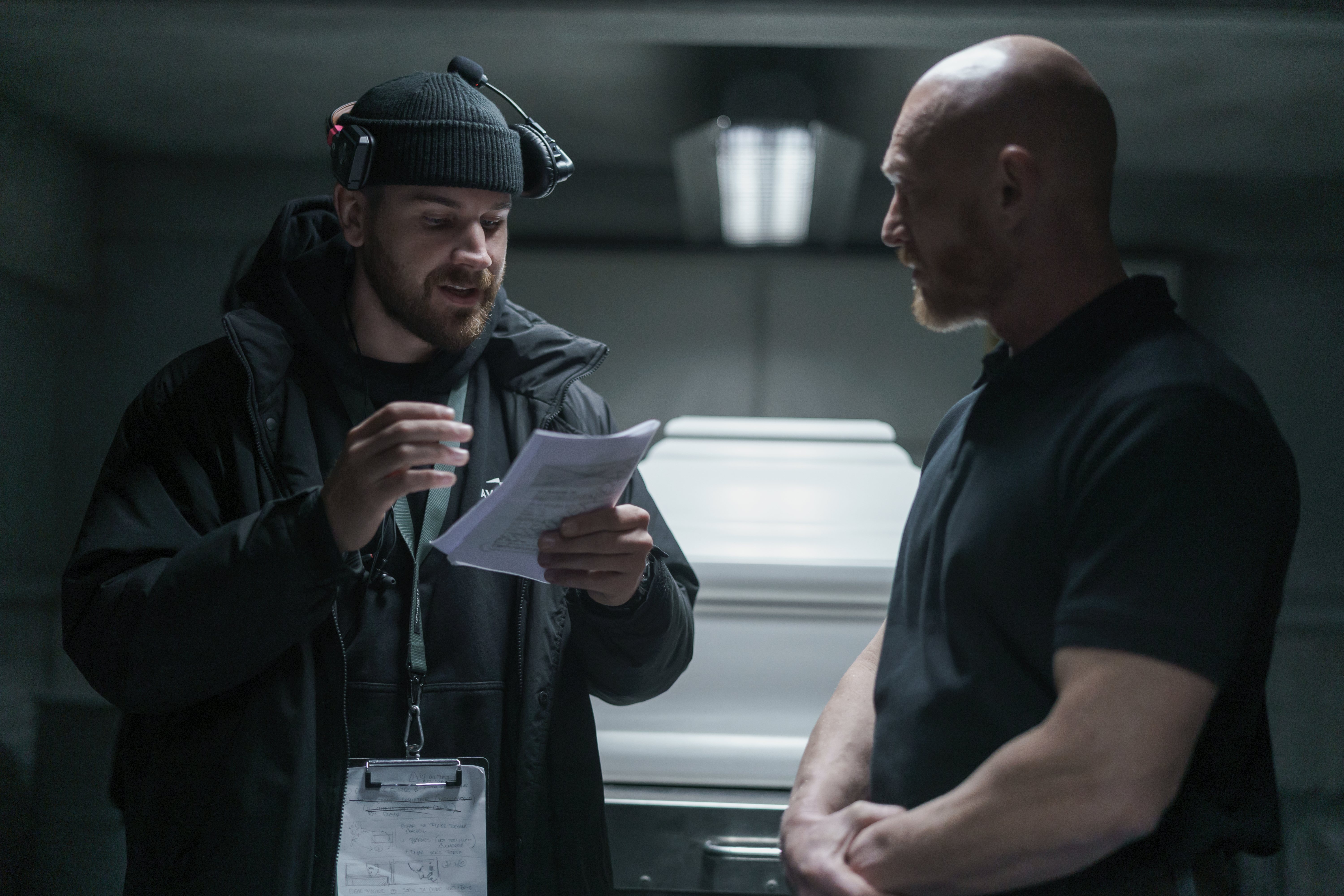
The first thing Sébastien Vaniček wants to address is the dog. In an interview with Variety published on 12 July 2026, the director of "Evil Dead Burn," the latest entry in Sam Raimi's long-running horror franchise, takes the rare step of confirming early in the conversation that yes, he killed the dog. The animal dies on screen. The film broke the rule deliberately, and Vaniček wants the audience to know that the choice was not a gag.
What "Evil Dead Burn" takes from Raimi's original 1981 "The Evil Dead," then, is not the cabin or the Necronomicon or even Bruce Campbell's chain-saw appendage. It borrows the franchise's long-standing contract with its viewers: a refusal to cushion the violence, and a willingness to make the audience complicit in watching things they have been told not to watch. The new film, now in theatres, extends that contract into territory Raimi never quite inhabited: a French-language register of body horror, slower and more procedural than the splat-stick of the original trilogy, and almost obscenely literal about fire.
A French accent on American horror
Vaniček's interview reads less like a director defending a film and more like a craftsman defending a method. The practical effects, he explains, are not a stylistic preference but a logistical necessity: the film's most punishing sequences involve open flame, and the insurance calculus of blowing real fire at actors is, he suggests, less onerous than the post-production bill of convincing CG that anything is on fire at all. The Variety piece makes clear that the production used real fire on set, with the combustion engineered frame by frame so that a stunt performer in flame-retardant gel becomes, briefly, a believable human torch.
The choice carries a long cinematic tail. French genre cinema has produced some of the most exacting practical-effects work of the past two decades, from the body-horror laboratories of Julia Ducournau to the slow-burn period chillers of Lucile Hadžihalilović. That tradition treats special effects as a moral question, not a technical one: digital gore cleans up too easily. Practical effects smear the camera with something closer to fact, and fact is what horror depends on to land. Vaniček credits that lineage without naming it, and the film wears the influence lightly: the camera lingers on a burn the way a Ducournau film lingers on a wound.
The post-credits question
Variety spoils the film's post-credits scene in detail, and the interview treats that scene as the third leg of the production's argument. Without giving the precise reveal, the implication is that "Evil Dead Burn" has been built to franchise. A near-final shot plants a sequel hook, and Vaniček frames the choice as a way of honouring the audience's investment in a horror series that has survived four decades on the willingness of its makers to keep punishing the people who pay to watch.
That is the part of the conversation that will draw the most heat, because the post-credits pivot is the single most fraught commercial decision a horror property can make in 2026. Theatrical horror is no longer the cultural floor it was in 1981; the genre's centre of gravity has lifted to prestige cable, to streaming, and to the long tail of short-form video. A franchise with a deliberate post-credits tease is signalling, unmistakably, that its producers intend to keep the IP in multiplexes rather than migrating it to a platform deal. Vaniček does not put it that baldly, but the inference sits inside the interview's final paragraphs.
What the rules cost
Killing the dog is the interview's most quoted line, and it deserves to be. The rule against harming animals on screen is not just industry etiquette; in many jurisdictions it is a contractual and sometimes statutory obligation, and a production that appears to violate it needs to clear a paperwork and welfare threshold before any footage is shot. American productions have spent decades finding cinematic ways around the rule: off-screen deaths, unseen accidents, sacrificial substitutes. The Evil Dead franchise, until now, abided.
Vaniček's explanation is that the rule, like any rule, has an expressive function. A film that respects its own dog preserves a floor of humaneness; a film that violates the rule in a controlled, deliberate way makes the audience feel the violation. The article frames this as an aesthetic argument, not a provocation, and that framing carries weight because the rest of the film, by Vaniček's account, is structured around similar controlled breaches: real fire, prolonged takes of actors in distress, and gore engineered to look like a thing that has actually happened to a body.
The interpretive risk is straightforward. A director who claims the moral high ground while orchestrating a dog's death on camera is one bad interview away from a news cycle. Vaniček appears aware of this, and the Variety interview is part of the pre-emptive work: explain the choice in the maker's own words, in a trade outlet, before someone else explains it in less sympathetic terms. The reader can judge whether the argument lands.
The franchise's longer arc
"Evil Dead Burn" is, in business terms, an unusually priced bet. The Evil Dead name carries residual brand recognition built across Raimi's original trilogy, the 2013 remake, the Starz series "Ash vs Evil Dead," and a near-constant drip of rights renewals and producer shuffles. A new theatrical entry is, in 2026, a contrarian act: the safer commercial play would have been another streaming series, a contained horror film with a different title, or a producer cut trimmed for streaming. Whatever led to a cinema release is not visible in the Variety interview, but the choice is itself part of the story.
What is visible is that the film, by Vaniček's account, is built to be rewatched. Post-credits teases reward repeat viewing; gore scenes engineered for squirm factor reward a knowing audience. This is a film pitched not at the casual viewer but at the long-horizon fan, the person who has already seen "Evil Dead II" five times and has an opinion about chainsaw-hand ergonomics. For that audience, killing the dog is not a provocation but a credential. Vaniček is signalling that he understands the unwritten contract between this franchise and its viewers: if you come expecting safety, you have come to the wrong cabin.
What this publication sees
The interview is a useful artefact because it lays bare the commercial grammar of contemporary franchise horror. A director defends a controversial choice on craft grounds; a trade outlet obliges with platform; the studio receives both an aesthetic argument and a marketing asset in a single conversation. Whether the choice survives contact with the broader press cycle is a question that the sources do not address, and the article has no way to resolve. The film's box-office performance, its critical reception beyond the trade press, and its longer-term placement within the Evil Dead canon are all open. What the interview establishes is that the maker is willing to stake his reading of the film on the dog.
Sources