CENTCOM declares the Strait of Hormuz open as Iran's grip on the chokepoint tightens
A 12 July CENTCOM statement insists the waterway is open to lawful transit. Iranian actions on the same day suggest otherwise.
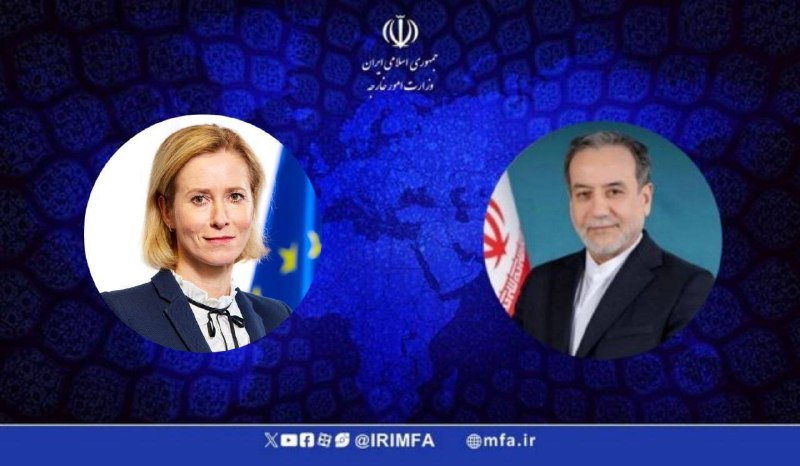
At 14:15 UTC on 12 July 2026, the United States Central Command posted a terse statement to its official channel insisting that the Strait of Hormuz "is open to all vessels seeking to lawfully transit the international waterway" and that "Iran does not control the Strait." The wording left little ambiguity about who the message was meant for. It also exposed a gap between official American messaging and the tactical picture unfolding at sea.
The Strait of Hormuz is the narrowest chokepoint in the global energy supply chain. Roughly 20% of seaborne oil passes through it every day; a sustained interruption would, on most published estimates, clear the way to a price shock that no strategic petroleum reserve can fully absorb. Iran has spent two decades investing in the maritime pressure it can apply in that corridor: fast-attack craft, anti-ship missile batteries sited along its northern shore, and a cadre of Revolutionary Guard commanders trained to translate small, deniable actions into systemic risk. CENTCOM's choice to declare the strait open is, on the reading of the public message alone, an attempt to deny Iran the signalling value of a closure without committing Washington to an escalation.
What CENTCOM actually said
The statement is short and built for reposting. It asserts that U.S. forces are positioned to ensure lawful passage, that commercial traffic should continue to plan for normal transit, and that any attempt to interfere with vessels will be treated as a hostile act. None of the language is new in form. U.S. naval commanders have issued similar declarations at moments of elevated tension in the Gulf for at least a decade. What is unusual is the simultaneity: the framing of an open waterway is being asserted while commercial operators and several flag states are reporting an operational environment in which the strait is, for practical purposes, contested.
The broader communications posture around the statement, including the staging of the post on the official U.S. military channel rather than through a State Department spokesperson or a Pentagon press briefing, signals an intent to broadcast to commercial shipping and to regional audiences rather than to negotiate with Tehran. That broadcast posture carries its own diplomatic cost: a public assertion of openness is harder to walk back than a quiet deployment, and Tehran now has a U.S. statement on the record to either honour or visibly defy.
The Iranian counter-reading
Iranian state-aligned outlets have spent the past week framing U.S. naval movements in the Gulf as a provocation rather than a stabilising presence. The official line from Tehran has long held that the strait is a shared waterway in which the littoral state has legitimate oversight responsibilities, including the inspection of vessels headed to ports from which sanctions evasion is presumed. That position is contested under the United Nations Convention on the Law of the Sea, which treats the strait as an international corridor in which transit passage cannot be hampered. But it persists inside Iranian doctrine as a sovereign claim that can be selectively enforced without ever producing a clean, attributable closure that would trigger an automatic military response.
What CENTCOM's statement does not address is the spectrum of actions below the threshold of an outright closure: harassment of tankers, the temporary seizure of vessels for "inspection," the forcing of course deviations into Iranian waters where a boarding can be staged. A waterway can be operationally unusable for major underwriters and still pass the formal test of "open." Lloyd's of London and the Joint Maritime Information Centre, in similar past episodes, have issued transit advisories that diverge from the political line coming out of Washington; if commercial insurers widen their Hormuz advisory in the coming days, the gap between CENTCOM's framing and the on-deck reality will become harder to paper over.
The structural frame: chokepoints as leverage
What is happening in the Gulf is a textbook case of geographic leverage applied by a state that cannot compete on aggregate naval tonnage against a carrier fleet and expeditionary strike groups operating out of Bahrain. Iran's answer to that imbalance is not to match the U.S. fleet hull-for-hull but to raise the cost of operating in a confined corridor until the marginal vessel, and the insurer behind it, decides the risk premium is not worth the voyage. This is not new. Tehran used the same playbook in 2019 around the British-flagged Stena Impero, and again in 2024 when a series of tanker seizures briefly drove the war-risk premium for Hormuz transit into triple digits.
The American counter-strategy, equally long-established, is to deny that the leverage is working. Public declarations of normality, freedom of navigation transits, and the periodic seizure of Iranian dhows suspected of supporting IRGC maritime action are all designed to communicate to markets and to Gulf allies that the corridor remains a U.S.-guaranteed commons. The contradiction at the heart of the current posture is that an honest read of the tactical picture and an honest read of the diplomatic messaging cannot both be true at once. Either the strait is functioning as an open international waterway, in which case the CENTCOM statement is redundant, or the strait is being pressured into something less than open, in which case the statement is an attempt to deny that pressure rather than a description of it.
What to watch next
The next 72 hours will settle which side of that contradiction becomes the operative story. Three signals matter. First, whether the major insurance underwriters quietly widen their Hormuz advisory; that is the most reliable leading indicator that commercial operators have lost confidence in the political framing. Second, whether Tehran stages a visible, attributable action against a named vessel, which would force Washington to choose between enforcing its own statement and accepting that the statement was always rhetorical. Third, whether OPEC+ quietly adjusts its production messaging, since the principal interest of the Gulf monarchies in a non-closure outcome is not Western security guarantees but the integrity of the price.
What remains genuinely uncertain, despite the volume of public messaging on both sides, is whether the current tempo of harassment represents an Iranian attempt to extract a concession, a calibrated response to a specific U.S. move that has not yet been made public, or the working out of an internal Iranian factional dispute that has spilled into maritime operations. The sources do not specify which read is correct. The safe assumption is that the operative answer is some combination of all three, and that any of them is enough to keep the premium on Hormuz-tracked cargo higher than CENTCOM's language suggests it should be.
Desk note: Monexus treated the CENTCOM statement as a primary-source claim about the political status of the waterway, not as a tactical description of conditions on it, and weighed it against the long-running Iranian position that the strait is a sovereign corridor subject to littoral-state oversight. The commercial-insurance signal is the cleanest test of whether either framing holds in practice.
Wire provenance
This editorial synthesis draws on the following public wire/social posts:
- https://t.me/DDGeopolitics
- https://en.wikipedia.org/wiki/Strait_of_Hormuz
- https://en.wikipedia.org/wiki/Transit_passage