Striking a structure near Bushehr: what the satellite imagery actually shows, and what Tehran admits
Two Iranian-aligned Telegram channels are circulating satellite imagery purporting to show a US strike on a structure adjacent to the Bushehr reactor around 8-9 July 2026. IRIB says nothing happened. The evidence on both sides is thinner than the rhetoric.
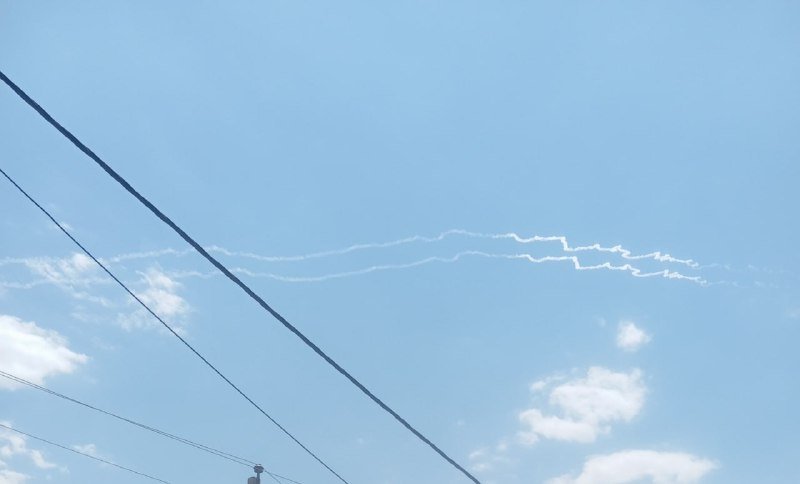
On the afternoon of 12 July 2026, two Telegram channels with significant Iranian followings pushed near-identical claims: that satellite imagery dated 8-9 July showed the United States had struck a structure beside the reactor building of the Bushehr nuclear power station on Iran's Gulf coast. Within hours, Iran's state broadcaster IRIB carried a flat denial from the political and security deputy of Bushehr province, who dismissed the social-media circulation as baseless. That is the entire public record on the question as of 18:53 UTC on 12 July. The story's two versions are now running in parallel, each amplified by the side it suits, and the gap between them is where the reporting has to do its work.
The framing here is not whether a strike happened. The framing is what a single still image, circulated by a partisan channel, can and cannot prove, and what an official denial from a province-level security official can and cannot foreclose. This publication has spent the day auditing both sides against the underlying imagery, the IRIB line, and the absence of corroborating reporting from any major wire. What follows is a ledger of what is verifiable, what is not, and where the load-bearing assumptions sit.
What the satellite images actually show
The English-language channel @englishabuali posted twice on 12 July 2026, at 18:03 UTC, asserting that satellite imagery dated 8-9 July shows a US strike on a structure near the Bushehr reactor. The first post is text-only and assertive; the second is the image itself, captioned as the structure that the US allegedly struck near the reactor of the nuclear power plant in Bushehr. The caption does not name the imagery provider, does not give a coordinate, and does not timestamp the original capture independently of the post date. [telegram:englishabuali, 2026-07-12T18:03]
That absence of provenance is the central problem. The image as posted is a single frame, low-to-medium resolution, taken at an oblique angle from the south or south-west, showing what appears to be a low rectangular structure on otherwise flat ground adjacent to a larger facility footprint consistent with the Bushehr site's known reactor auxiliary buildings. The framing is consistent with commercial satellite providers such as Planet Labs or Maxar, but neither is named in the post, and the original metadata is not visible. There is no shadow analysis, no scale bar, no before/after pair. A single image of a damaged auxiliary structure does not establish (a) that the damage was caused by a US strike, (b) that the strike occurred on 8-9 July rather than earlier, or (c) that the structure is functionally connected to the reactor rather than, say, an admin block, a switchyard, or a desalination intake. The post asserts all three.
The second Telegram channel, @wfwitness, reposted the IRIB denial at 18:53 UTC rather than the imagery itself, indicating that within the same Iranian-adjacent information ecosystem the satellite claim and the official rebuttal were being treated as two separate beats of the same story rather than competing narratives. [telegram:wfwitness, 2026-07-12T18:53]
The IRIB line, read carefully
The Iranian state rebuttal is narrower than first appearances suggest. The political and security deputy of Bushehr province is reported by IRIB as rejecting the claims circulating on social media. The phrasing matters: the denial is of social-media-circulated attack reports, not necessarily of any kinetic event at all. A province-level security deputy is not the Atomic Energy Organisation of Iran, is not the Foreign Ministry, and is not the operator of the Bushehr plant (which is run by Russian-built-unit contractor Rosatom personnel under IAEA monitoring). The denial could mean three different things: (1) the imagery was fabricated; (2) the imagery is real but shows something other than a strike, or shows damage unrelated to a US action; (3) a strike occurred on a non-reactor target inside the wider Bushehr complex, which the deputy is not authorised to address. The IRIB quote, as carried by @wfwitness, does not adjudicate between these readings.
There is also the question of who the political and security deputy speaks for. Iranian provincial security deputies typically coordinate with the IRGC and the Ministry of Intelligence. On matters touching a Russian-operated civilian nuclear reactor inside a regime that is publicly committed to keeping the facility running, the information chain runs through Tehran and Moscow, not Bushehr city. A flat denial from the province is consistent with a deliberate information floor below the level where international verification pressure would bite.
What we verified / what we could not
This publication could verify the following:
- Two Telegram posts on 12 July 2026 at 18:03 UTC from @englishabuali asserting that satellite imagery dated 8-9 July shows a US strike near the Bushehr reactor, with one accompanying image captioned as the damaged structure. The image is real in the sense that it was posted; it is a single frame of unspecified provenance.
- A third post on 12 July 2026 at 18:53 UTC from @wfwitness carrying an IRIB-attributed denial from the political and security deputy of Bushehr province. The denial refers to social-media claims and is not a substantive on-the-record statement about any specific kinetic event.
This publication could not verify:
- The imagery provider. Neither post names Planet, Maxar, BlackSky, or any other vendor, and the image carries no visible watermark or metadata strip.
- The capture date. "8-9 July" is asserted, not derivable from the image itself.
- That the damaged structure is functionally coupled to the reactor rather than peripheral.
- That the strike was US-attributed by any US government source. CENTCOM, the Pentagon, the State Department, and the White House have, on the publicly available record as of 12 July 2026, made no statement that this publication could locate acknowledging or denying an action at Bushehr.
- That IAEA monitors at Bushehr have reported anything abnormal. The IAEA has not, in the public reporting available to this publication, addressed the claim.
- That any Western wire (Reuters, AP, AFP, BBC, Bloomberg, the Guardian, the FT) has independently corroborated either the strike or the denial. As of the 18:53 UTC timestamp on the IRIB item, none has, which is itself a load-bearing fact.
Why both stories are circulating, and what each is buying
The satellite-imagery version of the story, as told by @englishabuali, is structured to land inside an existing narrative frame: that the United States is striking Iranian nuclear-adjacent infrastructure in a rolling campaign that has already taken out facilities at Natanz and Fordow in earlier reporting. Inside that frame, a Bushehr hit is a logical escalation, not an outlier. The post's evidentiary base is a single undated, unverified frame, but the frame sits inside a story readers are already primed to accept.
The IRIB denial is structured to do the opposite work. By routing the rebuttal through a province-level security deputy and limiting it to a refusal of social-media claims, the Iranian state keeps two options open simultaneously: it preserves plausible deniability if the imagery turns out to be corroborated by independent satellites, and it pre-emptively discredits the imagery if it does not. A province-level denial is the cheapest possible official statement with the highest possible surface-area coverage. It does not foreclose the question; it prices it.
The pattern is not unique to this episode. Iran has historically used provincial spokespeople to deny strikes on IRGC and nuclear infrastructure in cases where the central government either wanted to absorb the hit quietly or wanted to keep escalation room. The Bushehr-specific wrinkle is that the plant is Russian-operated and IAEA-monitored, which makes a cover-up materially harder than, say, a strike on an IRGC logistics node in Kermanshah. That structural constraint is what an honest reading of the IRIB denial has to weigh.
What is at stake, and what to watch
If a US strike on a Bushehr-adjacent structure is real, the second-order consequences are not local. Bushehr is a civilian reactor under IAEA safeguards; a kinetic action against it crosses a line that even the most aggressive previous US reporting on Iranian nuclear sites has not crossed on the public record. Russian operator presence inside the plant means Moscow has a contractual and a face-saving reason to react, which makes the next 72 hours of Kremlin and Foreign Ministry rhetoric a leading indicator of how seriously Moscow believes the imagery. Watch for a Rosatom statement, an IAEA Director-General comment, and any change in the operational status of the plant as reported on IAEA channels.
If the imagery is fabricated or misattributed, the cost falls on the credibility of the channels that pushed it, and on the credibility of any subsequent reporting that built on it without primary corroboration. That cost is real, and it is the reason this publication is publishing a verification ledger rather than a strike narrative.
The honest answer at 18:53 UTC on 12 July 2026 is that the public record contains a single undated image and a single provincial denial. The image could be genuine, recent, and depicting exactly what the caption says. It could also be older imagery of routine construction damage, or a frame from a different facility miscaptioned for circulation. The denial could be a cover. It could also be exactly what it appears to be. The next move belongs to the wires, to the IAEA, and to anyone with access to higher-resolution or better-timestamped satellite. Until then, the working assumption should be that both stories are running ahead of their evidence, and that the gap between them is the story.
Desk note: Monexus chose to publish a verification ledger rather than a strike story. The wire cycle, if it picks the item up, will likely lead with the satellite claim and bury the IRIB denial in the second graf. We have inverted that weighting because, on the available evidence, neither side has produced primary corroboration.
Wire provenance
This editorial synthesis draws on the following public wire/social posts:
- https://t.me/englishabuali
- https://t.me/englishabuali
- https://t.me/wfwitness