Bitcoin punches past $63K as Trump floats Iran 'deal', then warns of 'decimation'
BTC cleared $63,000 after Trump said Iran 'wants to make a deal', then slipped back as he warned Tehran would be 'completely decimated' if he were assassinated. The market is once again trading a war premium it cannot price.
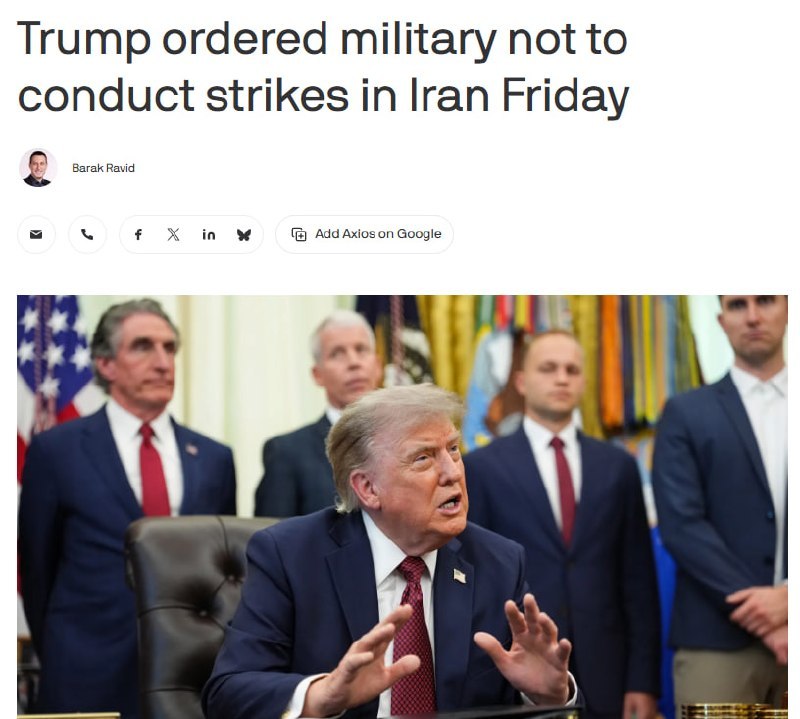
Bitcoin pushed through $63,000 on 9 July 2026 after Donald Trump told reporters that Iran "wants to make a deal," a single line that traders immediately read as a de-escalation signal and chased. Less than 48 hours later, on 11 July 2026, the same president warned that if he were assassinated, Iran would be "completely decimated." The warning landed a day after the funeral of Supreme Leader Ayatollah Ali Khamenei, where open calls for Trump's killing were reported.
The move is the cleanest illustration in months of how a single news cycle can both relax and re-impose a war premium on the same asset within a trading week. The premium never fully cleared on Thursday, and by Friday's Asia open the order book had already re-priced the escalation risk. Bitcoin is once again trading a geopolitical story it cannot independently verify, and that mismatch is the story.
A two-day tape, in two trades
The first leg, on 9 July, was textbook relief. According to Cointelegraph's markets desk, BTC broke $63,000 and traders began publishing fresh upside targets for the daily close and beyond, citing Trump's "wants to make a deal" remark as the catalyst. Long positions crowded in, funding rates flipped positive on the major perpetuals, and the move was widely framed on social media as a "ceasefire trade."
The second leg, on 11 July, was the unwind. Trump, speaking publicly, said that if he were assassinated, Iran would be "completely decimated," a line circulated by the X account Unusual Whales and echoed across financial terminals. LiveMint, reporting the same day, framed the warning as a fresh threat delivered a day after Khamenei's funeral drew open calls for Trump's killing. Spot BTC pulled back, oil-related risk gauges ticked higher, and the relief trade partially retraced.
Both inputs are the same actor, the same week, and the same policy posture. The market did not learn anything new about US-Iran relations between Wednesday and Friday. It learned that a single source of geopolitical information is also a single source of geopolitical volatility.
What the rally is actually pricing
A "deal" with Iran, in the trading community's working vocabulary, usually means three things: sanctions relief flowing back to Tehran, Iranian crude returning to formal export channels, and a corresponding softening of the missile-and-proxy posture that has priced Gulf shipping insurance for the last two years. The first two would compress the global risk premium embedded in Brent; the third would unwind a big chunk of the freight and war-risk surcharges that have run through Red Sea and Strait of Hormuz routing since 2024.
None of that has been confirmed. Trump's "wants to make a deal" line is not a framework agreement, an executive order, or a Treasury general license. It is a sentence at a podium. The market, which routinely punishes investors who anchor on rhetoric rather than text, treated it as text. That is a choice, and it has costs.
The structural risk is the inverse of the relief trade. If the deal pricing gets pulled, BTC does not just give back the relief leg. It also absorbs the escalation leg, which includes the explicit "decimation" rhetoric and the post-funeral Iranian posture. Crypto is the only $2-trillion asset class that trades 24/7 with no circuit breakers, and the same liquidity that lets it catch a bid on a Tuesday headline lets it gap down on a Friday headline.
Why Iran matters more than usual this cycle
Iran is not just a foreign-policy story for the Gulf. It is a balance-sheet story. Sanctions architecture, dollar-clearing access, and the price of compliant shipping insurance feed directly into the operating costs of every miner with exposure to Middle Eastern power contracts and every exchange serving Iranian-origin users through Turkish and Emirati corridors. A genuine deal that unlocked Iranian oil and unfroze central-bank access would also, by extension, slow some of the de-dollarisation momentum that has run through BRICS trade settlement experiments and Iranian import pilots using crypto. The geopolitical relief and the structural crypto-bull-case are pulling in the same direction, which is why the market is so eager to lean into the rumour.
It is also why the rumour is so dangerous. If a deal does not materialise, the same alignment of interests works in reverse: oil risk premia stay elevated, sanctions enforcement tightens, and the corridors that route around the dollar stay in place but become more expensive to operate. The market is long both the ceasefire and the multipolar-de-dollarisation trade. Those two positions are usually complementary. On the days they are not, the unwind is ugly.
The week ahead, and the line to watch
The next clean read will come from the Iranian side, not the American one. Tehran's foreign ministry briefings, the messaging from the office of the new Supreme Leader, and the operational tempo of IRGC-aligned media outlets will, in aggregate, indicate whether "wants to make a deal" is the opening bid of a negotiation or a phrase that the Iranian side will simply not accept as a basis for talks. Khamenei's funeral and the open calls for Trump's killing reported on 10 July are not a starting point for a deal. They are a starting point for a posture.
Bitcoin will trade whatever the tape tells it. That has been the working assumption for the last three years, and it has been right more often than not. But the working assumption depends on liquidity being able to absorb a flip, and on the underlying geopolitical story not breaking the rails of normal diplomacy. The 9–11 July sequence is a useful reminder that the rails are thinner than the relief trade suggests.
Desk note: Monexus is treating Trump's "wants to make a deal" remark and his subsequent "decimation" warning as the same event with two phases, not as two separate stories. The wire cycle would normally file these as a Tuesday market-mover and a Friday escalation piece; the structural read is that the volatility band on Middle East risk has narrowed enough that one actor's rhetoric can both relax and re-impose a war premium on the same asset within 48 hours.
Wire provenance
This editorial synthesis draws on the following public wire/social posts:
- https://x.com/unusual_whales/status/1943108604734107780