Northern Venezuela Counts Its Dead as the Quake Response Frays
More than a week after twin earthquakes struck northern Venezuela, official figures put the death toll past 4,000 and the injured above 16,000, while aid groups warn the response is outrunning capacity.
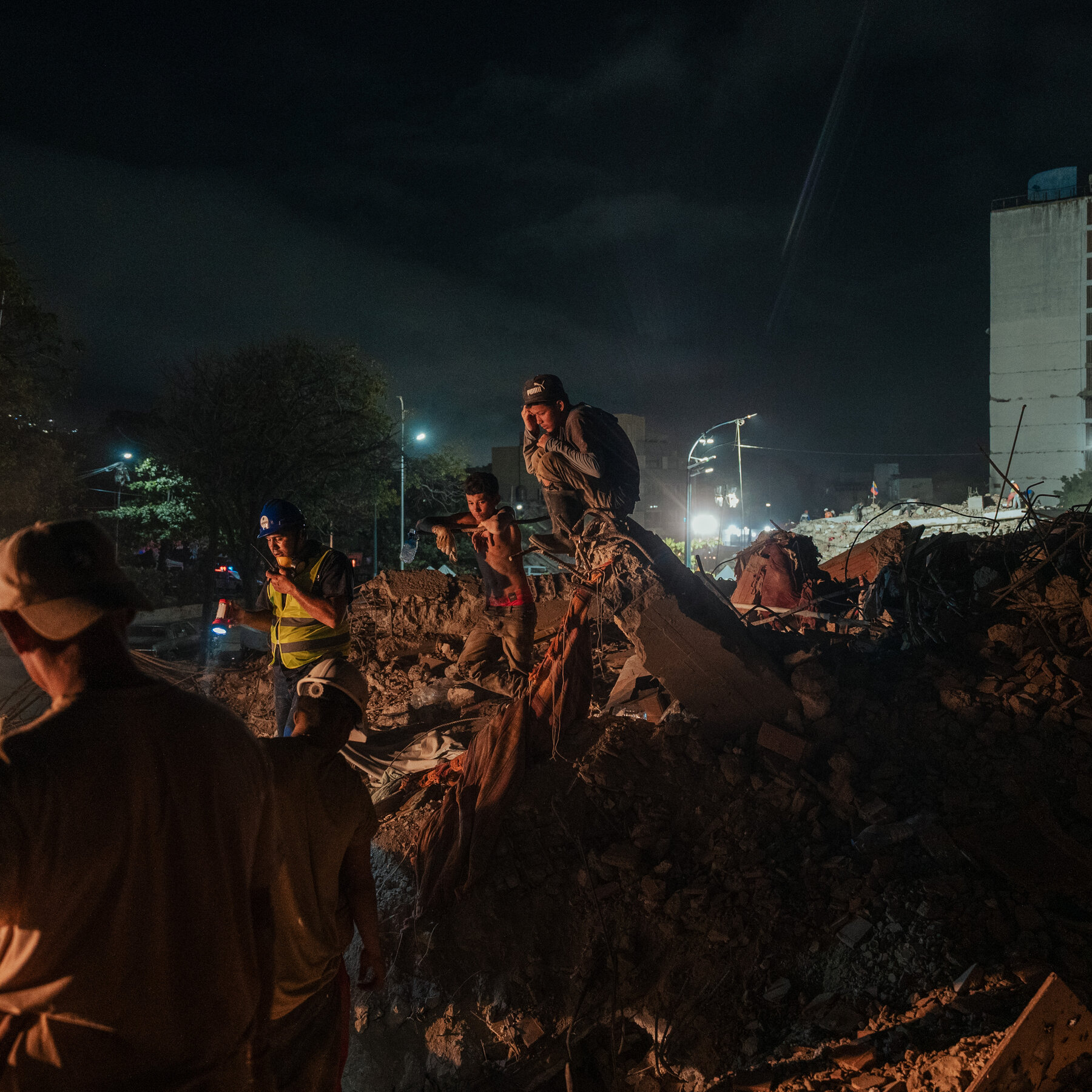
2026-07-11T10:49:00Z. More than a week after two powerful earthquakes hit northern Venezuela, official figures put the death toll past 4,000, the injured above 16,000, and thousands more still unaccounted for, the Red Cross told CGTN on 11 July 2026. The numbers describe a humanitarian operation that has visibly outrun the capacity of any single agency, and a country whose institutions are being asked to deliver a disaster-scale response without the budget or the diplomatic latitude most peers could call on.
The pattern, not the headline, is the story. A natural disaster of this magnitude lands on a state already strained by years of sanctions pressure, currency collapse and a sanctions-shaped hole in its import bill. What is unfolding in Caracas and the hard-hit northern states is what happens when the world's most geopolitically combustible dispute of the past decade meets a seismically active Caribbean margin, and when aid flows are filtered through the same politics that have shaped every previous Venezuelan emergency since 2017.
A toll that keeps climbing
The two earthquakes struck in quick succession in northern Venezuela, a region that runs along the country's Caribbean coast and includes the densely populated states surrounding Caracas. Initial accounts, as relayed by CGTN on 11 July 2026 from Red Cross briefings, gave the death toll as above 4,000 with more than 16,000 injured and thousands still missing. The phrase "still missing" is the one that matters most: a week into the response, the figure describes not a backlog of paperwork but a population that has been physically displaced, with rural communities cut off by road damage and urban blocks that rescue teams have not yet reached in force.
The Red Cross, speaking to CGTN, framed the moment in operational terms: humanitarian needs are rising faster than the response, the medical system is saturated, and the logistics chain into the affected states is uneven. That language is deliberately measured. The arithmetic underneath it is not.
The capacity problem the sanctions built
Venezuela enters this disaster with a public-health infrastructure that international agencies have been documenting as degraded for years. Hyperinflation, emigration of medical professionals, and recurring shortages of imported medicines and equipment are not new conditions; they are the baseline. A 7+ magnitude sequence of earthquakes layered on top of that baseline does not simply multiply the damage. It exposes every point in the relief chain where capacity has been hollowed out: the generators that don't start, the field hospitals that don't get built because the cement hasn't arrived, the trauma surgeons who are no longer in the country.
This is the dimension that wire coverage of the disaster, where it has appeared, tends to underplay. The frame "Venezuela suffers a natural disaster" is true and insufficient. The more useful frame is that Venezuela suffers a natural disaster inside a political and economic perimeter that has, for nearly a decade, restricted its ability to import, to finance, and to receive foreign-currency-denominated aid without friction. Disasters do not distribute damage evenly across countries with different sovereignties. They punish the constrained hardest.
What the response looks like from the ground
CGTN's reporting from 11 July 2026, drawing on Red Cross briefings, described an operation leaning heavily on domestic first responders, volunteer brigades, and a patchwork of international NGOs working through intermediaries. That is the standard Venezuelan disaster response profile of the last decade: a national government in the operational lead, regional neighbours and multilateral agencies in support, and a layer of US-aligned sanctions architecture that complicates any dollar-cleared transfer of humanitarian funding.
There is a real counter-narrative here that this publication wants to flag plainly. Caracas's official line is that the country can deliver for its people, and that sanctions are an over-reach. The opposition's line, voiced through exile networks, is that the regime's own mismanagement is the binding constraint, and that any aid shortfall is internal rather than external. Both claims contain truth, and they are not symmetric in the way they distribute responsibility. Sanctions restrict, but the state decides how the resources it does have get allocated, including through opaque military-controlled logistics networks that have drawn documented criticism in earlier disasters. The honest reading is that both pressures are acting on the same population simultaneously, and neither absolves the other.
What the next ten days look like
The next operational window is short. Search-and-rescue capacity in collapsed structures drops sharply after the first 14 days. The Red Cross warning that needs are rising faster than the response implies that the international humanitarian community is going to be asked, again, to route large volumes of relief through a financial and diplomatic architecture that has historically made Venezuelan operations harder than comparable responses elsewhere in Latin America. Whether that architecture flexes in the coming weeks is the variable to watch, more than any single casualty revision.
What remains genuinely uncertain is the size of the final toll. The 4,000 figure is an operational count; missing-persons registries in rural districts are still being reconciled, and structural-collapse assessments in major cities take weeks to complete. The number will move. The political geometry around it will move more slowly, and that is the part that ultimately determines whether the next Venezuelan emergency is any better absorbed than the last one.
Desk note: Monexus frames this as a humanitarian story inside a sanctions-constrained state, not as a partisan one. Wire coverage has so far foregrounded casualty counts; this piece foregrounds the capacity constraints that determine how high those counts climb.
Wire provenance
This editorial synthesis draws on the following public wire/social posts:
- https://x.com/cgtnofficial/status/2075894137048666112