Explosions rock eastern Homs as Syria's desert corridor enters a new phase
Heavy blasts were reported in the suburbs of al-Sukhna in eastern Homs province, drawing fresh attention to a desert corridor already contested by multiple armed actors.
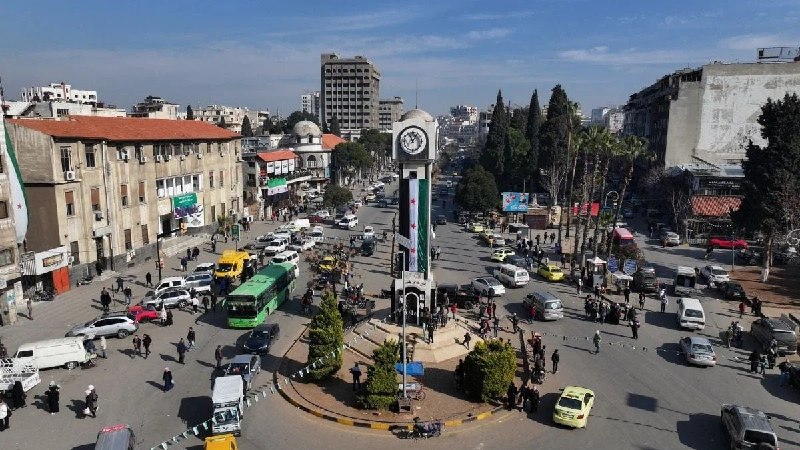
Heavy explosions were heard in the suburbs of al-Sukhna in eastern Homs province on 11 July 2026, according to Mehr News Agency, Iran's state-linked wire, which cited on-the-ground reporting and circulated the alert on its Persian-language Telegram channel at 14:54 UTC. Al-Sukhna sits along the strategic east-to-west axis that connects the Iraqi border to the Syrian interior. A detonation there travels further than its blast radius: it lands on a corridor that several armed actors have been quietly trying to control.
The immediate facts are sparse. Mehr's report identifies the location and the sound of the blasts; it does not name the responsible party, the target, or the weapon used. That thinness is itself the story. Eastern Homs has become one of the more opaque theatres in Syria's fragmented conflict, where Iranian-aligned, Russian-backed Syrian government, US-aligned, and residual Islamic State-linked actors overlap, sometimes with overlapping casualties. When something detonates there, the first question is rarely what exploded; it is whose fingerprints the blast carries.
A corridor under several flags
Al-Sukhna's significance is geographic. The town sits between Palmyra to the west and the Deir ez-Zor governorate to the east, on the road that links Damascus to the Iraqi frontier and, by extension, to the Iranian land bridge that runs through Iraq and into Lebanon. For Tehran, the corridor is a logistical artery: a land route that moves personnel, materiel, and influence westward without depending on the Suez Canal or on Turkish airspace. For Moscow, it sits inside an area of agreed deconfliction with the United States that has frayed but not collapsed. For Washington, it is a space where residual counter-ISIS operations continue and where Iran-aligned movements are tracked but rarely engaged directly. For Damascus, the new government that took over after the December 2024 transition, the corridor is a sovereignty test: the capital's writ in the Badiya al-Sham, the vast Syrian desert that stretches toward the Iraqi border, is partial at best.
It is against this layered map that the 11 July explosions must be read. Mehr's framing, with its emphasis on the eastern Homs suburbs and its Iranian editorial vantage point, treats the event as news about a corridor that Tehran watches closely. Western and Syrian outlets have not, in the immediate hours after the blasts, published confirmation or denial. That asymmetry is worth flagging on its own.
What the framing decides
Coverage of central and eastern Syria tends to settle into one of two registers, depending on which wire carries the first claim. Iranian state media reads the Badiya as a frontline of a wider regional contest, with Israeli strikes, US troop movements, and ISIS remnants folded into a single narrative of pressure on the resistance axis. Western and Gulf outlets, when they cover the area, often treat it as a counter-terrorism story or as a piece of the broader Iran-US shadow war, with Iranian activity as the dependent variable. Both frames are partly correct, and both are partly incomplete.
What neither frame fully captures is the local Syrian layer. The post-2024 transitional authorities in Damascus have their own interest in the desert corridor: it is the country's eastern frontier, and the legitimacy of any new Syrian government will be measured, in part, by how much of it they can credibly administer. A blast in al-Sukhna's suburbs is, on this reading, also a small data point about whether Damascus can keep its eastern flank from being governed by anyone else.
Stakes and what to watch next
The near-term stakes are operational rather than strategic. Iranian-aligned logistics through the corridor have, over the past eighteen months, faced periodic disruption from airstrikes attributed to Israel and from ground action by residual armed groups; the 11 July blasts fit into that pattern in shape, if not yet in attribution. If a responsible party emerges and it is Israel, the incident will be read as a continuation of the strike campaign that has targeted Iranian logistics from western Iran through Syria and into Lebanon. If it is a US-aligned force, the framing will tilt toward counter-ISIS or counter-Iranian posture. If it is a Syrian government operation, the read becomes a domestic one about the new authorities extending their reach eastward. If it is an ISIS-linked cell, the read becomes a counter-terrorism one. The same sound carries four different stories.
For now, the sources do not specify a perpetrator, a target, or a casualty count. Mehr's brief alert is the only public datum on the wire as of the afternoon UTC. That is worth saying out loud: a confirmed event with an unconfirmed cause, on a corridor where the cause itself is the news.
The next data points to watch are narrow. A second wire confirming the blasts would harden the location. A named claim of responsibility, or a satellite-image-based identification of the strike site, would harden the actor. A Syrian government statement, or the conspicuous absence of one, would harden the political read. Until then, the explosions in al-Sukhna's suburbs are a confirmed sound inside an unconfirmed story, and the corridor they sit on remains what it has been for several years: a place where several flags overlap, and where the loudest detonations are often the least attributable.
Desk note: Monexus treats this as a corridor-conflict story rather than an Iran-only one. The Mehr alert is the lead source; the absence of Western-wire confirmation in the immediate window is itself part of the reporting.