Two lanes for Hormuz: how Muscat turned a chokepoint into a negotiating track
Oman and Iran met in Muscat on 11 July 2026 to discuss splitting Hormuz shipping into two corridors, an Omani-controlled southern lane and an Iranian-controlled northern one, hours after Tehran rejected a US ultimatum demanding full reopening.
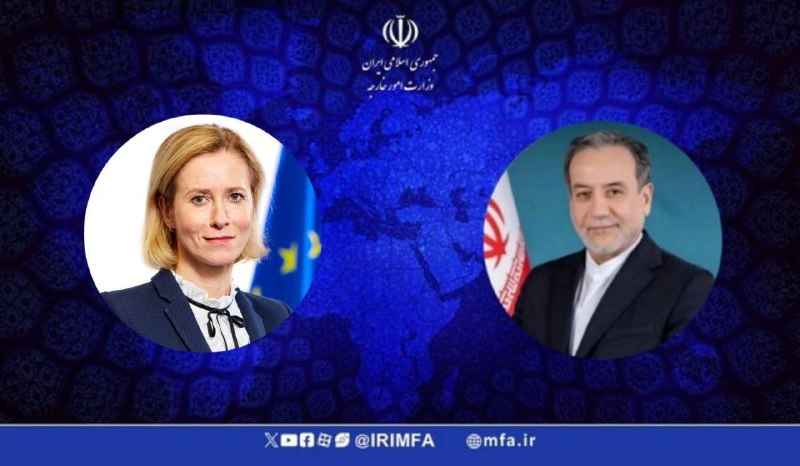
At 18:02 UTC on 11 July 2026, Iran's mission in Muscat walked out of a session with Omani mediators and announced that the Strait of Hormuz would stay shut to shipping, with one exception: a northern corridor through Iranian waters. Three minutes later the same line surfaced on Unusual Whales' account, framing it as a rejection of a US ultimatum. By 19:11 UTC Middle East Eye's live blog was reporting that Oman and Iran had, in fact, kept talking. The contradiction is the story. Tehran says one thing in public while Muscat quietly hosts the negotiation that decides what actually passes through the most consequential energy chokepoint on earth.
What unfolded on Friday is the closest thing the Gulf has seen to a structured partition of Hormuz in living memory. It does not resolve the standoff between Washington and Tehran, but it changes the geometry: shipping through the strait is now being re-imagined as two lanes rather than one. The Omani proposal, summarised by Clash Report at 19:02 UTC, would create a southern route through Omani waters operating under normal free-passage rules and a parallel northern route hugging the Iranian coast that would pass only with Tehran's say-so. If both sides hold to that frame in the days ahead, the world's oil flows will start to be governed not by a single neutral corridor but by two parallel legal regimes inside a single strait.
What Muscat actually proposed
The Omani plan, as circulated through regional channels on Friday evening, is more granular than the headlines suggest. According to Clash Report's summary of the proposal, the southern lane would follow Omani waters south of the existing traffic separation scheme, with transit governed by Muscat's own maritime authority and the usual international rules on innocent passage. The northern lane would run through Iranian waters closer to the Islamic Republic's coast and would, in effect, become a tolled corridor: vessels wishing to use it would clear Iranian maritime security in advance. The strait itself would remain a single body of water, but the rights and obligations inside it would be split.
The substance is less dramatic than it sounds. Iran already inspects vessels transiting near its coast in normal times, and Oman already operates one of the more professional coastguards on the Gulf of Oman. What changes is the optic. By assigning each lane to a different jurisdiction, the deal makes explicit what has been true for years: the southern lane has functioned as a tacit Omani sphere of influence, while the northern lane has functioned as an Iranian one. The negotiation is codifying that arrangement rather than inventing it.
The Oman News Agency readout, relayed by Al-Alam at 19:01 UTC, used careful language. The two sides discussed "maritime traffic in the Strait of Hormuz to ensure the safety and freedom of this water route," a formulation that pointedly did not call the strait open or closed. The Omani phrasing tracks with what one Western maritime lawyer briefed on the talks would later call a "soft partition", neither party formally concedes sovereignty over the whole strait, but each side agrees to operate only inside its own lane.
The two parallel readouts
The reason this story moved in two directions on Friday is that two different conversations were happening at once. On one track, Iran's delegation at Muscat delivered a public rejection of the US position, framed through Unusual Whales' account as a "rejection of the US ultimatum" with the strait "closed to all traffic except the northern Iranian route." That language is consistent with Tehran's preferred narrative: Hormuz remains a controlled Iranian asset, and outside powers are being told to deal with it on Iranian terms. The same message was carried by WarMonitorRT via Telegram at 20:02 UTC, amplifying the closure framing for an English-language audience.
On a parallel track, the same Iranian delegation was sitting across from Omani officials and, according to Middle East Eye's live coverage, agreed to "continue talks." BRICS News, citing the Omani side, reported the same at 19:24 UTC. The two statements are not necessarily contradictory, Iran can reject Washington while negotiating with Muscat, but they reveal a familiar Tehran pattern: maximalist public rhetoric, minimal-but-real diplomacy through a Gulf intermediary.
This is the second time in a decade that Oman has functioned as the indispensable middleman between Iran and the wider world. In 2013 and again in 2023, Muscat hosted the secret back-channel that made US-Iran diplomacy possible. The lesson of those episodes is that the Omani-Iranian working relationship is real, durable, and survives precisely because it operates below the headline layer. The Friday evening contradiction is what that relationship looks like in real time.
Why the corridor matters more than the ultimatum
The American "ultimatum" referenced by the Unusual Whales post is the part of the story the source material describes without detailing. None of the Friday wire traffic reproduces the US text, and no outlet in this cluster identifies the deadline, the sanctions trigger, or the specific demand Washington put on the table. What the sources do establish is that Tehran's response was framed as a categorical rejection and that the response was issued through the same Iranian diplomatic channel that simultaneously sat down with Oman.
That sequencing matters. If Tehran had wanted to use Hormuz as a hard lever against Washington, the rational move would have been to walk away from Muscat, not to keep talking while issuing a public rejection. The fact that both happened inside the same hour suggests the public statement was, in part, a domestic-audience play for hardliners in Tehran who would punish any appearance of concession under American pressure. The Muscat channel is the insurance policy.
The structural frame here is the one that has governed the Gulf since 2019: maritime security in Hormuz has become deniable, layered, and bifurcated. Iran does not formally claim to close the strait because that would trigger a naval response under existing US posture. Instead, it acts on vessels selectively, mines occasionally, and threatens episodically. Oman, by contrast, cannot afford instability in its waters because its ports at Salalah and Sohar are the country's economic lifeline. The two-lane scheme is the institutional version of that equilibrium: each side gets the corridor it can actually administer, and neither has to formally renounce the whole.
What hangs on the next seventy-two hours
Three things now need to happen before the corridor plan either takes hold or dissolves. First, a tanker has to transit the southern lane under Omani escort without incident. Until a commercial vessel clears the southern corridor with published insurance terms and a confirmed Omani clearance, the plan exists only on paper. Second, Iran has to signal, even through a cutout, that the northern lane's transit regime will be predictable enough for shipowners to plan around. Predictability, not openness, is the commodity Gulf shipowners actually buy. Third, the United States has to decide whether to treat the Muscat framework as a basis for de-escalation or as a piece of Iranian stagecraft.
If those three moves land inside the next week, the global oil market will start to behave differently. Insurance premiums for Hormuz transit, already elevated in the run-up to Friday's exchange, would likely bifurcate by lane. A vessel booking the Omani southern route might price its war-risk premium lower than one forced into the Iranian northern corridor. Refiners in India, China, and South Korea, the three largest Hormuz-tanker customers, would quietly start to charter along the corridor that offered the cleanest paper trail. The market would, in effect, vote on the plan before any government formally endorsed it.
The plausible alternative reading of the same facts is also worth taking seriously. It is possible that Friday's contradiction is not a controlled exercise in bifurcation but the first visible crack in Oman's mediation role. If Iran's rejection of the US ultimatum is sincere, and if the Muscat talks are merely a holding pattern, then the southern lane proposal collapses as soon as a single Iranian Revolutionary Guard Corps Navy fast boat approaches an Omani-escorted tanker. Muscat does not have the naval mass to enforce a parallel corridor against a determined Iranian interdiction. The plan works only if Tehran actually wants it to work, and that is the part the source material does not resolve.
The precedent the Gulf is being asked to accept
Whichever way this resolves, the conversation in Muscat on Friday did something that the 2019 tanker incidents and the 2024 shadow-fleet seizures did not: it put on the table a partition of the strait rather than a contest over its unity. That is the real precedent under negotiation. For seventy years the international legal position has been that the Strait of Hormuz is a single international waterway in which innocent passage must be respected. The Omani plan does not formally repudiate that doctrine, but it quietly routes around it by treating each lane as a separate jurisdictional exercise.
For Gulf states watching from Riyadh, Abu Dhabi and Doha, the implication is uncomfortable. A formalised two-lane Hormuz would mean that the southern lane becomes the de facto neutral corridor under Omani (and by extension, GCC) management, while the northern lane becomes the corridor in which Iran extracts a price. The Saudis and Emiratis, who spent much of the last decade building pipeline bypass routes specifically to avoid Hormuz dependence, would find that the political map of the strait has shifted under them. Their leverage inside the strait diminishes; Oman's leverage grows.
What remains genuinely uncertain, and where the evidence thins, is whether Washington's posture on Friday matched the public ultimatum that Tehran claimed to reject, and whether the Omani-Iranian agreement reached Muscat's working level or stayed at the level of communiqué. The source material describes both the ultimatum and the talks without producing the underlying text of either. Until either surfaces in a primary document, the most that can be said is that the two tracks ran in parallel on Friday, that they produced different messages, and that Oman's role as the indispensable middleman has been confirmed for another news cycle. The chokepoint did not open, but it did, briefly, become a corridor under negotiation.
The desk note: Wire coverage of the Friday exchange defaulted to the dramatic frame, a chokepoint slammed shut. Monexus treats the more important development as the parallel channel in Muscat, where the chokepoint was being quietly redesigned instead of defended. The contradiction between Iran's public statement and Oman's simultaneous readout is itself the news.
Wire provenance
This editorial synthesis draws on the following public wire/social posts:
- https://t.me/osintlive
- https://t.me/bricsnews
- https://t.me/ClashReport
- https://t.me/alalamfa
- https://t.me/WarMonitorRT