Merlier makes it four in stage eight as the Tour's sprinters tighten their grip
Tim Merlier took his fourth stage win of the 2026 Tour de France in a bunch sprint on stage eight, reasserting the pure sprinters' claim on a race still hunting for its first decisive break.
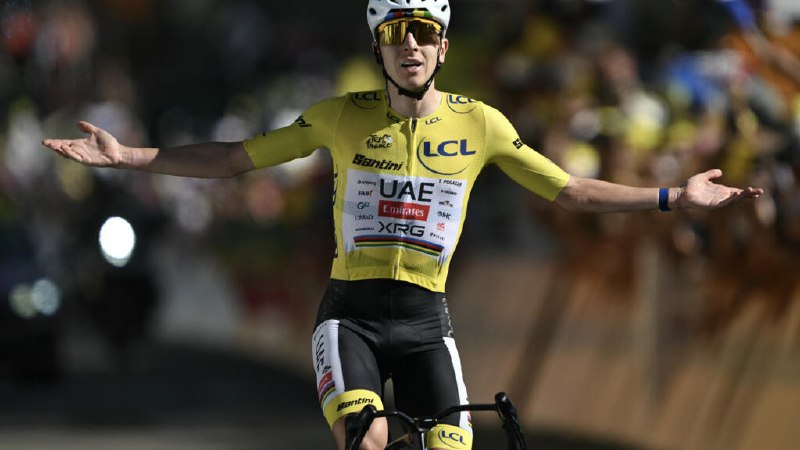
Tim Merlier crossed the line first in a mass gallop on stage eight of the Tour de France on 11 July 2026, taking his fourth victory of this edition and reminding a race still looking for its first long-range breakaway that the fast men have not gone anywhere. The Belgian, riding for Soudal Quick-Step, timed his effort off the wheels of his lead-out train to overhaul the late-charging Jonathan Milan and the Dutch sprinter Dylan Groenewegen, who rounded out the podium in a finish reported by FRANCE 24's cycling feed at 15:41 UTC.
A sprint win on the eighth day of a Grand Tour is, on paper, a footnote. In practice it is the kind of result that shapes how the race is read from the roadside and from the commentary bus for the week that follows. Merlier's four stage wins already equal his entire Tour tally from any single previous campaign, and he has collected them in bunch finishes that have given the general classification almost no air to breathe.
The sprinters are not letting go
For three weeks every cycling correspondent in the peloton asks the same question: when will the breakaway finally be allowed to win? Eight stages in, the answer this July is still "not yet." The flat and rolling finishes in the opening phase of the 2026 route were always likely to favour the pure sprinters, and the teams of Milan, Merlier, Groenewegen, Arnaud De Lie and the green jersey contenders have shown no interest in surrendering them. Each sprint finish so far has ended with a textbook lead-out: a long, controlled approach through the final three kilometres, a saturated speed line of soigneurs and directeurs sportifs screaming into earpieces, and a single winner by one or two bike lengths.
Merlier's wins have come in slightly different shapes. Two were straightforward power sprints on pancake-flat arrivals; a third required him to come off a well-timed wheel in the closing 200 metres; and the eighth stage, run through a tailwind finish, became a contest of who could hold the highest top-end speed longest. On that metric, Soudal Quick-Step's train, with its Belgian champion sitting third or fourth wheel into the final kilometre, simply had more in the tank. Milan, the Lidl-Trek sprinter who arrived at this Tour as one of the favourites for the green jersey, has now finished second to Merlier more often than he has beaten him, a record that will weigh on his squad's tactical choices as the race tilts towards the Alps.
A classification still waiting to breathe
The general classification, meanwhile, remains almost suspiciously tidy. No rider has taken more than a handful of seconds out of anyone else through crosswinds, echelons or summit finishes, because the race has not yet reached terrain that punishes the pure climbers. Tadej Pogačar, Jonas Vingegaard, Remco Evenepoel and Primož Roglič have all been spared the kind of day that costs minutes rather than seconds, and the race's hierarchy is still being decided in the margins of intermediate sprints and bonus seconds.
That makes the sprint stages structurally important in a way they often are not. In a Tour where the climbers have not yet broken the race open, the men taking green jersey points are also the men shaping the televised story. Every bunch finish reassures the organiser, ASO, that the roadside crowds in northern and central France are getting the show they came for, and it gives the sponsors of the sprinters' teams something to put in their end-of-day marketing wrap. The risk, for the wider spectacle, is a long middle week where the GC riders mark each other until the mountains, with the television product leaning heavily on intermediate moves and domestique raids to manufacture drama.
There are reasons to think that risk is contained. The 2026 route carries enough high-mountain stages in its final ten days to force a real selection, and the rest day after the first mountain block tends to be the moment when the race's narrative reorganises itself around the climbers rather than the sprinters. Merlier's early lead in the points classification gives Soudal Quick-Step something to defend, which in turn forces the other sprint teams to keep the pace honest in any transitional stage that tries to slip away.
What the sprinters' grip tells us about this peloton
The depth of the sprinting field is the other story hiding inside Merlier's fourth win. Milan, Groenewegen, De Lie, Wout van Aert when he chooses to contest a flat finish, Jasper Philipsen, Biniam Girmay, Phil Bauhaus: the list of riders capable of winning a flat Tour stage on a given afternoon runs well into double digits, which is part of why breakaways have struggled to stay clear. The calculus for a directeur sportif weighing a morning escape is unforgiving. Let a six-rider group go, and the sprint trains will simply throttle the peloton at 55 kilometres an hour for the last hour, banking on the certainty of a sprint they expect to win.
The structural reading is straightforward. Modern sprinting is no longer the province of two or three super-teams with the budgets to build kilometre-long lead-outs. The depth of the field, the professionalisation of lead-out trains, and the reliability of in-race radio have produced a peloton in which the sprint is the default outcome on any stage that does not finish above 1,500 metres. The corollary is that the racing spectacle increasingly depends on terrain that breaks the script.
The week ahead
The race now turns towards the Massif Central and the first real climbing tests, with stage nine and the days that follow expected to offer the first summit finishes of the edition. That is the window in which the climbers will try to impose themselves and in which Merlier's four stage wins will either look like a sprinters' honeymoon or the foundation of a green jersey campaign. Either way, stage eight was a reminder that until the road tilts up, the fast men still own the Tour.
This piece was written by Monexus's Europe desk, leaning on FRANCE 24's cycling wire for the stage result and the broader sprinting picture; the article takes the sprinters' grip on the opening week as a structural story rather than a one-day result.