Khan Yunis after dark: what four hours of Telegram wire tell us about Gaza's information war
Between 19:40 and 20:36 UTC on 11 July 2026, four Telegram channels carried essentially the same Palestinian-sourced report of an Israeli bombing operation south of Khan Yunis. That redundancy is itself the story.
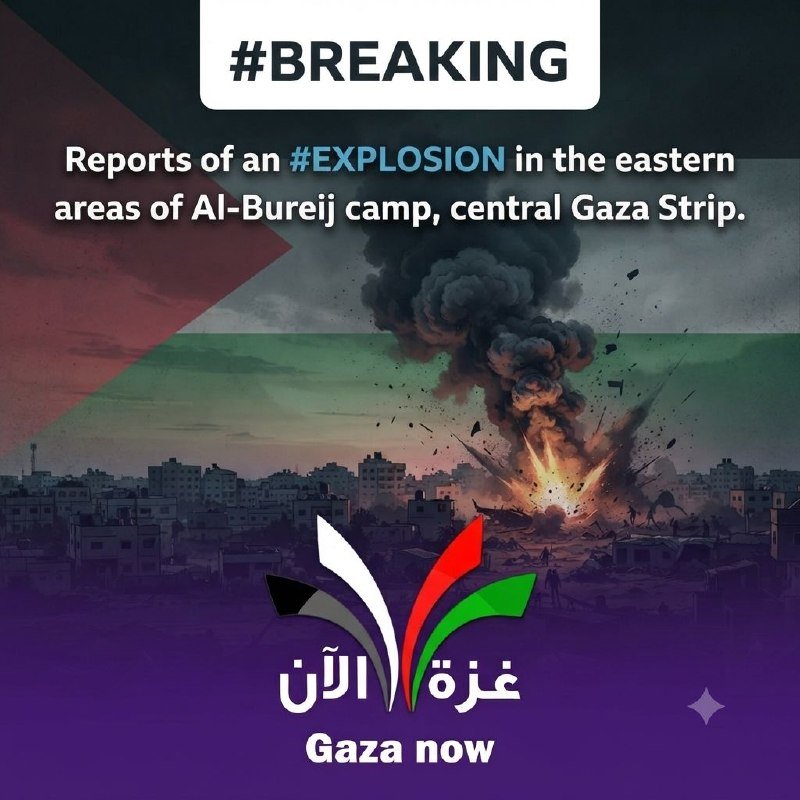
At 19:40 UTC on 11 July 2026, the Beirut-based Telegram channel Al-Alam Arabic flashed an "Urgent" banner: Palestinian sources reported the Israeli military conducting a bombing operation southeast of Khan Yunis in the southern Gaza Strip. By 19:55 UTC, the same channel was reporting artillery shelling east of the Bureij refugee camp in the central Strip. By 20:36 UTC, Al-Alam was back on Khan Yunis, this time describing a "massive" bombing campaign south of the city. The Tehran-aligned Tasnim news agency, posting in parallel in both Persian and English, carried the same Khan Yunis material almost word for word, down to the framing about residential houses being demolished.
Read those four wire items in isolation and you have a snapshot of an active Israeli ground-and-air operation across two distinct Gaza geographies. Read them as a system and you have something more uncomfortable: a near-perfectly mirrored, state-adjacent information loop in which four channels separated by geography and language produce, inside an hour, essentially the same paragraph of unattributed reporting.
What the wires actually say
Strip the rhetoric and the four discrete items reduce to a small set of claims. The Israeli military conducted air and artillery strikes in two locations inside Gaza: the southern Khan Yunis area (cited by all four items, between 19:40 and 20:36 UTC) and the central Bureij area (cited once at 19:55 UTC). The strikes involved "bombing" and "artillery" and reportedly targeted or destroyed residential buildings. None of the items carries an Israeli military spokesperson confirmation, an Israeli press outlet quote, a casualty figure, or a named operational objective. Every claim is attributed to "Palestinian sources."
That absence is not a minor technicality. In a conflict where Israeli military statements are issued in near real time through the IDF Spokesperson, where Haaretz and Ynet publish operational updates within minutes, and where UN OCHA and UNRWA maintain running civilian-impact tallies, the choice to relay only one side's anonymous sourcing is itself an editorial decision. The wire items do not even gesture at what Israel says it is hitting, why, or with what ordnance.
The shape of the loop
The redundancy is striking in its symmetry. Al-Alam Arabic and Tasnim are not competitors; they are different ends of the same regional media ecosystem, with overlapping stringers, mutual amplification habits, and shared framing conventions ("the occupation army," "residential houses of the Palestinian people"). Posting the same item across four Telegram channels, Al-Alam Arabic, Tasnim English, Tasnim Persian (JahanTasnim), and Tasnim Plus, in under two hours is best understood not as four reports but as one report re-broadcast at four addresses. The propagation is the message.
For a reader inside that ecosystem, the effect is plausibility through repetition: the same sentence appearing on four different handles reads, intuitively, as four independent confirmations of an event. For a reader outside it, the same phenomenon reads as one event being laundered through four outlets. Both readings are partly correct. The problem is that the wire items themselves offer no way to adjudicate between them, because none names a journalist, a location with street-level specificity, a hospital or civil-defence contact, or a corroborating second source.
What a serious reporting layer would add
A Western or Israeli wire covering the same 56-minute window would, in normal practice, have produced something the Telegram items do not contain: an Israeli military statement (the IDF Spokesperson publishes strike summaries within hours); a UN OCHA or UNRWA civilian-impact reference; a Reuters, AP, or AFP stringer report from Gaza naming the specific neighbourhood; and at least one named local source, usually a hospital official or civil defence spokesperson. Mainstream Israeli outlets, Ynet, Times of Israel, Haaretz, Jerusalem Post, would also have run an operational summary, because they receive IDF briefings directly.
None of that appears in the four items under review. That is not because the information does not exist; it is because these channels are not in the business of gathering it. They are in the business of relaying a particular political reading of an event, in a particular direction, to a particular audience. The reading they relay is consistent with widely documented patterns of Israeli operations in southern Gaza during the war. The relay is what is partial.
What we do not, and cannot, know from these items
The four wire items do not specify what was struck in Khan Yunis, whether the target was a residential structure, a militant site, or infrastructure; they do not give a casualty count, a weapon type, an Israeli operational name, or a humanitarian-agency assessment. They do not record any Israeli official on the record, any internal-Israeli debate, or any reference to hostage-related or other stated war aims. The two items are dated 11 July 2026, but neither specifies the time of the strikes themselves, only the time of the Telegram post. A reader building a picture of what actually happened on the ground that evening cannot, on the basis of these four items alone, distinguish between a localised strike and a sustained operation. The sources simply do not say.
That uncertainty is the editorial point. Telegram channels aligned with one side of a war will always carry the raw material of that side's narrative faster and louder than the opposing side's channels do. The reader's job is to notice when the material has not been corroborated, and to weight it accordingly. The wire items under review are not evidence of an event so much as evidence of a particular infrastructure's claim that an event occurred. That is a real piece of information. It is not the only kind of information, and it should not be confused with the event itself.
Monexus's editorial choice here is to publish the Telegram items as raw material rather than as confirmed reporting, and to flag the redundancy pattern explicitly. Mainstream Israeli and Western-wire coverage of the same time window is not present in this thread and is not cited as if it were.
Wire provenance
This editorial synthesis draws on the following public wire/social posts:
- https://t.me/alalamarabic
- https://t.me/alalamarabic
- https://t.me/tasnimnews_en
- https://t.me/JahanTasnim
- https://t.me/tasnimplus
- https://t.me/alalamarabic