A football match, two boys, and a Gaza morning the cameras missed
A Palestinian researcher says two boys were killed in Gaza while walking to watch the World Cup semi-final. The single thread that surfaced the claim is also the only window into the story.
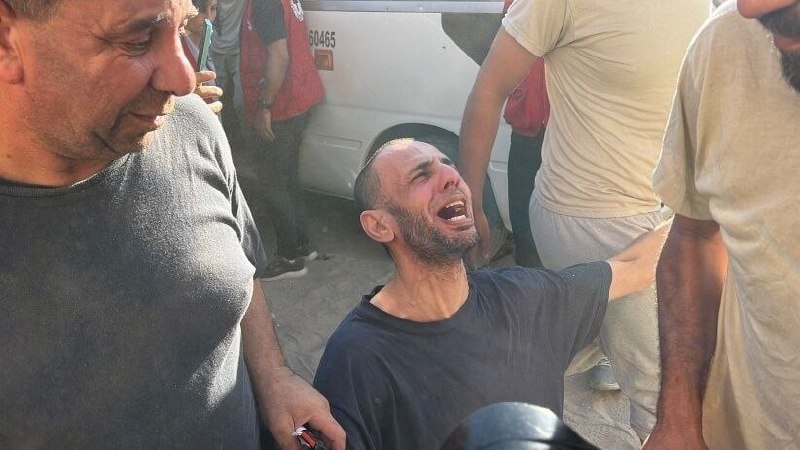
At 18:47 UTC on 11 July 2026, a single post on X by the Palestinian researcher and Euro-Med Monitor chair Ramy Abdu surfaced a story that no major wire had yet filed: that two Palestinian boys, identified by Abdu only as Fadi and Hamza, had been "executed by Israel" in Gaza while on their way to watch the Egypt-Argentina World Cup match two days earlier. The post carried no coordinates, no field hospital name, no footage timestamp. It carried one image.
The match itself is verifiable: Egypt faced Argentina in the semi-finals in the United States on 9 July 2026, part of the expanded FIFA tournament hosted across North American venues. The rest of the claim sits in the kind of evidentiary vacuum that has come to define reporting from Gaza in the middle of 2026: a single, named humanitarian source, a one-line assertion, and a global news apparatus that has spent the year oscillating between saturation coverage and fatigue. What this publication can do with a thread that thin is limited. What it cannot do is pretend the claim is either confirmed or refuted.
What we actually know
Two facts are independent of Abdu's post. First, Egypt played Argentina on 9 July 2026, a fixture the host nation's diaspora and the wider Arab world followed with the intensity of a geopolitical event, not merely a sporting one. Second, Israel continues to conduct strikes inside Gaza more than two years into the war that began on 7 October 2023, with the civilian-protection floor of international humanitarian law the central fault line between Israeli and Palestinian-account framing.
Abdu's post asserts the boys were "executed" while walking to a screening, and that they were targeted rather than caught in incidental fire. That word choice matters. "Executed" implies intent, not collateral damage. It is the kind of characterisation that, if confirmed by an independent field investigation, would have legal as well as journalistic consequence under the Fourth Geneva Convention's protections for civilians not directly participating in hostilities. It is also the kind of characterisation that, if it remains at the level of a single advocacy-source post, will be dismissed by Israeli spokespeople and the Western-wire consensus as unverifiable.
The structural problem with a one-source thread
A single post from a named advocate with skin in the outcome is a lead, not a story. The honest reading is that this publication does not know, on the evidence currently in hand, whether Fadi and Hamza died in a targeted strike, an airstrike on a residential block, an errant shell, or some combination of the above. The geography alone is missing. Gaza is a 41-kilometre strip; "in Gaza" in mid-2026 can mean the flattened north, the displaced-population camps in the centre, or the increasingly besieged south.
The structural frame is the harder point. Coverage of civilian death in Gaza now runs through a narrow set of channels. Western wires depend on a small pool of stringers, hospital directors, and Gaza-based press photographers whose own safety and access shape what reaches the page. Israeli military briefings travel through IDF spokesperson channels and Hebrew-wire translation almost in real time. Palestinian-civilian testimony arrives through advocates like Abdu, through Gaza's ministry of health (which Israel and several Western governments no longer treat as a neutral source on casualty attribution), and through social-media posts that may or may not be picked up by mainstream desks. The result is that a story with mass-casualty implications can sit on one platform, in one voice, for hours before anyone with editorial infrastructure asks the next question.
What a serious version of this story would look like
A filed piece from a wire would, at minimum, name the boys' family, the neighbourhood, the time of day, and whether any other civilians were killed in the same strike. It would seek comment from the IDF's Arabic-language spokesperson, Avichay Adraee, whose unit routinely publishes strike-by-strike accounts on Telegram and X. It would check the names against the Hamas-run ministry of health casualty lists, with the caveat that those lists record names and not causes of death. It would ask whether the boys' route to a viewing location passed any site Israel had designated a combat zone on that day.
None of those steps has been visible in the public record of this particular incident. That absence is itself the story, in a way: the news system has internalised Gaza-civilian-casualty reporting to a model in which named, photographable incidents are sought out and verified while unphotographed incidents are aggregated into the background toll.
Stakes and what to watch
If Abdu's characterisation holds up, the legal and political stakes are direct. Civilian killings tied to a sporting moment pull at a particular kind of international attention, the same attention that briefly turned on the killing of the World Cup mascot's Palestinian analogue during the 2022 tournament in Qatar. They also pull against the Israeli diplomatic line that the post-7 October campaign targets Hamas infrastructure and that civilian deaths, where they occur, are the consequence of Hamas operating inside populated areas.
The forward view is procedural rather than dramatic. Within 24 to 48 hours, either a major wire orients to the post and asks the next round of questions, or the thread stays where it is and gets cited, much later, by advocacy groups compiling their own records. The IDF's daily operational summary, if a strike is acknowledged at all, will name a target category. The boys' names will either enter a longer verified list or remain a single-source claim. That second outcome is the one this publication is currently sitting with, and it is honest to say so.
Gaza reporting in mid-2026 is shaped less by what is unknown than by which unknowns the wires choose to chase. This article treats a single X post as exactly what it is: a lead, not a story, until independent corroboration changes that.