Explosions reported across southern Iran as Tehran's air defenses activate
Within a thirty-minute window on 11 July 2026, blasts were reported in Bushehr, Asaluyeh, Kangan and Chabahar, while Iranian air defenses engaged targets over Tehran, a sequence the sources say followed Tehran's re-closure announcement for the Strait of Hormuz.
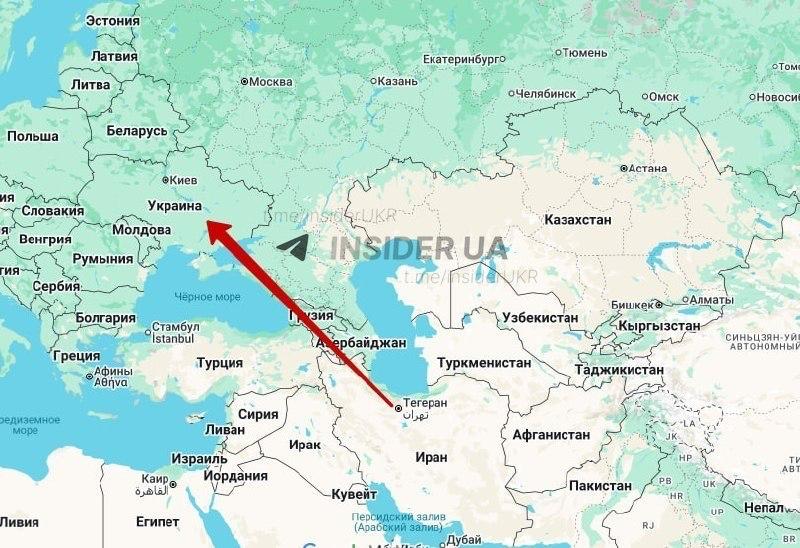
Blasts were reported in at least four Iranian cities inside a half-hour window on Friday, 11 July 2026, beginning with explosions in Bushehr and Asaluyeh at roughly 23:23 UTC and ending with detonations in Chabahar and air-defense activity over Tehran near 23:52 UTC, according to Telegram-based monitoring channels.
The sequence is unusually wide. Bushehr and Asaluyeh sit on the Persian Gulf coast and host Iran's only operating nuclear power station and the bulk of its South Pars gas processing capacity. Chabahar, more than a thousand kilometres to the southeast on the Gulf of Oman, hosts the country's principal Indian-co-financed port and a naval base that fronts the Strait of Hormuz from the outside. Tehran is roughly nine hundred kilometres inland from both. A claim of activity across all four nodes inside thirty minutes would, if corroborated, point to either a multi-axis strike, a coordinated Iranian defensive posture, or both.
For now, the public record is a stack of Telegram dispatches. That record is enough to take the episode seriously, and not enough to confirm who is doing what to whom.
What the wires actually say
The earliest item in the cluster is a 23:23 UTC post on the wfwitness channel citing "circulating reports" of explosions in southern Iran, with Asaluyeh named explicitly, and placing the reporting in the immediate aftermath of an Iranian announcement of the re-closure of the Strait of Hormuz. Two minutes later, PressTV itself, Iran's state broadcaster, posted a short notice confirming reports of explosions in Bushehr and Asaluyeh. By 23:27 UTC wfwitness had added local reports of blasts in Kangan, a town adjacent to Asaluyeh and part of the same petrochemical corridor. At 23:29 UTC the ClashReport and GeoPWatch channels both posted short BREAKING items naming Bushehr and Asaluyeh together. At 23:51 UTC rnintel reported air defense activity over Tehran. At 23:52 UTC rnintel and GeoPWatch both posted on Chabahar.
Two things stand out. First, the time compression: a span of less than thirty minutes separates the first Bushehr report from the first Chabahar report, with Tehran airspace activity logged in between. Second, the source mix: the same Iranian state outlet that would normally be expected to suppress or reframe a strike on its own soil has instead carried one of the earliest confirmations, in spare telegram form. Neither observation resolves the underlying question, but both shape how to read what follows.
The Hormuz link, and why it matters
The single piece of context the sources volunteer for the strike sequence is the Iranian re-closure announcement for the Strait of Hormuz, which the wfwitness post at 23:23 UTC explicitly ties to the blasts. The closure claim has not been independently confirmed in this thread, and the brief does not specify whether the announcement was unilateral Iranian rhetoric, a counter-announcement to a prior Israeli or US posture, or something else. The cluster treats it as reported context, not as verified fact.
If the re-closure claim is taken at face value, the geographic logic of the reported explosions becomes legible. Bushehr and Asaluyeh are inside the Gulf, where any Iranian move to seal Hormuz would be enforced. Chabahar sits outside Hormuz on the Gulf of Oman and has been marketed by Tehran, New Delhi and, at various points, Beijing as an alternative trade corridor precisely because it bypasses the strait. A strike package spread across both flanks would, in that reading, target both the chokepoint and its principal bypass. Tehran's reported air-defense activity, if genuine, fits the same pattern: the capital is engaged not because it is the operational centre of any single node but because the air-defence picture is national.
If the re-closure claim is set aside, the geography still has to be explained. Bushehr, Asaluyeh, Kangan, Chabahar and Tehran are not a coherent military target set on their own. They are, however, a coherent political target set: energy infrastructure, a strategic port, and the capital's air picture.
Who benefits from the fog
The episode is, at this writing, a Telegram thread more than it is a confirmed strike. No major wire service has been added to the cluster. No Israeli, US or Iranian official has been named on the record. The attribution problem is therefore not a side issue; it is the issue. Two readings deserve airtime.
The first reading takes the cluster at face value. The sequence reads as a US-orchestrated operation: the embassy-style flag emoji on rnintel's posts is a strong editorial signal, the geographic spread matches a doctrinal interest in degrading both Iran's Gulf export capacity and its outside-the-strait alternatives, and the timing immediately after an Iranian closure announcement is consistent with a strike designed to pre-empt or punish. The counter is that no US or Israeli official has confirmed anything, that Telegram flags are not attribution, and that the time pattern is also consistent with several other explanations.
The second reading treats the cluster as a contested information event. PressTV's prompt and unembellished confirmation of blasts in Bushehr and Asaluyeh is unusual. Iranian state media has historically been the slowest, not the fastest, outlet to acknowledge kinetic action on its own soil. A post that names specific cities in real time, without framing or denial, is either the behaviour of an outlet that has been told what to say, or the behaviour of an outlet reporting a genuinely small incident. The sources do not let the reader choose between those two.
A third, narrower reading sits between them: that some of the reports describe real Iranian defensive activity responding to unidentified aerial targets, that the chokepoint-adjacent explosions are tied to that activity, and that Chabahar's later appearance in the cluster reflects a separate, possibly unrelated, incident whose inclusion in the same Telegram thread is a function of how the channels aggregate rather than how the events unfolded. The cluster does not exclude this reading. It also does not support it.
What remains uncertain
The source set does not establish: who struck, with what, or whether the explosions in different cities are causally linked. It does not establish casualty, damage, or whether Iranian, US or Israeli officials have commented on the record. It does not establish whether the Strait of Hormuz is in fact closed, partially closed, or being announced closed for the second time in the current escalation cycle. Each of those is a load-bearing fact for any subsequent framing, and each is absent from the inputs.
What the sources do establish, narrowly, is the order and timing of the reporting itself: Bushehr/Asaluyeh first, Kangan and PressTV's confirmation next, then a gap of roughly twenty minutes before the Tehran and Chabahar items cluster together. That ordering is a piece of evidence. It is not a conclusion.
How Monexus framed this: the wire confirms a thirty-minute sequence of reported blasts across four Iranian cities and reported air-defence activity over Tehran; the cluster does not confirm attribution, scale or causation, and this piece is built on the reporting record rather than on any single dominant frame.
Wire provenance
This editorial synthesis draws on the following public wire/social posts:
- https://t.me/wfwitness
- https://t.me/presstv
- https://t.me/wfwitness
- https://t.me/ClashReport
- https://t.me/GeoPWatch
- https://t.me/rnintel
- https://t.me/rnintel
- https://t.me/GeoPWatch