Apple’s lawsuit turns OpenAI’s hardware push into a courtroom fight
Apple alleges OpenAI’s consumer-hardware programme was built on poaching and stolen secrets. OpenAI is offering a $50,000 bounty for a universal GPT-5.6 biosafety jailbreak the same week.
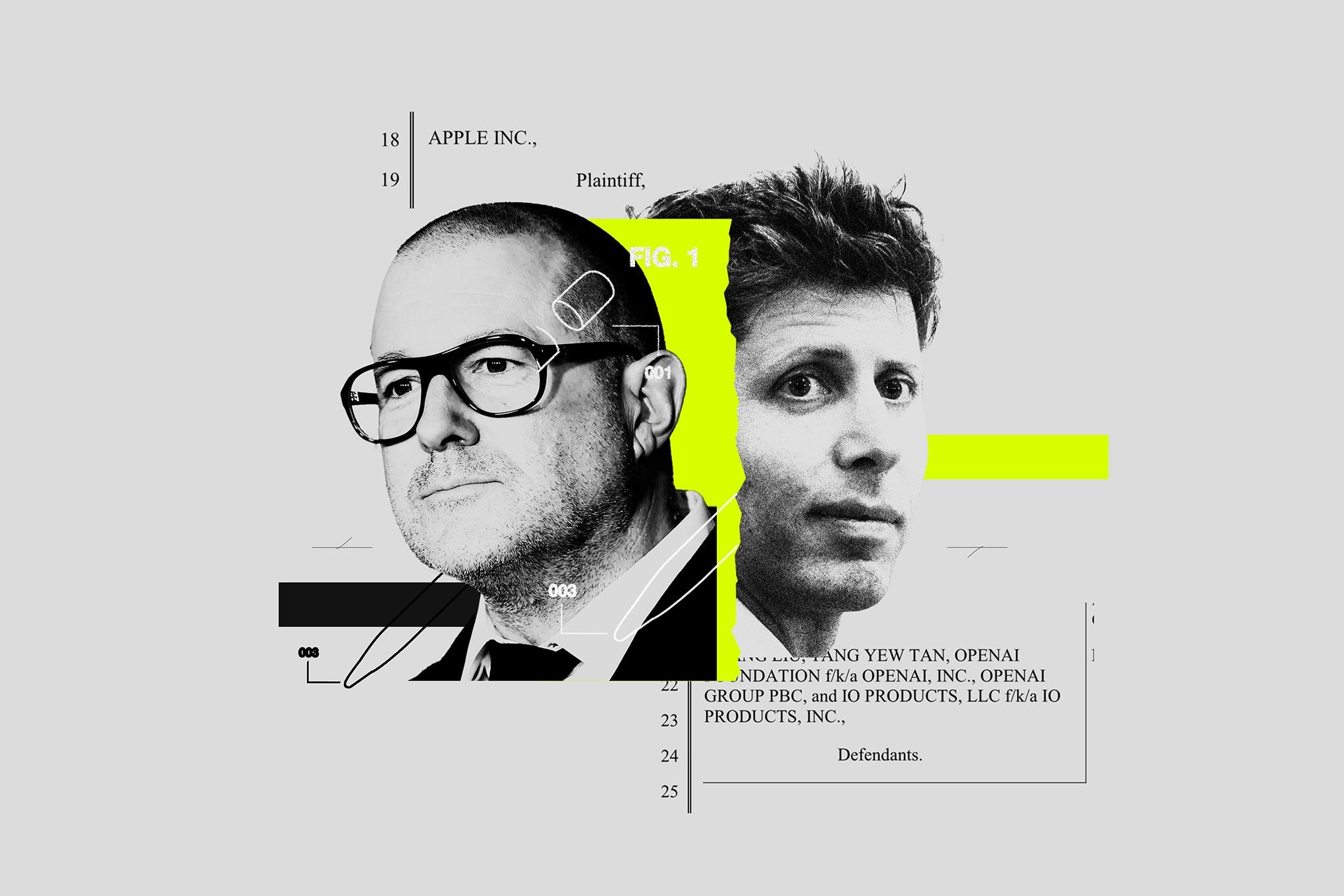
Apple filed suit against OpenAI in a US federal court on 10 July 2026, alleging that the artificial-intelligence company’s nascent consumer-hardware operation is built on trade secrets pulled out of Cupertino by former Apple employees. The complaint, lodged on a Friday afternoon, claims that senior OpenAI leaders directed the misconduct, including at least one long-tenured ex-Apple staffer. Apple’s legal team described the unit as "rotten to its core," according to BBC reporting on the filing.
The lawsuit is the sharpest shot yet in a quiet war between the iPhone maker and the most valuable AI lab in the West. It also lands on a week when OpenAI was already drawing attention for an entirely different reason: a public $50,000 bounty for anyone who can universally jailbreak the biosafety guardrails on its newest model, GPT-5.6.
What Apple is actually alleging
The complaint targets OpenAI’s hardware programme — the same unit widely reported to be exploring a phone-class device and other consumer gadgets. Apple’s theory, as paraphrased by BBC and TechCrunch, is straightforward: senior OpenAI managers orchestrated a deliberate campaign to recruit Apple engineers and, in the process, to carry proprietary designs, supply-chain relationships and internal testing data across the street. Apple is asking the court for damages and an injunction blocking the use of the contested material, according to the two outlets that broke down the filing.
TechCrunch’s account adds that the alleged misconduct is pinned to OpenAI’s leadership tier rather than rank-and-file hires, a framing Apple’s lawyers appear to have built around paper trails and internal communications. The companies have been rivals for talent in AI for years; the lawsuit recasts that rivalry as theft.
OpenAI had not, as of Friday evening UTC, posted a public rebuttal on its press page. The filing itself is the first move.
The hardware prize Apple is trying to defend
The most consequential sentence in the complaint is the one describing OpenAI’s hardware business as "rotten to its core." That language is a tell. Apple does not litigate against small rivals; it litigates against competitors it thinks can actually dent its hardware margins. The market agrees that the prize is real, even if the probability is still long: a Polymarket contract on whether OpenAI unveils a phone in 2026 traded at 14% on Friday afternoon, implying the smart-money crowd thinks a device is plausible but not yet imminent.
Either way, OpenAI’s appetite for a consumer device is the worst-kept secret in Silicon Valley. The complaint treats that ambition as a threat in its own right — a reason to fight in court now rather than later, when Apple would be playing defence on shipped product rather than pre-launch design teams.
A bounty, a jailbreak and what safety looks like in public
Hours before the Apple news broke, OpenAI had put out a different kind of challenge: a $50,000 prize, posted to X on 10 July, for anyone who can produce a universal jailbreak of GPT-5.6’s biosafety protections. The company framed the bounty as a stress test — a way to surface weaknesses before adversaries do.
The juxtaposition is awkward. One arm of OpenAI is being accused in federal court of running a covert operation to steal a competitor’s playbook; another is running a public bug-bounty, asking the world to attack its own model. Both moves are consistent with a company that operates in two registers at once: the closed, defensive one that guards its AI roadmap, and the open one that asks external researchers to keep its models honest. The Apple lawsuit turns the first register into a public exhibit.
What the framework looks like underneath
Big-tech IP fights are rarely just about patents. They are about tempo. Apple’s complaint tries to slow OpenAI’s hardware timeline at the moment that timeline is most fragile — before any device ships — and to weaponise the discovery process into a stream of disclosures about who joined whom, when, and what they brought with them. Discovery in trade-secret cases is where careers end and settlement cheques are written; it is also where company cultures get dragged across a courtroom.
For OpenAI, the strategic cost of a public, leadership-level theft allegation is heavier than the legal cost. Juries and regulators do not punish unknown startups for grungy hiring practices. They punish established AI labs whose managers are accused, on the record, of treating a Fortune 100’s R&D as a recruiting pool. The complaint cites a long-time former Apple employee by role and tenure; once a name is associated, the rest of the story writes itself.
What’s genuinely contested
Two things the public record does not yet settle. First, the names: Apple has framed the alleged misconduct around a long-tenured ex-employee but has not, in the early reporting, released a roster. That detail will define the discovery war. Second, scope: the complaint characterises the entire hardware unit as compromised, which is a much broader claim than a single hire. OpenAI will press the narrower reading and fight to keep the case about individuals rather than the institution.
The Polymarket print on an OpenAI phone in 2026 — 14% — is itself a contested signal. Markets price probabilities; they do not settle liability. But it is the cleanest public gauge of how seriously the industry takes the hardware threat, which is precisely the threat Apple is now asking a court to slow down.
Stakes, and a date to watch
If Apple secures an injunction, OpenAI’s consumer-hardware programme is functionally frozen until the case resolves or the two settle — a process that typically runs a year or more. If Apple loses, the filing itself becomes a recruiting brochure for talent willing to jump ship from Cupertino. The most likely outcome lives in the messy middle: an injunction narrow enough not to kill the programme, paired with a discovery process that is publicly humiliating for at least one senior figure on either side.
Watch for OpenAI’s first formal response in court, which under standard federal procedure will arrive within twenty-one days of service. Watch also for the named defendants. The moment Apple attaches a name to the "long-time former employee," the lawsuit becomes a referendum on the entire AI-talent pipeline between Cupertino and San Francisco.
Desk note: The wire framing — Apple as wronged incumbent versus OpenAI as over-reaching newcomer — is the easy story. The harder one is structural: two companies now treat AI hardware as the only game left worth playing, and the courtroom has become a recruiting and signalling tool as much as a legal venue. Monexus framed the dispute around tempo and discovery, where the cost of the suit will actually be paid.
Wire provenance
This editorial synthesis draws on the following public wire/social posts:
- https://t.me/s/BBCWorldoffl
- https://x.com/unusual_whales/status/example
- https://x.com/polymarket/status/example2
- https://x.com/polymarket/status/example3