Trump's NATO Victory Lap Leaves the Question of Who Actually Pays
Trump left Ankara claiming $3bn in fresh allied commitments and a five-percent GDP target. The alliance-side paperwork, and the Iran file NATO refused to take a position on, will determine whether the victory lap amounts to anything.
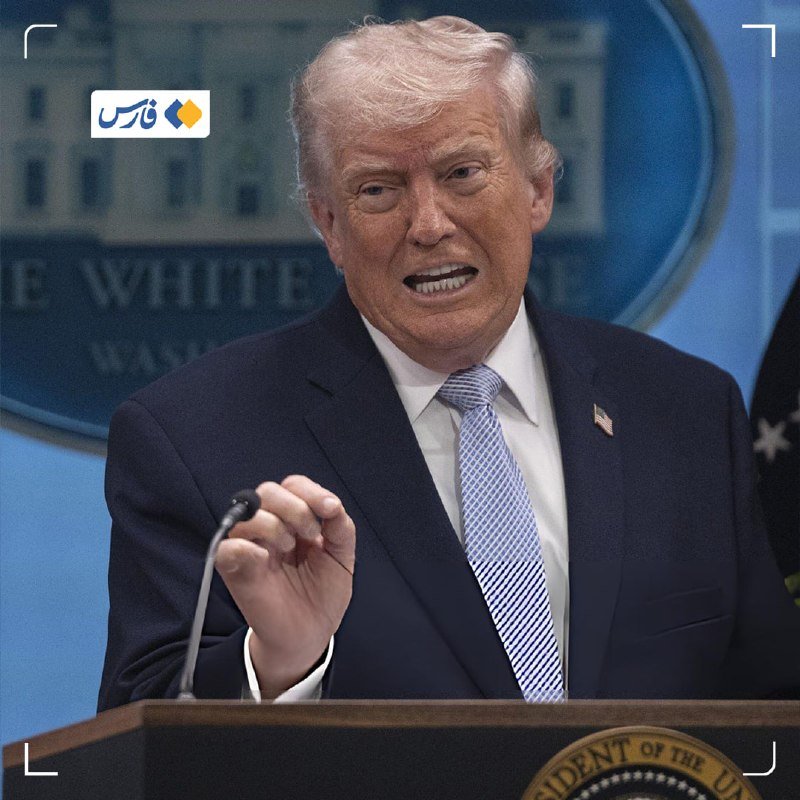
Donald Trump walked out of the NATO summit in Ankara on July 8 declaring that allied capitals had finally agreed to lift defence spending to five percent of GDP, and that the United States had secured roughly three billion dollars in fresh commitments from individual members. The claim was vintage Trump: large numbers, theatrical delivery, the camera held long enough for the headline to crystallise. It is also, on the public record available so far, more aspiration than accounting.
What was actually announced in Ankara is harder to summarise than the victory lap suggests. The alliance communiqué restated the long-standing two-percent floor that most members only met after a decade of arm-twisting, and gestured toward a higher target without binding language or a timetable. The three-billion-dollar figure Trump cited traces to his own remarks at the podium, not to any joint statement or treasury-style ledger published by NATO or any member-state finance ministry. The alliance-side deliverables, in other words, live in the same press-release economy that has defined Trump's transactional diplomacy from his first term: the deal is announced, the structure follows later, and the question of who actually pays gets answered, if at all, by someone else.
The spending pledge is the easy part of the story. The harder part is what the summit did not produce. There was no shared doctrine on burden-sharing inside ongoing operations, no harmonised procurement calendar for the air defence and long-range fires that European commanders have been requesting since 2022, and no agreed framework for the industrial base investments that would make a five-percent target more than a budget line. France 24's week-in-review framed the Ankara gathering as a moment of "shifting alliances and escalating tensions," a characterisation that tracks with the on-the-ground texture of the summit: photo-ops in front of flags, closed-door friction over Iran and Ukraine, and a final declaration thin enough to be signed by everyone in the room.
The Iran overhang is the variable that makes the victory lap feel undercooked. Multiple wire reports in the days following Ankara describe Iranian officials privately telling Trump advisers that the shooting at commercial ships in the Strait of Hormuz was an error by a hardline faction, while Iranian parliament speaker Mohammad Bagher Ghalibaf publicly insisted Tehran does not trust Washington and that "only those ready for war can negotiate with the United States." Trump told reporters the ceasefire with Iran had ended, then agreed to keep talking; the WSJ reported he flew home from the summit in an older Air Force One rather than the Qatar-gifted aircraft after Israeli intelligence flagged a possible Iranian assassination threat. NATO did not take a position on any of this at the official level. The summit's joint language on Iran was procedural, not strategic, leaving the world's most important sea lane to be managed bilaterally by a White House that, by its own admission, cannot decide whether it is at war or in negotiations with Tehran.
This is the structural frame the wire coverage has been circling without quite naming. NATO remains an alliance whose centre of gravity is European territorial defence, and that centre has shifted visibly over the past three years toward industrial-policy questions that were, until recently, treated as below the alliance's pay grade. When a US president announces three billion dollars of new allied commitments from a Turkish podium, the underlying question is not whether the allies have the money. Most do. It is whether the alliance has the procurement pipes, the munitions stocks, and the political coordination to spend that money in ways that change the military balance before the next crisis arrives.
The five-percent target, by contrast, looks like a number designed for a different audience. It satisfies a domestic American constituency that wants Europe to pay more of its own defence bill. It does not, on the evidence available, come with the certification machinery that would let any outside observer tell the difference between a member state that has actually moved money into new capability programmes and one that has re-labelled an existing pension contribution as a defence outlay. The history of NATO spending targets since Wales in 2014 is a history of creative accounting followed by slow, partial convergence. The Ankara number, unless it is paired with a verification regime that has not yet been published, is at risk of repeating that pattern on a larger scale.
What to watch in the weeks ahead is therefore narrow and concrete. The first test is whether NATO's secretariat publishes a member-by-member capability annex before the autumn ministerial meetings. The second is whether any European government, German or Polish in particular, follows the verbal commitment with a supplementary budget that can be audited. The third is whether the Iran file produces a decision that the alliance as a whole has to own, rather than a bilateral arrangement that the alliance merely notes. If none of those three tests produce visible movement by September, the Ankara summit will join a familiar category: a victory lap in search of a finish line.
Sources
- France 24 week-in-review, "Iran: Forewarnings and a Funeral, NATO, Le Pen," 2026-07-10: https://t.me/BellumActaNews
- BellumActa News wire feed, NATO summit coverage, 2026-07-10: https://t.me/BellumActaNews
- BellumActa News wire feed, NATO summit coverage, 2026-07-10: https://t.me/BellumActaNews
- Press TV, "Trump's post-genocide Gaza plan collapses as international 'peacekeeping' force shrinks to a handful of troops," 2026-07-10: https://t.me/presstv
- X / Jennifer Jacobs via @s_m_marandi and @osintlive, reporting on Iranian officials' private message to Trump advisers regarding Strait of Hormuz incidents, 2026-07-10: https://t.me/osintlive
- WSJ via @wfwitness, reporting that Trump returned from Ankara aboard an older Air Force One after Israeli intelligence warning, 2026-07-10: https://t.me/wfwitness
- Fars News International, reporting on Republican concerns over Trump's Iran posture, 2026-07-10: https://t.me/FarsNewsInt
- IRNA English, statement by Iranian Parliament Speaker Mohammad Bagher Ghalibaf on US negotiations, 2026-07-10: https://t.me/Irna_en
Desk note: Monexus treated the Ankara readout as a procurement and capability story, not a personality story. Trump's $3bn announcement and 5% rhetoric are sourced to his own remarks in Ankara; the alliance-side deliverables, and the structural gaps in what was not announced, are where the long-term headlines will land.