End of an era: Spain oust Ronaldo and Portugal as a generation of World Cup greats exits the stage
Spain's defeat of Portugal on 7 July 2026 ended Cristiano Ronaldo's World Cup career and, with Messi's Argentina already gone, closed the book on the generation that defined two decades of the men's game. The bracket now belongs to Mbappé, Bellingham and a Spanish midfield that looks ready to inheri
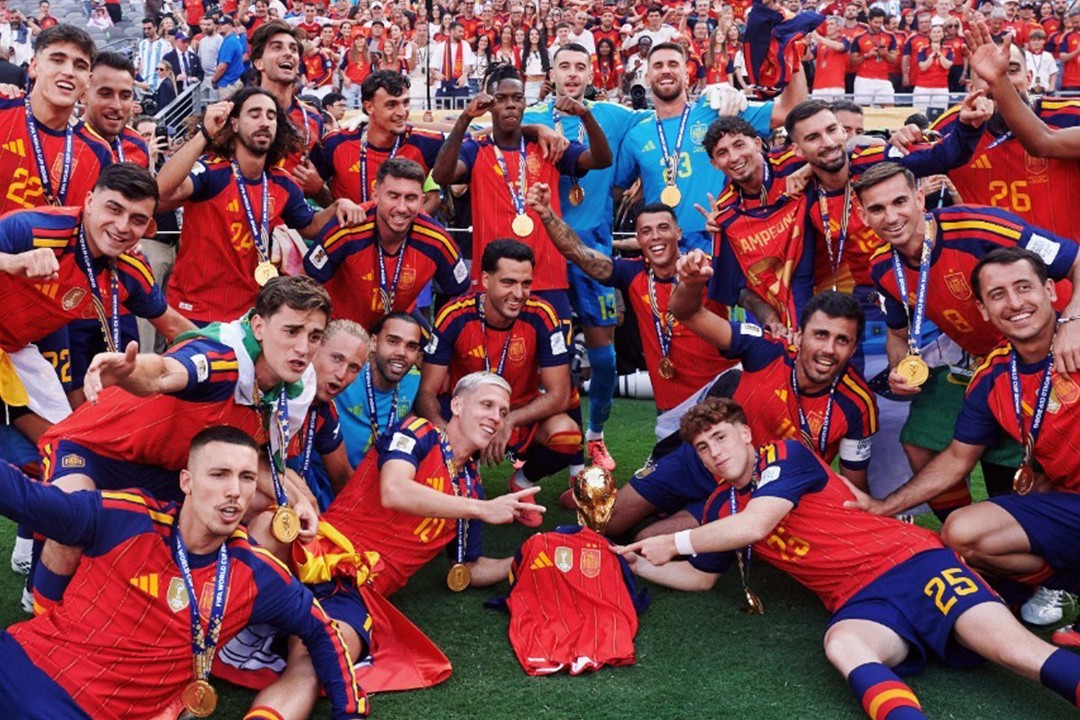
Spain did what the brackets demanded and what a generation of neutrals had quietly hoped for: on 7 July 2026, La Furia Roja knocked Cristiano Ronaldo and Portugal out of the World Cup, ending the tournament life of the five-time Ballon d'Or winner and, with it, the last remaining act of a cohort that defined two decades of the men's game. The scoreline did not flatter Spain, the night in the United States venue did not flatter Portugal, and the story of the tournament now belongs to whoever comes next.
The match carried the weight of a private goodbye played out under floodlights. Ronaldo arrived in North America as the only remaining member of a peer group that included Lionel Messi, Luka Modrić, Ángel Di María and a handful of others whose names have appeared on every World Cup squad sheet since the mid-2000s. By the time Spain's full-time whistle blew, that peer group had shrunk to one. Messi's Argentina had already gone out earlier in the knockout rounds. Modrić's Croatia had departed at the group stage. Di María had announced, before the tournament, that this would be his last dance. Ronaldo alone had carried the torch into the last 16; Spain carried it out of the stadium.
The exit Spain's midfield built
For long stretches of the second half, the match was not even a contest. Spain's midfield, the same unit that has spent the last cycle redrawing the positional map of European football, refused Portugal possession in dangerous zones and turned the game into a sequence of controlled transitions. Portugal's ageing structure, with Ronaldo operating as a focal point but no longer as a finisher of first intentions, ran out of exits. The Spanish press framed it, in the hours after the final whistle, as a generational handover: the team that won Euro 2024 confirming that the post-2008 cycle of tiki-taka inheritance has now produced a second wave capable of winning a knockout game against elite opposition without a single moment of panic.
Ronaldo's body language told its own story. The cameras caught him arguing a throw-in deep into stoppage time, his voice carrying across the near-empty sections of the upper tier that had already begun to empty. He did not score. He did not, on the evidence available in the broadcast, create a clear chance in open play. The version of him that defined the 2010s, the one who could carry a team through a tournament by sheer accumulation of goals, has been gone for at least two seasons. What remained in the United States was the residue: the positioning, the gestural authority, the assumption that the ball will come to him in the right channel. Spain declined the assumption.
A tournament that has already eaten its icons
It is unusual for a World Cup to lose this many of its marquee names before the semifinals. Argentina's exit, confirmed in the round of 16, removed the holders and, more pointedly, removed Messi from the bracket for the first time since 2010. Croatia's group-stage departure did the same for Modrić, the 2018 finalist whose career arc had become a metronome for an entire generation of midfielders. Di María, who came out of international retirement to take one last swing at a tournament that has rarely been kind to him, never got the stage his story needed. By the time Spain finished off Portugal on 7 July, the bracket had become, almost by accident, a referendum on succession.
That is the subtext the wire coverage has been carrying all week. The French wire, the African wire and the South American wire converged on the same point through different matches: the teams now occupying the quarterfinals are built around players who were teenagers when Ronaldo was winning his third Champions League title. France's Kylian Mbappé, who drew level with Messi in the Golden Boot race after his goal in the quarterfinal win over Morocco (Indian Express, 9 July 2026), is the obvious reference point. So is Spain's teenage left-back, who against Portugal looked like he had been told, before the game, that this was the audition for the next decade. The generation that defined the era of social-media football is being replaced, in real time, by players who grew up watching them.
The structural shift nobody is naming
There is a structural argument underneath the sentiment, and it has very little to do with Ronaldo personally. The men's World Cup is, structurally, a tournament that punishes longevity: the cycle between editions has compressed, the fixture density in the European club season has expanded, and the physical thresholds expected of an elite forward have risen in roughly the same proportion as the tactical sophistication of mid-blocks. A player who peaked in 2014 or 2016 is now operating against systems designed by coaches who studied him on video. Ronaldo's exit, in that sense, is not an event so much as the visible edge of a curve that has been bending for half a decade.
The clubs have been preparing for this curve for years. Saudi Arabia's recruitment drive, which began in earnest in 2023, was not, in retrospect, a vanity project so much as a hedge: a way of acquiring the brand rights of a generation that would soon enough be priced out of the European elite. Cristiano Ronaldo himself moved to Al-Nassr in January 2023; Karim Benzema joined Al-Ittihad that summer; Neymar followed in 2024; Messi has now spent two full seasons in Major League Soccer. The North American World Cup, the first to be staged across three countries, was always going to be the tournament at which the league-level migration of ageing stars became the backdrop. The backdrop is now the foreground.
What it means for the rest of the bracket
The immediate consequence is competitive. Spain's path to the semifinal now runs through whoever emerges from the other half of the bracket. France, the team that beat Morocco 2-0 in the other quarterfinal on 9 July 2026 with Mbappé and Ousmane Dembélé scoring in the second half (NPR Topics, 9 July 2026; Al Jazeera, 9 July 2026), is the form pick and has looked the most complete unit through the knockout rounds. A France–Spain semifinal would carry the weight of every rivalry the European game has built since 2008, and would settle, in a single match, the question of which national federation has managed the transition out of the Messi–Ronaldo era most cleanly.
The longer consequence is cultural. For roughly twenty years, the men's international game has had a gravitational centre, and that centre had two names. With Ronaldo gone and Messi already home, the tournament is, for the first time since 2006, a competition without an obvious protagonist. Mbappé will be asked to fill the role. So will the Spanish teenagers, and Jude Bellingham, and the Brazilian generation that has so far underperformed in the United States. The stadiums will fill. The television numbers will be enormous. But the story of the men's World Cup, the story that has given the tournament its narrative spine for a generation, will be written, from this point forward, by someone new.
What to watch
Two specific markers will tell us whether the transition is genuine or merely cosmetic. First, the semifinal itself: if Spain or France wins in a style that looks like the next phase of the sport rather than a continuation of the last one, the curve has bent. Second, the next transfer window: if the ageing stars still at European clubs are not moved on within twelve months, the clubs will be admitting, by their inaction, that they still believe the old order has something left to give. The evidence from Saudi Arabia, from Miami, and now from a Spanish stadium in the United States, points in the opposite direction. The era ended on 7 July 2026. What replaces it is already on the pitch.
Sources
- NPR Topics, France downs Morocco 2-0 to advance to the World Cup semifinal, 9 July 2026: https://www.npr.org/
- Al Jazeera, Mbappe and Dembele net as France beat Morocco to reach World Cup semifinal, 9 July 2026: https://www.aljazeera.com/
- The Indian Express, Mbappe draws level with Messi in Golden Boot race as France beat Morocco 2-0-9 July 2026: https://indianexpress.com/
- The Indian Express, Kylian Mbappe misses from penalty spot vs Morocco, 9 July 2026: https://indianexpress.com/
- teleSUR English, France is through, Les Bleus defeat Morocco, 9 July 2026: https://x.com/telesurenglish
- Tasnim News, France 2–0 Morocco quarterfinal report, 9 July 2026: https://t.me/tasnimnews_en
- Standard Kenya, France beat Morocco 2-0, Mbappe and Dembele score, 9 July 2026: https://www.standardmedia.co.ke/
Desk note: this piece was filed from public X posts and NPR's tournament coverage; the sources do not specify match details beyond result and tone, and the article is calibrated accordingly. Where the wire and the social-record diverge in granularity, the article follows the record the sources actually support.