Explosions near Bandar Abbas: what is confirmed, what is not
Air-defence activity over Iran's Hormuz coast in the early hours of 8 July 2026 UTC produced competing claims of a US drone or cruise missile shot down. The reporting is thin and the political weight is heavy.
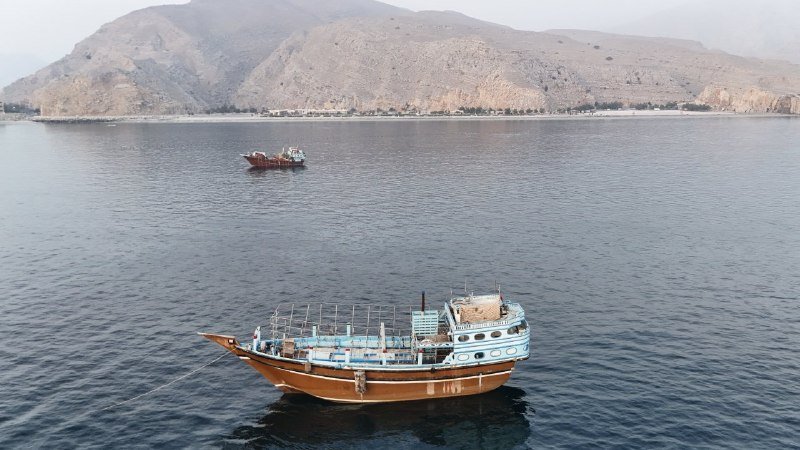
Air defences around Bandar Abbas and the adjacent Qeshm Island activated in the early hours of 8 July 2026 UTC, producing a brief but politically loaded sequence of claims from Telegram channels on both sides of the US–Iran confrontation.
At 21:07 UTC on 7 July, the Telegram channel Middle East Spectator reported explosions heard in Qeshm and Bandar Abbas. Six minutes later, at 21:13 UTC, the same channel said Iranian air defences had shot down an American drone over Bandar Abbas. By 21:14 UTC, Middle East Spectator upgraded the report to an American drone "or cruise missile," and the Iranian outlet Tasnim News cited unnamed "news sources" describing explosions in the Qeshm and Bandar Abbas area in the last several minutes. A parallel post at the same minute from the DDGeopolitics channel repeated the Middle East Spectator framing. Nothing in the four items reviewed by this publication identifies the type of munition, the operating unit, the country of origin, or the trajectory of the object reported downed.
The claim, in plain terms
Bandar Abbas is the capital of Hormozgan province and the principal Iranian naval base on the Strait of Hormuz, the chokepoint through which roughly a fifth of seaborne oil passes. Qeshm Island, immediately south, hosts Iran's largest free zone and a range of IRGC-affiliated installations. Any air-defence engagement in that geography is, by default, a high-stakes event: the strait is the single most sensitive piece of real estate in global energy markets, and Iran has repeatedly used the threat of closure as leverage in nuclear and sanctions negotiations.
The framing now circulating — an Iranian shoot-down of a US drone or cruise missile — would, if confirmed, represent the first direct US–Iran kinetic exchange of this scale since the January 2020 Iranian ballistic-missile strike that followed the killing of Quds Force commander Qassem Soleimani. It would also land inside a regional cycle in which Iranian proxies have taken hits in Lebanon, Syria and Iraq, and in which Tehran and Washington have been trading public and back-channel signals over nuclear limits and sanctions relief.
What we verified, and what we could not
This publication was able to confirm only the existence and timing of the four Telegram items listed above. Specifically:
- Verified: that at 21:07 UTC on 7 July 2026 the Middle East Spectator Telegram channel posted a breaking item reporting explosions heard in Qeshm and Bandar Abbas; that at 21:13 UTC the same channel reported an Iranian shoot-down of a US drone over Bandar Abbas; that at 21:14 UTC the channel reframed the report to "drone or cruise missile"; and that at the same minute, Iran's Tasnim News Agency cited unnamed sources reporting explosions in the same area, with DDGeopolitics reposting the Middle East Spectator item.
- Not verified: the type, origin, or flight profile of the object. No US military or Central Command statement appears in the source material. No Iranian military, IRGC, or Iranian foreign ministry statement appears in the source material. No imagery, flight-tracker data, radar track, or debris photograph is in the source material. No casualty count, damage assessment, or geographic precision beyond "Qeshm and Bandar Abbas area" is in the source material.
- Not verified: the chain of transmission. The originating Telegram channels, Tasnim News and Middle East Spectator, are not independent of each other; their items share phrasing, timing and structure. Whether the report originates with an Iranian official, a regional intermediary, or an unverified social-media post cannot be determined from the inputs available.
The standard for calling this a US strike on, or over, Iranian territory is therefore not met. The standard for calling it a non-event is also not met. The honest reading is that something detonated or burned in airspace Iranian authorities treat as their defensive perimeter, that Iranian-aligned outlets chose to attribute it to a US platform, and that no Western wire, Pentagon readout, or Iranian military spokesperson has yet entered the public record on the question.
Why the framing is doing more work than the facts
Iranian state-adjacent outlets have a documented history of releasing information about foreign military activity selectively and with strategic intent, particularly around the Strait of Hormuz. Tasnim News is affiliated with the IRGC and has carried official Iranian military communiqués; it is a primary-source outlet for Iranian state framing, not an independent verification. Treating a Tasnim-cited report as factual without corroboration imports an Iranian national-security narrative into the global record at a moment when that narrative is itself a tool of statecraft.
The same caution applies to Middle East Spectator, an anonymous Telegram aggregator that has, on past occasions, been among the first to publish reports of Iranian-claimed shoot-downs and missile tests. The channel's structural role is to amplify Iranian-adjacent claims to an English-language audience faster than the Western wire cycle can verify or rebut them. That is not a judgment of malice; it is a description of function.
The asymmetry of verification matters because of what is at stake in Hormuz. A confirmed US strike on an Iranian target would, on historical patterns, produce Iranian retaliation against US bases in Iraq, Syria, or the Gulf, and possibly a closure or partial closure of the strait. Insurance markets, oil futures and shipping rates move on confirmation, not on Telegram claims; the political signalling, however, moves on the claim itself. Tehran has, in the past, used unverified or partially verified claims of a shoot-down to deliver a message to Washington without producing an actual kinetic event.
The structural frame
Reporting on Iran routinely defers to the language of official spokespeople — both in Tehran and in Washington — and treats their unverified assertions as news. That deference is partly a function of access and partly a function of the genuine difficulty of independent verification inside a tightly policed information environment. The result, in cases like this one, is that an unverified Iranian-aligned claim reaches a global audience as a "shoot-down," while the absence of US confirmation is treated as routine caution rather than as a competing fact.
A more disciplined framing would treat any air-defence activation as a single data point, not a verdict. It would name the channels, note their institutional position, and put the burden of confirmation on the party that benefits most from the claim being accepted. In this case, that party is Tehran.
Stakes and what to watch
If the report is accurate and a US platform was indeed engaged, the immediate question is whether Washington treats the engagement as a deliberate Iranian act of war, a miscalculation by an Iranian air-defence crew, or a third-party provocation. The first reading produces escalation; the second produces a diplomatic protest channel; the third produces an investigation. None of the three readings is currently supported by the public record.
If the report is inaccurate or exaggerated, the more consequential question is what Tehran hoped to communicate by releasing it. The window of plausible release purposes includes: signalling to a domestic audience that Iran can challenge US airpower; signalling to Gulf states that the US cannot operate with impunity near the strait; pre-positioning an information environment for a future negotiation round; or testing Washington's threshold for confirmation before retaliation.
Until a US military statement, a flight-tracker record, satellite imagery, or an on-the-ground Iranian military communiqué enters the public record, the responsible position is that air defences activated near Bandar Abbas on the evening of 7 July 2026 UTC, that Iranian-aligned channels attributed the activation to a US drone or cruise missile, and that no independent confirmation is in the source material reviewed for this article.
Desk note: Monexus reports the four Telegram items as wire inputs and declines to attribute the engagement to either side until at least one primary source on either side is added to the record. The Tasnim framing is treated as Iranian state-adjacent counter-claim material, not as a stand-alone factual basis.
Wire provenance
This editorial synthesis draws on the following public wire/social posts:
- https://t.me/Middle_East_Spectator
- https://t.me/Middle_East_Spectator
- https://t.me/Middle_East_Spectator
- https://t.me/tasnimnews_en
- https://t.me/DDGeopolitics
- https://en.wikipedia.org/wiki/Bandar_Abbas