Iran's security elite gathers around the martyrdom frame as regional pressure mounts
Three senior Iranian security figures used a single Telegram hashtag to frame the next phase of confrontation as one of continuity with the dead.
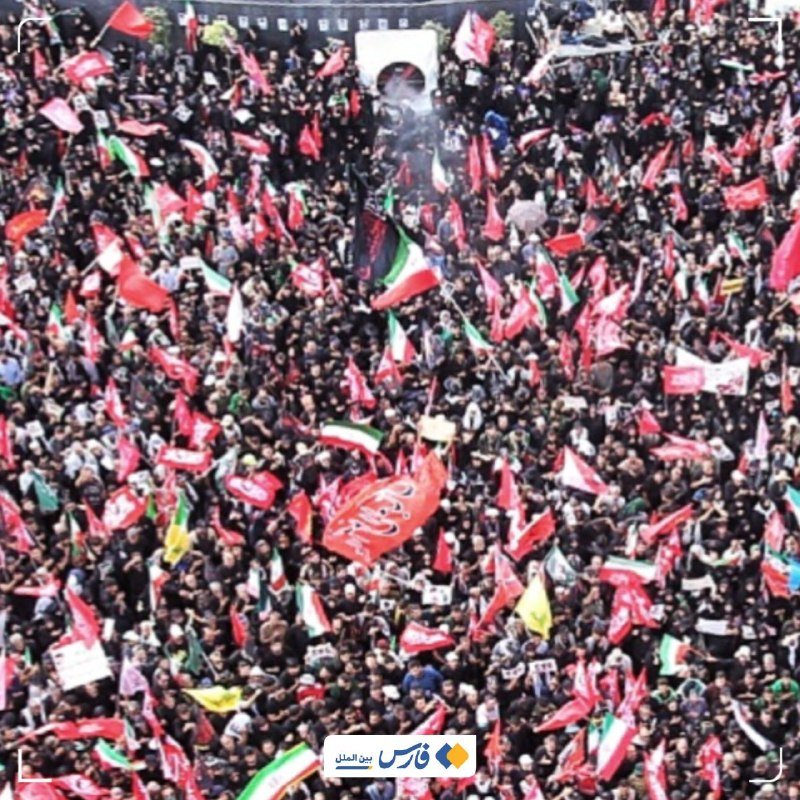
Three of Iran's most senior security figures posted to a single Telegram hashtag on the morning of 5 July 2026, and the convergence was tighter than the messaging alone suggests. In a span of roughly one hour, IRGC Quds Force commander Esmail Qaani, IRGC deputy commander Ali Fadavi-adjacent figure Sardar Radan, and political deputy Saeed Haddad Adel all surfaced on the Tasnim News English channel invoking the hashtag #Badarqa_Aghai_Shahid_Iran and its partner tag #must_rise, framing the moment as a continuation of a martyred predecessor's path. The compressed timing is the story: when the security elite synchronises its language within a single news cycle, it is signalling that the framing is institutional rather than personal.
What is being said, plainly, is that the next phase of confrontation is not a departure from the last one. It is a vow that it will not be.
The language, and who used it
The hashtag itself is a compressed piece of Iranian political theology. Badragha is the Persian for the crescent moon that signals the start of Ramadan; Aghai Shahid Iran — "Mr Martyrdom of Iran" — invokes the clerical and military dead whose sacrifice is read as the ground on which the Islamic Republic's security doctrine stands. At 10:37 UTC, Tasnim posted Haddad Adel's line that "Mr. Shahid's prayer for the kingdom makes the nation proud," positioning the martyrdom frame as a public, devotional anchor. At 10:54 UTC, Qaani's contribution landed: "An imam who has had a lifetime of sincere struggle and struggle should also have a good end" — a phrase that doubles as a warning about what the security apparatus considers a properly fought finish. At 11:43 UTC, Radan closed the cycle with a personal oath: "I promise that I will not deviate from the path of Mr. Shahid until the last moment of my life."
Three figures, one hashtag, an hour.
Why the synchronisation matters
Iranian political messaging rarely clusters this tightly by accident. Tasnim, the outlet carrying all three posts, is the IRGC-aligned news agency whose English wire feeds both internal audiences and foreign-readability framing in parallel. When the Quds Force commander, a senior IRGC operational figure, and a political deputy all funnel through the same channel within an hour, the signal is operational as much as theological. The vocabulary used — path, prayer, kingdom, imam, deviation — is not the language of diplomacy. It is the language of a security institution reaffirming its founding narrative under live conditions.
The plainest read is that Tehran's security elite is preparing its domestic audience for a posture that does not accommodate retreat.
What the framing leaves out
Read against the actual balance sheet of 2026, the hashtag's certainty sits oddly. The regime enters the second half of the year under sustained sanctions pressure, with currency volatility and inflationary strain still visible in domestic coverage, and with the regional axis absorbing the cost of a multi-front posture. The martyrology frame offers a counter to that arithmetic: it tells the cadre that the cost is legible, that it has been paid before, and that deviation — not confrontation — is the unforgivable sin. That is not a policy so much as a permission structure. It tells commanders they will be defended for escalation that they would not be defended for restraint.
It also tells external observers something uncomfortable. Iranian state-aligned messaging is most unified when the domestic consensus is most stressed. Three posts in one hour, on one channel, under one hashtag, is the kind of message that travels best when the institution most needs it to travel.
The stakes for the rest of the region
For neighbours, the operational implication is straightforward. When Tehran's senior security figures queue behind a single martyrdom hashtag in a single morning, the period ahead is not the period to test whether the language is rhetoric. It is the period to read the language as forecast. The Gulf states, Iraq, and the Levant front line that has absorbed the cost of past escalations should price the message in. Western chancelleries already do — that is what the sanctions architecture is designed to do — but chancelleries are not the ones absorbing the strike.
What remains uncertain
The three Telegram items are a single-channel, same-day cluster, and Telegram as a platform is curated by Tasnim's editors; it is not a public polling instrument. The hashtag's reach inside Iran versus diaspora versus bot traffic is not measured by any source available here. The three figures named — Qaani, Radan, Haddad Adel — are individually well-documented in their roles, but the specific continuity claim about "Mr. Shahid" is unsourced beyond the hashtag itself, and the martyr being referenced is not made explicit in the items available to this publication. The framing is solid; the identity of the figure being mourned and continued requires another round of verification before it can be cited as fact.
This publication treats the convergence itself as the news, not the theology it carries. The signal is in the timing, the channel, and the rank of those behind it — not in the devotional vocabulary, which is constant.
Wire provenance
This editorial synthesis draws on the following public wire/social posts:
- https://t.me/tasnimnews_en
- https://t.me/tasnimnews_en
- https://t.me/tasnimnews_en