Iran's Mourning Theatre and the Long Memory the West Refuses to Read
While U.S. strikes on Iran were being announced on Tuesday, state-aligned Telegram channels were publishing coordinated mourning content from Karbala and Najaf. The Western wire filed those bulletins as colour. They are the actual signal.
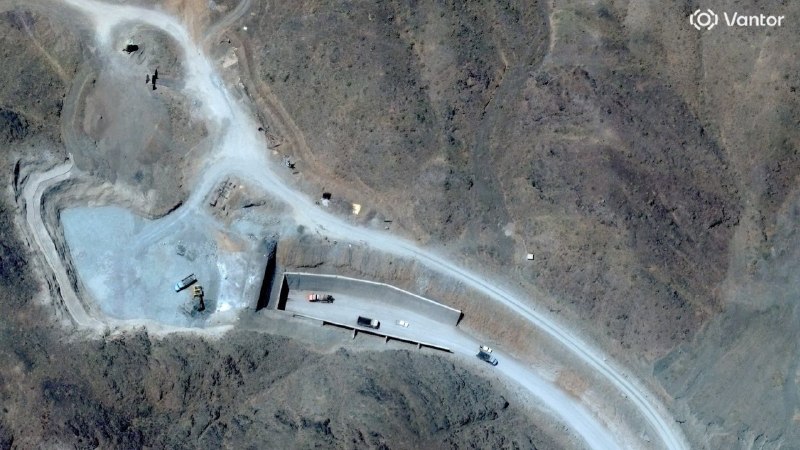
On Tuesday evening, the Telegram channel of Iran's Supreme Leader published a video captioned as "a narrative of longing, vengeance, and loyalty, from the people of Iran," depicting the faithful "seeking vengeance for their martyred Imam and following the example of the Master of Martyrs." Hours earlier, Iranian state outlets had been broadcasting scenes of Iraqi mourners walking between the two holy shrines of Karbala and converging on Sadreen Square in Najaf, chanting "O Seyyed, we will not forget you." At the same moment, U.S. Central Command announced strikes on Iranian targets in retaliation for IRGC attacks on three commercial vessels in the Strait of Hormuz, with video circulating of explosions at the port of Bandar Abbas. Mourning theatre and live military escalation were running on parallel screens, and the only question was which audience was being addressed.
The bulletins the wire ignores
The Fars and Tasnim posts on Tuesday were not routine Muharram coverage. The hashtag Badarqa Aghai Shahid Iran, and its companion "must rise," recurred across Iranian and Iraqi state-aligned channels in coordinated bursts between 22:15 and 23:59 UTC. Tasnim published mourning footage from "between the two temples" in Karbala, from Iraqi pilgrims en route to the funeral of "Imam Martyr," and from Iraqi worshippers in Najaf framing their remembrance as prayers "for Mr. Shahid of Iran." The framing is theological, but the timing is operational. The bulletins were published while U.S. strikes were being announced.
Western wire services treated the corresponding events as two separate stories: a tanker attack in the Strait of Hormuz and a U.S. retaliation campaign, with Kuwait simultaneously reporting electrical transmission lines knocked offline. Iranian state media's coordinated mourning campaign received, in most anglophone feeds, no column inches at all. The Cradle, an outlet that does cover the regional framing, ran the Kuwait grid story. BBC's official channel posted the U.S. strike announcement. The mourning content circulated in Persian and Arabic but did not cross the language barrier into mainstream Western coverage except as occasional colour.
What the framing actually says
The Supreme Leader's channel did not say "retaliate." It said "longing, vengeance, and loyalty." It invoked the Master of Martyrs, a referent whose meaning inside Shia political theology is specific: Hussein at Karbala, defeated militarily, vindicated morally, and remembered across centuries as the figure whose martyrdom legitimises resistance to a superior order. The vocabulary is deliberate. "Badarqa," as used in the hashtag, echoes the classical imagery of standing beneath the standard. "Must rise" is a directive addressed to a constituency that includes, by design, Iraqi Shia pilgrims already on the streets of Karbala and Najaf.
For an analyst watching from Washington or London, this can read as boilerplate. For an analyst reading the bulletins against the Strait of Hormuz tanker attacks, the IRGC strikes, and the U.S. Central Command response, the bulletins are a framing instrument. They tell an internal audience that whatever kinetic exchange is unfolding on Tuesday night has already been absorbed into a longer martyrology, and that the costs of escalation will be borne within a moral economy that the United States cannot audit.
The long memory the framing invokes
This is what the standard Western coverage misses when it bins the Fars and Tasnim posts as ceremonial content. The mourning imagery is not a distraction from geopolitics. It is the medium through which a specific audience is being told that a kinetic event is legible, that it slots into a remembered sequence of grievances, and that the obligation it creates outlives any particular news cycle. When Iraqi pilgrims in Najaf chant that they will not forget, the "forgetting" they are refusing is a structural one: the forgetting that a Western-led order routinely performs when it files a tanker attack under "maritime security" and moves on.
The bulletins also perform a coalition function. They show Iraqi Shia religious geography, Karbala's two shrines, Sadreen Square, the routes to the funeral of "Imam Martyr," staging grief that is shared across a border. In a week when Kuwait's grid went dark, when Chinese submarine-launched ballistic missile tests rattled the Pacific, when Venezuela's acting president launched a domestic reconstruction plan after the June 24 earthquakes, and when the IOC provisionally lifted the suspension of the Russian Olympic Committee, the Iranian regime was asserting a different kind of presence: not a presence at the UN Security Council, but a presence in the symbolic architecture through which a large regional constituency interprets its own history.
What it costs to keep refusing to read it
There is a comfortable argument that ritual invocations are noise and that policy should track material capabilities and shipping lanes. That argument has the virtue of being operationally tidy. It also produces a recurring blind spot. When Western analysis treats the ceremonial layer as inert, it loses the ability to anticipate which audiences will be mobilised by which martyrdom narratives, and on what timetable. The Tuesday night bulletins did not cause the tanker attacks or the U.S. response, but they were already in motion when those events broke, and they were structured to convert those events into a longer story.
The next test is whether anglophone coverage continues to file the Strait of Hormuz exchange as a maritime security incident, or whether it starts to register the parallel track on which the Iranian state was writing that incident into a martyrology as it happened. The cost of refusing to read the bulletins is not that they will be wrong about the outcome. It is that the audience receiving them will be addressed in a language the briefing papers do not speak, and the policy class will be the last to know which register is landing.