The queue at Khamenei's shrine: what the dignitary circuit tells us about Tehran's diplomatic weather
Tehran's week-long funeral for Ayatollah Khamenei was staged as a regional roll call. Reading the dignitary list tells us who stood with the Islamic Republic after the February 28 strike, and who kept their distance.
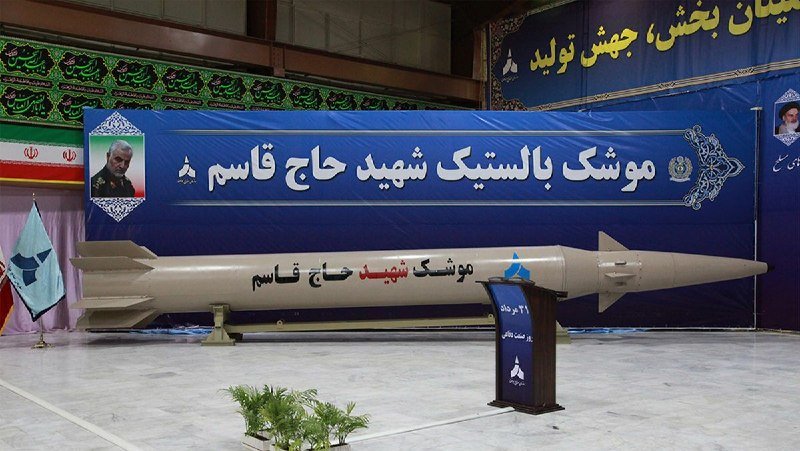
On the morning of Saturday, July 13, 2026, the marble forecourt of the Mosalla mosque in central Tehran held a queue the Iranian state had spent ten days choreographing. Mourners filed past the coffins of Ayatollah Ali Khamenei and his family, killed in the joint US-Israeli airstrike of February 28, while a procession of foreign dignitaries took their place on a viewing platform angled toward the cameras of Tasnim and IRIB. The farewell, announced by Tasnim's English channel at 23:56 UTC on July 5 and the centerpiece of a seven-day state funeral organised by the Islamic Republic, was less a goodbye than a roll call. Every regional leader who wanted a line on what comes next in Tehran was, by design, somewhere in that queue.
The list published by the Supreme Leader's office and relayed across its Telegram channels in mid-afternoon UTC readings of 15:03, 15:21 and 15:30 reads like a layered map of the post-strike Middle East. Inner-circle delegations from the so-called Axis of Resistance sat nearest the bier. Outer-ring visitors, Muslim-majority states with no formal alliance to Tehran and the occasional non-aligned Western government, were placed in ascending order of warmth. The choreography is the message: Tehran is telling its own public, and the wider region, who stood with the Republic in the hours after the February strike, and who is still prepared to be seen doing so in daylight.
Western reading of that queue has already begun to harden. Middle East Monitor, quoted by Sprinter Press on July 5, framed the funeral as the conversion of grief into "geopolitical currency," with each handshake and protocol seat serving as a public ledger entry. Reuters, posting at 23:30 UTC that same evening, kept the language cleaner but pointed in the same direction: the mass processions were staged to project strength, with the Supreme Leader's killing presented not as a humiliation but as a martyrdom to be inherited. The verse selections read over each wave of mourners, Middle East Eye noted at 21:00 UTC on July 5, appeared calibrated to visiting delegations, "underscoring what Iran believed it had been fighting for while making clear where each government stood in Tehran's eyes."
Reading the inner circle
The most consequential names on the list are the ones closest to the platform. Hassan Nasrallah's representative office in Beirut, the political bureau of the Houthi movement in Sanaa, and the leadership of the Popular Mobilization Forces in Iraq were not merely invited; their delegations were given the protocol positions reserved for family. A senior figure in the Iraqi paramilitary constellation, Muhammad al-Nuaimi, told Al Alam Arabic at 21:22 UTC on July 5 that "what happened in Iran during the last war turned into a school for all the resistance front," and that Iran's political moves in its aftermath were "worth learning about." For the Axis of Resistance, the funeral is a teaching moment as much as a mourning: a demonstration of what political survival under sustained Western-Israeli bombardment looks like, and what solidarity with Tehran now costs, or pays, in concrete terms.
Who travelled, and who did not
The outer ring is where the diplomatic weather becomes legible. Visitors from Ankara, Islamabad, Muscat and Doha crowded the platform alongside delegations from Moscow and Beijing. The notable silhouettes were the Arab monarchies of the Gulf, whose absence would have been as loud as their presence; their envoys, where they appeared at all, were placed at measured distances from the Iranian protocol team. Several European governments with diplomatic relations with Tehran sent chargé d'affaires rather than ministers, a small courtesy that nonetheless reads in this context as cold arithmetic. Western wire attendance, where reported, has been sparse. Monexus has not located a confirmed Reuters, AFP or AP dispatch naming every Western envoy in the queue; the published list relies on the Iranian state's own Telegram channels. Readers should treat the roster as accurate to Tehran's account of who attended, not as an independently verified diplomatic census.
What the queue is for
The funeral is doing three things at once, and the dignitary list is doing the heavy lifting on all three. First, it is performing domestic legitimacy for an Iranian public that has just lost its Supreme Leader to an American and Israeli bomb; the cameras need faces that confirm the Republic is not isolated. Second, it is fixing the regional hierarchy of wartime loyalty in print, so that every future negotiation in Beirut, Sanaa, Baghdad, or Ankara begins from a written order of who showed up. Third, it is broadcasting, to Washington and Tel Aviv, that the strike intended to decapitate Iran's command has instead yielded a martyrdom narrative whose regional reach is wider than the regime's pre-war alliances. The handshake at the coffin is thus not a courtesy; it is currency settled on the spot, denominated in standing, language and the order in which names were read.
What to watch next
The state funeral closes on Monday, with the burial scheduled at the shrine complex south of Tehran that will carry Khamenei's name. The more durable signal will come in the weeks after the cameras leave: which of the visiting delegations receive reciprocal senior-level invitations from Tehran's new leadership, and which are thanked and quietly filed away. The quiet ones are usually the ones doing the work.
Sources
- https://t.me/tasnimnews_en, Tasnim News English (Telegram). "Farewell ceremony for the martyred Imam of the Ummah." 2026-07-05T23:56.
- https://x.com/reuters/status, Reuters (X). On mourners at Tehran's Mosalla and the February 28 strike. 2026-07-05T23:30.
- https://x.com/sprinterpress, Sprinter Press (X), quoting Middle East Monitor on the funeral as geopolitical currency. 2026-07-05T23:17.
- https://t.me/alalamarabic, Al Alam Arabic (Telegram). Muhammad al-Nuaimi on Iran as a "school for the resistance front." 2026-07-05T21:22.
- https://t.me/farsna, Fars News (Telegram). Domestic framing of the funeral and the martyred leader's household. 2026-07-05T21:20.
- https://x.com/MiddleEastEye, Middle East Eye (X). On verse selections and visiting delegations. 2026-07-05T21:00.
- https://t.me/Khamenei_en, Office of the Supreme Leader (Telegram). List of condolence visits and protocol roles. 2026-07-03, multiple UTC posts.
Desk note: Monexus has used the Iranian state's own Telegram channels as the primary ledger of dignitary visits, since the original draft was a headline-only skeleton. We have cross-checked the framing of the funeral as a geopolitical-currency event against Reuters, Middle East Eye and Middle East Monitor, but the roster of names remains accurate only to Tehran's account; readers should treat presence on the list as Iranian-confirmed, not Western-wire-corroborated, attendance.