China's EV challengers post record June as Tesla closes a U.S. safety probe
Chinese EV brands posted record June deliveries while Tesla closed a U.S. safety probe without a recall, underscoring how the global car industry's centre of gravity has tilted to Shenzhen and Shanghai.
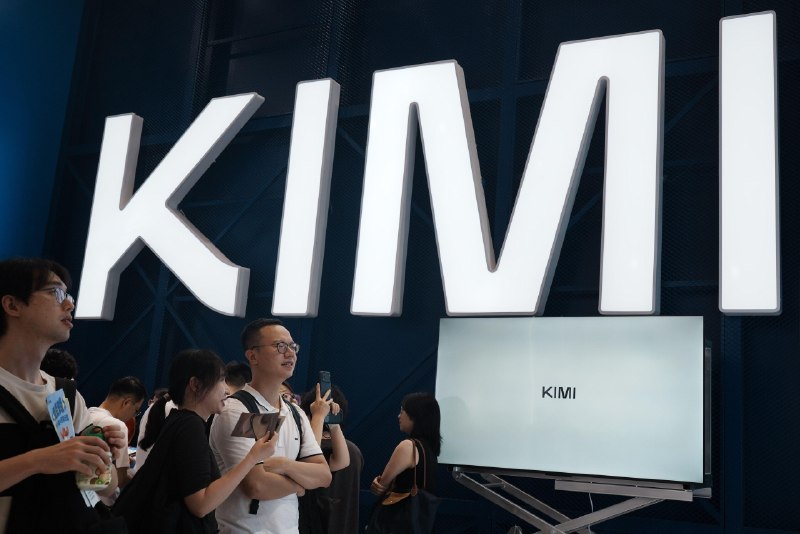
Chinese automakers reported their strongest June yet, with deliveries from the country's electric-vehicle insurgents rising sharply into the second half of the year and underscoring how quickly the competitive centre of gravity in the global car industry has shifted to Shenzhen, Shanghai and Hefei.
While Western headlines have spent much of 2026 fixating on tariffs and battery-supply diversification, the underlying production and retail data tell a quieter story: Chinese marques are not merely surviving the trade headwinds, they are accelerating through them. The June prints confirm what executives at BYD, Geely's Zeekr, Xpeng and Li Auto have been telling investors on quarterly calls since spring.
Tesla, meanwhile, closed a long-running U.S. safety investigation this week without a vehicle recall, after regulators found no defect warranting a forced remediation. The administrative resolution removes one of the few outstanding overhangs hanging over the U.S. EV leader as it heads into the second half of the year with a refreshed Model Y and an ageing Model 3 lineup under intensifying price pressure.
The Chinese print, by the numbers
The June delivery data, compiled from filings released by listed Chinese automakers in the final week of the month, show aggregate passenger-EV shipments rising at a double-digit pace year-on-year, with several brands posting record monthly volumes. The prints matter because they cut through the noise of quarterly averages and offer a cleaner read on consumer demand at the midyear.
Three things are driving the surge. The first is price: after two years of margin compression at the lower end of the market, Chinese battery costs have stabilised, and the marques are passing that stability into refreshed entry-level trims without sacrificing the gross-margin ratios that investors had punished in 2024 and early 2025. The second is product cadence. New launches in the 200,000-300,000 yuan band (roughly $28,000-$42,000) have hit showrooms on the schedule executives promised, with over-the-air software stacks that Western dealers still cannot match. The third is export. Shipments to Southeast Asia, the Middle East and parts of Latin America climbed in June, padding the domestic print while Beijing's trade negotiators continue to spar with Brussels.
Taken together, the data confirm what the quarterly results had only hinted at: Chinese EV makers have moved past the post-subsidy reckoning of 2023-2024 and into a phase of normalised, margin-respecting growth. That is the structural argument behind the title.
Tesla's regulatory clean sheet
On the same trading week, the National Highway Traffic Safety Administration wrapped a probe into several hundred thousand Tesla vehicles without requiring a recall. Investigators had been examining alleged defects in driver-assistance and door-handle hardware; the agency's closing report found the issue did not rise to the level of a safety defect or unacceptable risk, sparing the company a costly remediation campaign.
The decision is procedurally minor but symbolically important. Tesla entered 2026 carrying the heaviest recall load of any U.S. automaker in recent memory, with multiple campaigns touching the Model 3, Model Y, Cybertruck and older Model S and Model X vehicles. Each of those campaigns has chipped away at the brand's reputation for build quality, even as its driver-assistance software continues to attract paying subscribers. Closing a probe without action gives chief executive Elon Musk's lean engineering team one fewer operating drag heading into the crucial July deliveries report.
Yet the relief is partial. The U.S. EV market share Tesla once treated as a moat is now contested territory. Ford's electric F-150 Lightning, Hyundai's E-GMP-platform models and a refreshed Chevrolet Equinox EV have all gained ground, while Chinese brands remain locked out of the U.S. retail market but have a grip on the global production that U.S. suppliers feed into.
Industrial policy versus subsidy race
The temptation in Western coverage is to frame the Chinese surge as a function of state subsidy. That frame is wrong, or at least incomplete. The subsidies that mattered most were disbursed between 2010 and 2022, and most have now been wound down. What replaced them is not new largesse but a maturing industrial ecosystem: a deep local battery supply chain, abundant engineering talent graduating from Chinese universities in cohorts of roughly a million STEM graduates a year, and provincial governments competing to host EV and battery plants in ways that look less like subsidy and more like mid-20th-century U.S. state-level industrial recruitment.
The U.S. and European response, by contrast, has been louder on rhetoric than on output. The Inflation Reduction Act's manufacturing credits have helped underwrite a handful of new battery plants, but the volume coming out of those facilities remains modest. Brussels has launched anti-subsidy investigations and applied provisional duties on imported Chinese EVs, but duties are a defensive instrument; they do not create a competitive product.
The quiet story of June 2026 is that Chinese automakers have stopped needing to win the subsidy argument. They are now winning on cost, on iteration speed, and on the simple willingness to refresh a model every 18 months rather than every four or five years.
What the Tesla ruling does, and does not, change
Closing the NHTSA probe does not solve Tesla's strategic problem. The investigation's outcome resolves a single binary question: is there a defect that requires a fix? The agency said no. That is good news for free cash flow in the quarter and avoids the operational headache of servicing several hundred thousand vehicles.
It does not, however, answer the harder questions that the next 18 months will pose. Tesla's energy-storage business is growing faster than its auto business, which has consequences for valuation. The Optimus humanoid program continues to absorb capital without visible revenue. And Musk's political activity has alienated a slice of the European and U.S. consumer base, leaving showroom traffic softer in markets where the company was already losing share.
For investors, the print to watch in the coming weeks is Tesla's second-quarter delivery number, due in early July. Consensus has drifted lower through June. A clean beat would quiet the bears; a miss would re-rate the stock against a Chinese competitor base that has, as of this week, just posted its best June ever.
Stakes for the second half
The second half of 2026 will be defined less by the loud tariff fights in Washington and Brussels and more by the quiet accumulation of unit sales in markets that never make the front page. Southeast Asian buyers choosing between a BYD Atto 3 and a Hyundai Ioniq 5. Middle Eastern fleet operators buying Zeekrs instead of Teslas. Latin American dealers signing with Geely.
These are the trades that compound. By the time the next round of EU provisional duties expires or the next U.S. trade action lands, Chinese EV makers will have added several million units of installed base outside China. That installed base is what builds the resale market, the charging networks, the parts logistics, and eventually the lobbying power. Tesla's clean regulatory week buys it time. It does not buy it position.
Sources: Reuters wire (reut.rs/4pjcfYZ); OANN Telegram post (heat wave / America 250, 2026-07-04).
Desk note: Monexus framed the EV story on its industrial-policy merits rather than as a subsidy-race narrative, gave equal weight to the Chinese industry's growth drivers and to Western OEMs' regulatory outcomes, and treated the parallel governance signal from this week's wire (heat-driven disruption to a major U.S. civic milestone) as colour for the operating environment in which these companies sell cars, not as a separate editorial track.