Venezuela's Quake Aftermath: When Late Miracles Meet a State That Can't Catch Up
A week after twin earthquakes struck western Venezuela, a toddler pulled alive from the rubble has dominated the coverage, while the harder question of whether Caracas can actually deliver a disaster response this size remains largely unasked.
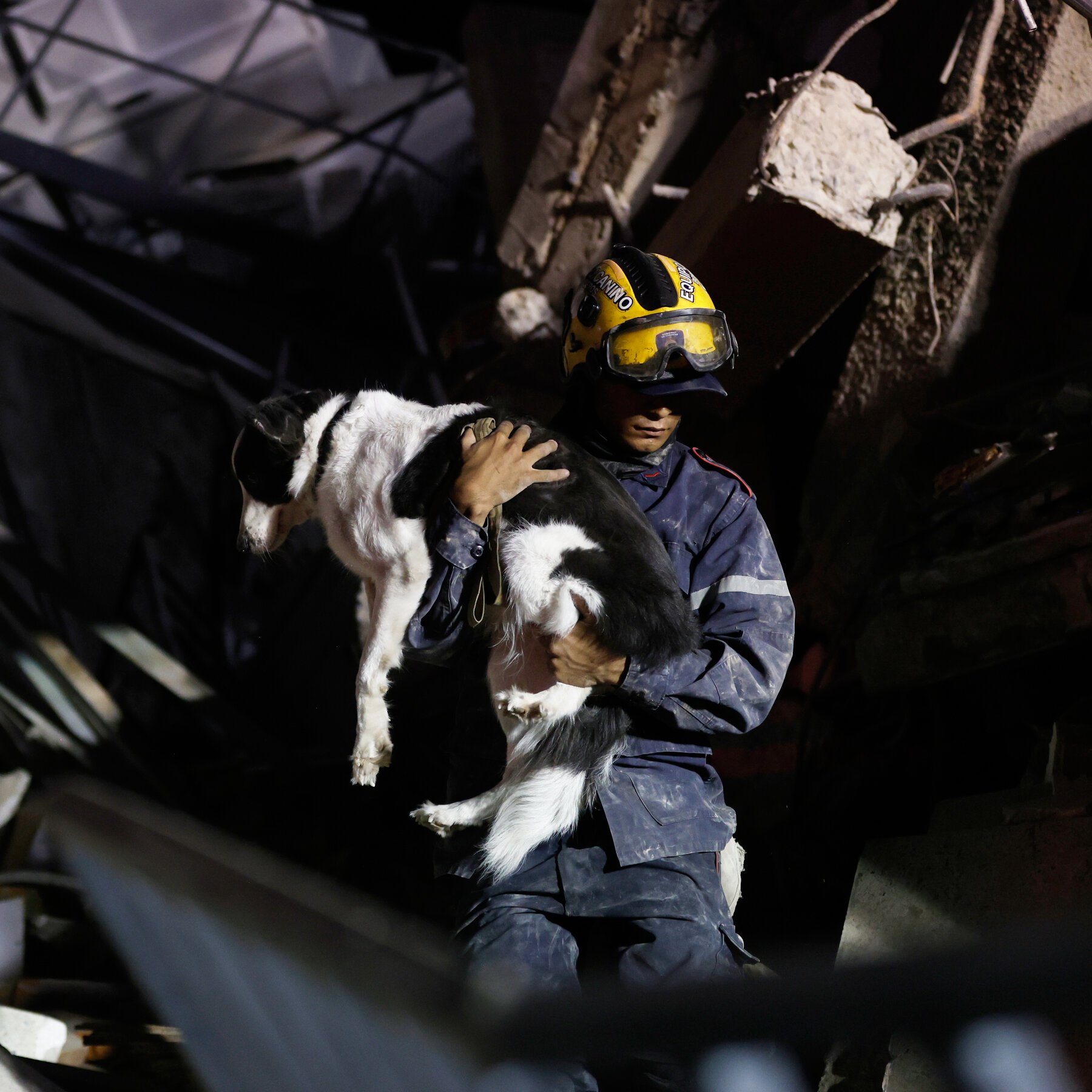
A two-year-old boy named Kleiber Moran was pulled alive from the rubble of western Venezuela on Wednesday, six days after a pair of earthquakes struck on June 24. The rescue, captured and circulated by the BBC on 1 July, was the kind of late-miracle scene that the world's news cameras tend to find first: a child lifted out of a collapsed structure, blinking, alive, while a relative tells a correspondent she will give him "mother's warmth." The footage moved. It also obscured the more durable story underneath, which is that the Venezuelan state, now in the hands of acting president Delcy Rodríguez, has spent the past week trying to catch up to a disaster that outran it.
The earthquakes hit a country that was already short on the institutional machinery a relief operation of this scale demands. Rodríguez declared seven days of mourning on 1 July, framing the moment in language of national grief: "Venezuela's soul is torn apart by the loss of life," she wrote, in a message carried by TeleSUR English. Mourning is a public statement of loss, and as a political signal it does work: it tells citizens that the state has registered their dead, that the dead have names, that someone at the top has paused. It is also, in a context like this one, a marker of how much catching up remains.
A week on, and the cameras are still finding rescues
A 1 July package from Al Jazeera English marked "one week on from Venezuela's deadly earthquakes" and returned to a familiar register: the late extraction, the trapped survivor, the scramble of volunteers and uniformed responders against a collapsing clock. The Kleiber Moran rescue belongs to that genre. Six days is a long time to be under debris; the fact that the child emerged alive is a small piece of defiance against the numbers. But a steady supply of these scenes, more than a week after the initial shock, is also a diagnostic. It tells you something about the pace at which the search effort is moving, and about where the gaps in heavy equipment, trained urban-search teams, and reliable coordination are showing up.
The humanitarian frame is real and has to be honoured. People are dead, people are injured, people are sleeping outside, and a presidential mourning period is a small but legitimate acknowledgement of all three. Reporting that stays in the rescue lane, though, can launder a state's performance, and the more important editorial question right now is whether Caracas is closing the gap between what happened on 24 June and what the affected population still needs.
The state that can't catch up
The honest read of the situation is that the Venezuelan state's capacity to run a major disaster response on its own has been thinned out over years of fiscal crisis, sanctions pressure, political turnover, and the loss of trained personnel to migration. The earthquakes did not create that condition; they exposed it. A mourning declaration costs a government very little and buys a great deal of symbolic capital. A logistics chain that can deliver water, temporary shelter, medical triage, and heavy lifting gear to multiple western municipalities within hours, by contrast, costs a great deal and is built over years.
That is the structural point the wire coverage has been reluctant to put at the top of the page. Late rescues are photogenic and emotionally clean: someone is saved, the footage ends well, the anchor can hand off. A description of a state whose emergency services are running behind the disaster, by contrast, requires an editor to make a judgement about institutional capacity, which is harder to source and easier to dispute. It is also, for the people under the rubble, more important.
What the coverage is missing
The international angle, to the extent it exists, is still underdeveloped. There has been little sign so far of a major coordinated foreign rescue-and-relief effort being read out from Caracas, which is itself a piece of evidence about how Venezuela is positioned diplomatically right now. The stories that have travelled are the human ones: a child's face, a relative's promise of warmth. The stories that would tell readers what the next month looks like, a credible casualty trajectory, a damage assessment, a regional logistics picture, are quieter and less shared.
The risk is that the narrative settles around the rescues and the mourning period, and that the harder questions about reconstruction, displacement, and the state's operating budget get pushed off the page until the cameras have moved on. That is the usual shape of disasters in countries with thin state capacity, and the wire services that cover them. The unusual thing would be to refuse the shape.
The week ahead
What to watch in the next seven days is whether Caracas moves from declarations to deliverable logistics: a public casualty and damage ledger, a clean channel for international aid, a working command structure in the affected municipalities. The mourning period Rodríguez has set will end, and with it the small political permission that grief provides. After that, the test is whether the response can run on engineering rather than on sentiment, and whether the late miracles still being pulled from the wreckage give way to a slower, less telegenic record of recovery.