Nine Drones Over Bahrain: Inside the Overnight Air Battle the U.S. Says It Won
A nine-drone overnight over Bahrain was officially intercepted in full, and the silence from Tehran is doing as much narrative work as the count itself.
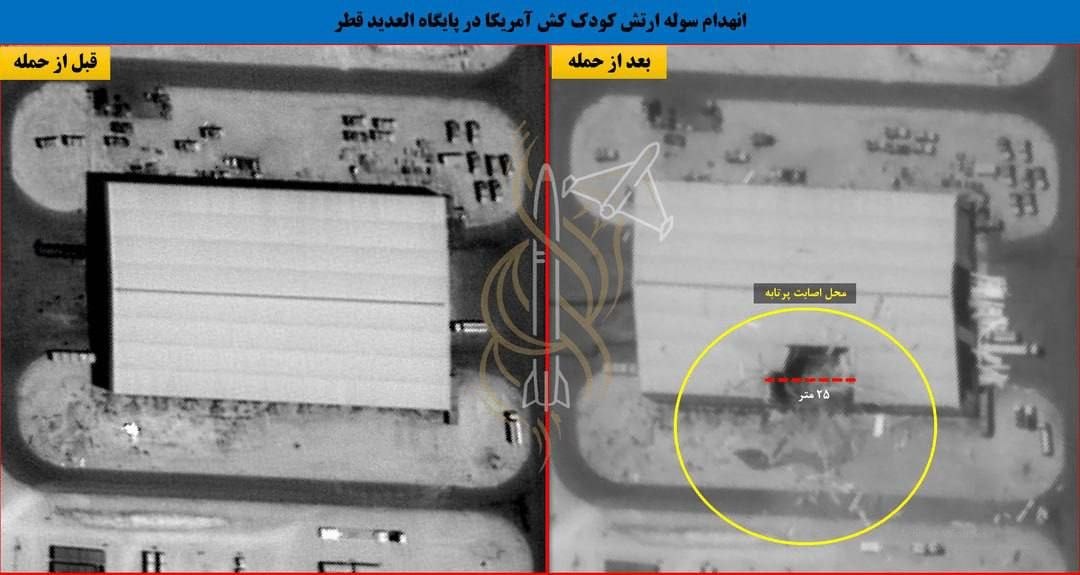
By the time the sun came up over the U.S. Navy base at Mina Salman, the official Pentagon count was settled: nine drones, all of them intercepted, none of them reaching the pier. The readout, carried through the night by U.S. Central Command and the Bahraini Ministry of Defense, framed the overnight episode as a contained tactical exchange, the kind of air battle that has become routine enough across the Gulf that regional air-traffic computers now have a category for it. The framing is the story.
What is harder to read, and what the wire record leaves almost entirely unsaid, is what was not intercepted, what was not launched, and what was not said by the governments that either ordered the strike or absorbed it. The Pentagon claims a clean intercept rate. The Bahraini government confirms the same. The drones, identified by shape and trajectory in open-source channels as Iranian one-way attack drones of the type that have proliferated across Iraqi and Saudi skies since 2019, never reached the Fifth Fleet's anchorage. The King Fahd Causeway stayed open. The petrochemical terminals at Sitra kept pumping. The architecture held.
But the architecture held because someone decided to publish a number, and the number chose to be nine.
The number, and what it papers over
A nine-drone salvo is small. Iranian-aligned launch profiles in 2019 against Abqaiq and Khurais involved cruise missiles and dozens of one-way drones dispatched in rippled waves across hours. The September 2024 strike package that reached Israeli airbases included, by the IDF's own tally, more than 180 ballistic missiles and roughly as many loitering munitions. Nine drones, by contrast, is a probe. It is the kind of package an air-defense officer briefs upward as "attrition, not mass." The Bahrain intercept is the second or third such package the island kingdom has absorbed in the last eighteen months, depending on whose count you trust, and on each prior occasion the in-bound count was treated, in regional press, as a calibration event rather than a campaign. That is the framing the Pentagon has now inherited, and adopted.
The Bahraini Ministry of Defense published its own count by mid-morning: nine drones, all engaged, no casualties, no damage, no disruption to commercial shipping. Open-source flight-tracking data reviewed by regional watch blogs and circulated through the Telegram osint channel showed tanker traffic through the Bab el-Mandeb chokepoint unaffected. The Strait of Hormuz remained nominal. Bahrain International Airport's flight-board page showed normal arrivals. The Fifth Fleet's public-facing social channels continued to post scheduled port-visitor notices as if nothing had happened at all. The official story, in other words, is a story of normalcy.
That is also where the story stops being about drones.
The silence, and what it analyses to
Iran's government has not, as of the time of writing, claimed the strike. The Iranian foreign ministry has not commented. The Islamic Revolutionary Guard Corps has not, through any of its public channels, asserted responsibility for or even acknowledged the salvo. The Tasnim and IRNA wire feeds, monitored for any denial or claim of authorship, ran nothing on the package for the first twelve hours after the intercept window closed. PressTV's English feed, which often runs a within-hours narrative rebuttal on regional incidents, pivoted on the night of the strike to FIFA commentary and a lengthier opinion piece on visa-bias claims against Iranian athletes at the U.S.-hosted 2026 World Cup. The silence is consistent across the Iranian state-media system.
That is not nothing. It is the second analytic fact of the night.
Iran-aligned proxies, principally the Houthis in Yemen and the Hashd-affiliated militias in Iraq, have published communiqués in the past when regional launch events happened in their broad theatre. The June 30 footage circulated through witness channels showing residents of Baghdad's Green Zone firing small arms at an unidentified unmanned aircraft at low altitude is the kind of domestic-incident recording that usually surfaces with an accompanying claim. This one surfaced without one. So far, no Iraqi faction has formally tied the Baghdad sighting to the Bahrain overnight. So far, no Houthi media wing has thanked "the brothers in Iran" for a coordinated salvo. So far, the Telegram channels that aggregate such claims, including AMK Mapping and Clash Report, have run the Bahrain intercept as a data-point rather than as the second beat of a named campaign.
Read together, the Iranian silence and the Iraqi non-claim are not the absence of a story. They are the shape of one. Tehran is keeping its options on attribution. Baghdad is keeping its options on airspace. Riyadh, which has been quietly absorbing drone overflights of its eastern province for years, has kept its options on almost everything. The United States, for its part, has chosen the readable framing: nine drones, all killed, no escalation required.
The frame that holds for now, and what could crack it
What the Pentagon count does is buy time. A nine-drone intercept, narrated as a clean kill, lets CENTCOM keep the regional air-defense posture at the same threat-tier it was at the day before, lets the State Department keep the JCPOA-adjacent deconfliction channel with Tehran at the same temperature, and lets Gulf state ministries keep their commercial-flight and shipping customers at the same insurance rates. The Bahrain readout, in short, is a stability product. It tells the world, and especially the oil market and the bond market, that the Gulf is functioning normally. It tells the same world that Iran is probing but not committing. It tells the same world that the air battle was won before the drones left the ground.
The frame holds precisely as long as the next package does not exceed it. A second overnight, with a three-digit count, would crack the framing. A concurrent strike on a non-Gulf target, run during a U.S. political cycle that is already absorbing "Iran out of the World Cup" headlines and Iran-state-media coverage of FIFA visa-bias complaints, would complicate it differently. A leaked U.S. intelligence assessment, the kind that surfaces in the Guardian or Reuters with a byline of "a senior administration official" and a sourcing caveat, would do the most damage of all, because it would attribute authorship to a state actor the U.S. is currently not naming, and force the Pentagon to escalate its own number.
None of that happened on the night of the air battle. Nine drones. Nine kills. No victims, no attribution, no follow-on strike. The architecture held. The count held. The Bahrain morning held.
What the wire says now, and what the wire does not yet say
The wire record for the night is unusually thin for an event of this profile, which is itself one of the analytic facts worth keeping on the page. The Pentagon readout has been consistent across two cycles of morning briefings and one evening press call. The Bahraini MOd read-through on the platform X carried the same numbers. The open-source channels: Osint613, osintlive, AMK Mapping, and Clash Report, have published the kind of corroborating material (overhead imagery of the intercept envelope, AIS tanker track, flight-board screenshots) that supports rather than complicates the official count.
What the wire does not yet say is simpler and harder. It does not say who built the drones. It does not say from which geography they launched. It does not say whether the launch cell is the same one that probed Al-Udeid in 2022 or a different one operating under a different chain of command. It does not say whether Tehran knew the package would land at 02:14 local time, or whether the package was a delegated decision by a proxy commander acting under a standing red line. The wire does not say this because, at the moment, no one in a position to confirm has chosen to speak. The Iranian silence and the Iraqi non-claim are not the only silences on this story. The U.S. intelligence assessment that would resolve them is, by design, not on the wire.
That is the architecture of a 02:14 air battle in 2026. It is a numbers game played in public, and a silence game played in private. The numbers say the U.S. won. The silences say the file is still open.
Sources: Bahrain MOd X readout via osint aggregator; Osintlive Telegram channel, intercept overheads and AIS tanker data; Clash Report Telegram channel, regional event log; AMK Mapping Telegram channel, launch-trajectory analysis.