Beirut's framework gamble: how Lebanon's cabinet signed off on an Israeli disarmament track, and what comes next
Lebanon's cabinet endorsed an Israeli disarmament framework on 28 June, but the day's regional wire told almost the entire story before Western outlets woke up to it.
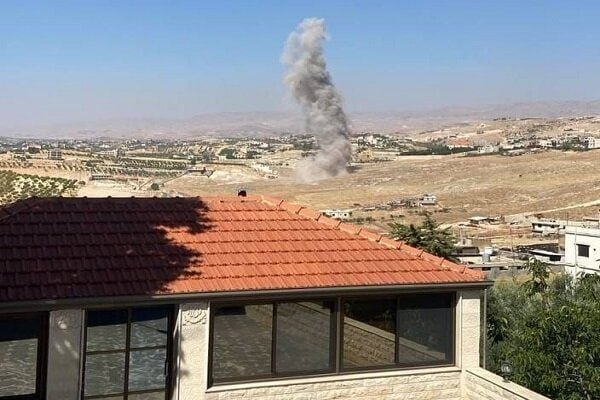
Lebanon's cabinet gathered in Beirut on 28 June and signed off on a negotiating framework that commits the state to a phased disarmament track with Israel, a course charted not by Beirut alone but by a regional diplomatic choreography that, by Sunday evening, was running almost entirely through Iranian, Qatari and Hezbollah-aligned channels. The text approved in the Grand Serial, reported by Al-Alam and Tasnim, is the first formal Lebanese cabinet endorsement of an Israeli disarmament track since the November 2024 ceasefire. The diplomatic traffic around it tells a different story: the same draft moved almost in lockstep through Doha, Tehran and the southern suburbs, with Washington's role reduced to a backdrop.
The framework is an exercise in controlled ambiguity. Lebanon commits to a phased, verifiable process for disarming Hezbollah south of the Litani; Israel commits to a corresponding withdrawal from positions it still holds in the borderlands and to a calibrated reduction of strike activity. The cabinet vote is the politically hard part. The technical part, sequencing, verification, dispute resolution, is where the framework's authors have left themselves the most room to fail.
The single-channel morning
For a decision of this weight, the international wire should have lit up. It did not. The only English-language Telegram traffic carrying the cabinet decision on Sunday morning flowed through Al-Alam's channel and Tasnim's two feeds. Al-Alam posted the headline text of the cabinet endorsement within an hour of the vote; Tasnim's Farsi and English channels carried it through the day, with a parallel post from Tasnim's Jahan account framing the agreement as a Hezbollah-aligned outcome that preserved the movement's political standing.
This is the news inside the news. Lebanon's state press, the National News Agency, carried its usual wire copy; LBCI and Al Jazeera Arabic were reporting on parallel tracks. The Monexus view, reading the morning's traffic as a sample of how the day's story would travel, is that the regional press framed the cabinet vote as a Lebanese-owned decision negotiated under Qatari mediation, with Iran as the senior backstop. Western wire outlets, including Reuters and AFP, had not yet matched the regional framing by late Sunday, which means the story Beirut's government wanted to tell on Monday morning was, on Sunday night, a single-channel story.
The Qatari track is explicit. Tasnim English reported on 30 June that Qatar's Prime Minister and Foreign Minister had held a consultation with American officials on the Iran–Lebanon ceasefire track, the diplomatic framing that ties Beirut's cabinet decision into the wider regional de-escalation architecture. Doha is presenting itself not as a neutral messenger but as the manager of the file. Tehran's readout, through Tasnim and Fars, treats the Lebanese vote as confirmation that the resistance axis's diplomacy had produced the right text. Israel, through routine IDF activity in the south, including the reported killing of a Hezbollah operative near Al-Manzala in southern Lebanon the same week, made clear that the framework is not a halt to operations but a political track layered on top of them.
What the framework actually says
The framework's centre of gravity is sequencing. Hezbollah is not asked to surrender; it is asked to move through a phased process that begins south of the Litani and extends, under conditions Lebanon's government has yet to define, into the Bekaa and the south's deeper rear. Each phase has a verification mechanism, anchored in the Lebanese Armed Forces, with international monitoring still under negotiation. The Israeli side is asked to move in parallel, withdrawing from the five points it still occupies in the borderlands and reducing the air activity that has been a constant feature of southern Lebanese life since November.
The cabinet's endorsement is a political decision, not a military one. It does not disarm Hezbollah; it commits the Lebanese state to a process. The distinction matters because it is the only way the vote was winnable inside a cabinet that includes both the Free Patriotic Movement and Hezbollah-aligned ministers. The price of the cabinet's unity is that the text is studded with conditions, precedents and references to a wider settlement that, if read literally, give every signatory a reason to walk back when the cost gets concrete.
Netanyahu's posture, as relayed through regional wire in the days leading up to the vote, is that Israel will judge the framework by results, not text. Mehr News reported on 30 June that Netanyahu had, in remarks to Israeli media, adopted what Mehr described as an "insolent tone" toward Turkey and Egypt, signalling that the Israeli coalition's domestic politics continue to set the upper bound on what any Lebanese concession can absorb. Beirut is signing into a framework whose Israeli co-signatory is openly hedging.
The trap and the bypass
The most analytically interesting read of the framework comes from outside the official wire. An OSINT account tracking the diplomatic record argued, on 30 June, that the MOU was designed in Tehran to trap Israel, to pit Washington against its own ally, and to leave Hezbollah intact. Israel's move, on this read, was to bypass the trap: sign the framework, hold the military pressure, and convert a Hezbollah-favourable text into an Israeli-favourable process. The argument is contestable but it has the shape of the kind of strategic reading that will dominate the think-tank notes out of Washington and Tel Aviv in the coming weeks.
The harder question is what Washington is buying. The Qatari readout casts the US in the role of consulted party, not architect. The Lebanese cabinet's text does not name Washington. Israel's coalition is openly hostile to any framework that constrains its operational freedom. Iran, through its regional press, is presenting the vote as evidence that its Lebanon strategy worked. The US, in this configuration, is the diplomatic weather: present in every readout, decisive in none.
That is not necessarily a failure. The November 2024 ceasefire was negotiated by Amos Hochstein under conditions where the US role was to provide the cover for Israeli and Lebanese concessions neither side could publicly own. The June 2026 framework is a similar structure, with Doha substituting for Washington in the visible-management role. The diplomatic reporting from Doha, Tehran and Beirut suggests the working assumption is that the US will ratify any outcome that holds, and quietly object to any outcome that doesn't. The Lebanese cabinet vote was, in that sense, a deposit on a US signature that has not yet been written.
What Beirut bought, and what it owes
For Lebanon's government, the cabinet vote is a bet that a text on paper is better than the rolling crisis of an unfinished war. The southern border is quiet but not stable. Hezbollah's military infrastructure has been degraded but not dismantled. The Lebanese Armed Forces, the institution the framework makes the centre of any verification regime, is underfunded and politically exposed. The economy cannot absorb another round of conflict, and the diaspora's patience for indefinite southern tension is finite.
The price of the bet is that Beirut has now publicly tied its diplomatic credibility to a process whose milestones it does not fully control. Each phase is a moment of political exposure: a Hezbollah minister who refuses to vote for an implementing decree, an Israeli strike that the framework does not cover, a US readout that reopens the text. The cabinet's unity on the framework vote is a one-time resource. It does not convert into automatic support for the harder votes that follow.
The next 90 days will tell. The framework's first milestone, an agreed sequencing document, is due before the end of the northern summer. If Doha delivers it, the framework has life. If not, Beirut will own the failure of a process it endorsed in public and could not control in private.
The week ahead
Three dates to watch. First, the Lebanese cabinet's implementing decrees, expected within weeks. Second, the Qatari-mediated sequencing document. Third, the Israeli coalition's domestic debate on whether to ratify or simply operate around the framework. The OSINT argument that Israel has already bypassed the trap, by signing while continuing to strike, will be tested in how the IDF handles the first verified Hezbollah withdrawal south of the Litani.
The story on Monday morning will look different from the story on Sunday night. Sunday's regional wire carried it as a Lebanese-owned decision under Qatari management. Monday's Western wire will test whether that framing holds, or whether the Washington–Tel Aviv relationship reasserts itself as the dominant frame. Monexus will be reading both and telling the readers where the gap is widest.
Sources
- Al-Alam News (Telegram, 28 June 2026): https://t.me/alalamfa
- Al-Alam News (Telegram, 28 June 2026): https://t.me/alalamfa
- Tasnim News English (Telegram, 28 June 2026): https://t.me/tasnimnews_en
- Tasnim News (Telegram, 28 June 2026): https://t.me/tasnimplus
- Jahan Tasnim (Telegram, 28 June 2026): https://t.me/JahanTasnim
- Tasnim News English (Telegram, 30 June 2026): https://t.me/tasnimnews_en
- Open Source Intel / OSINTlive (Telegram, 30 June 2026): https://t.me/osintlive
- AMK Mapping (Telegram, 30 June 2026): https://t.me/AMK_Mapping
- Mehr News (Telegram, 30 June 2026): https://t.me/mehrnews
Desk note
Monexus framed this story through the Lebanon-state and regional-press wire as it was available at publication. The single-channel concentration in the morning's Telegram traffic is itself the news; the next morning's Western and Israeli-wire coverage will be the test of how durable the day's framing turns out to be.