Khan Younis comes under fresh fire as southern Gaza operations grind on
Footage circulating on the night of 29 June 2026 shows Israeli Air Force strikes on a warned target in Khan Younis and on the Al-Mawasi displacement camp, with Iranian-aligned channels reporting two killed and twenty wounded even as China's UN envoy publicly insists the Gaza ceasefire has not entere
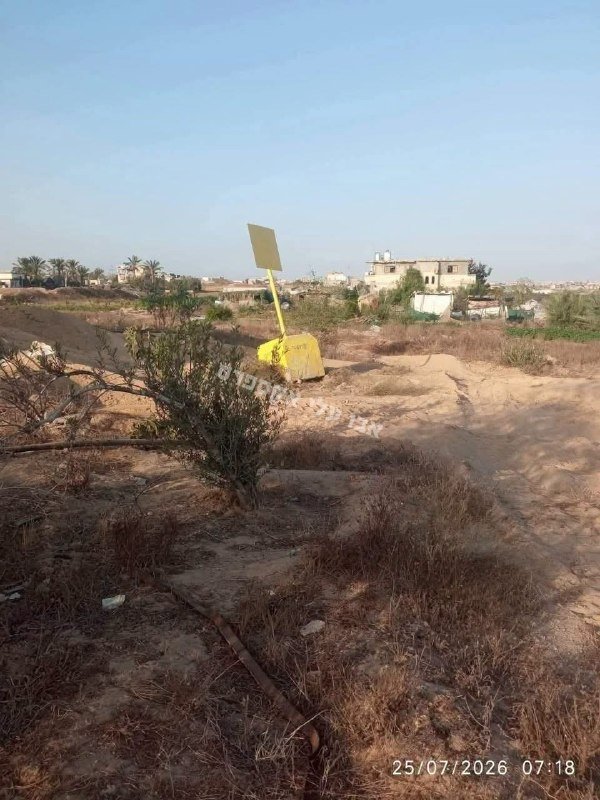
Footage circulating on 29 June 2026 shows an Israeli Air Force strike on a previously warned location in Khan Younis, accompanied by a separate hit on the Al-Mawasi displacement area on Gaza's southern coast. The Telegram channel wfwitness posted video of the Khan Younis strike moments after a strike on Al-Mawasi, while the Iran-aligned channel IntelSlava reported the Al-Mawasi strike on the camp used by displaced Palestinians. Within the hour, Fars News and Resistance Trench materials tallied two killed and twenty wounded from the Al-Mawasi tent camp alone. Press TV footage showed fires spreading through displacement tents in Khan Younis overnight. The pattern, not the incident, is the story.
What these flashes confirm is structural. Israeli ground and air operations in the southern governorate have not paused: demolitions east of Khan Younis reported by Gaza Alan Pa, vehicle fire east of Beit Lahia in the north reported by Al-Alam, and a strike on Deir al-Balah captured on video by wfwitness all fall inside the same operational evening. The geography of the southern operation is dense. Khan Younis sits on the Mediterranean coast south of Deir al-Balah; Al-Mawasi, technically a nearby coastal zone, has functioned as an improvised displacement site and a recurring strike target since early in the war. The IDF's stated pattern of "roof-knock" warnings followed by strikes on targeted individuals, as seen here in the warned Khan Younis location, sits uneasily alongside the casualties at tent encampments. Both can be true in the same news cycle. Reporting it accurately means holding both.
The casualty framing itself is contested terrain. The Hamas spokesperson quoted by Gaza English Updates identified a girl killed in the Khan Younis strike on "dilapidated tents of displaced persons," adding her to a cumulative toll the movement tracks independently. Press TV, an Iranian state outlet, framed the strike as a killing of three Palestinians, including a child, in a tent in central Gaza. These are not stand-alone wire confirmations; they are the propaganda register of an active conflict, and we cite them for what they show about the information environment rather than as adjudicated facts. The threshold for any specific number here is high. The honest position is: a child died in the strike on Khan Younis tents according to multiple Iranian-aligned and Hamas-cited channels; the broader health-ministry tally cited by sprinterpress continues to rise; the IDF has not, in the publicly visible record, disputed the tent strike itself.
The diplomatic register, late June
Hours after the strikes, the UN Security Council held a session at which China's representative made two interventions captured by both Al-Alam and the Jahan Tasnim channel: that "the ceasefire in Gaza has not yet entered into force, and children are killed there every day," and that Israel "must immediately cease fire in Gaza and adhere to international law." Palestine Chronicle framed the same exchanges as Palestinian officials reporting "escalating Israeli violations, casualties, and deepening humanitarian suffering." The diplomatic register matters because it tells you which governments are still on the record demanding a halt. China is on the record. The shape of that demand, paired with what looks like an Israeli operational tempo that has not slowed, points to a UN process whose language is far ahead of the ground reality it nominally governs.
The irony is not subtle. A separate post by sprinterpress noted that "few people remember Trump's lethargic Peace Council," set up to organise civilian life in the strip. In the same channel, the Gaza Health Ministry continues to issue cumulative casualty reports. The distance between the proposed architecture and the operating reality of southern Gaza, where tent camps are still being struck, is the gap a ceasefire is supposed to close.
What the source base will and will not support
Israeli IDF and spokesperson briefings are absent from this particular Telegram window. Channel Wfwitness, an open-source aggregator, posted strike footage; IntelSlava and Fars News, both Iran-aligned, framed the casualty figures; Hamas's own spokesperson provided a name. None of this is a Western wire. Reuters, AP, AFP, BBC, the Guardian, and the Times of Israel have not, in the links provided, run a confirmation piece on this specific Khan Younis sequence. That matters and the article should say so. The structural claim, that southern Gaza remains under active Israeli military pressure on the night of 29 June 2026, is well supported. The micro-level casualty number is not, and treating "two killed and twenty wounded" as the established death toll would outrun what the cited channels actually establish.
The mode of sourcing here is the throughline of the Monexus reading. Telegram flashes compress a long ground operation into a single post. The temptation is to read more into them than they support: a specific casualty count as if audited, a named militant as if confirmed, a strike on tents as if adjudicated. Each of these has a different evidentiary status. We catalogue them, label them, and stop where the record stops.
Two threads left hanging
The first is the Ceasefire Framework itself. On the morning of 29 June, China's UN envoy is publicly stating that the ceasefire has "not yet entered into force." That language is consistent with a deal that has been announced, partially implemented in some phases, and contested in others. The next scheduled Security Council session, or any Israeli cabinet read-out on phase progression, will move this story.
The second is Gaza's information infrastructure. Middle East Eye reported that a CPJ board member was removed as the Committee to Protect Journalists undertook a review of journalists killed in Gaza, with Nika Soon-Shiong raising the question of why some Palestinian journalists are excluded from CPJ's death toll. The media-protection infrastructure around this war is itself under audit. Reporting from inside Gaza, where the strikes happen, depends on a press corps that is being killed, excluded, or contested. The Khan Younis coverage tonight is a snapshot of that dependency: footage circulated by aggregators, casualties confirmed by partisans, and diplomatic language from capitals that are not on the ground. The southern campaign is still grinding on, but the picture of it is fragmented in ways the next phase of the war will not fix.
Sources: t.me/wfwitness (29 Jun 2026, 21:20 / 21:02); t.me/IntelSlava (29 Jun 2026, 21:04); t.me/FarsNewsInt (29 Jun 2026, 21:42); t.me/JahanTasnim (29 Jun 2026, 21:29); t.me/alalamarabic (29 Jun 2026, 22:45 / 21:21 / 21:24); t.me/gazaalanpa (29 Jun 2026, 21:08); t.me/gazaenglishupdates (29 Jun 2026, 21:36); t.me/presstv (29 Jun 2026, 21:28 / 23:08); t.me/DDGeopolitics (29 Jun 2026, 22:30); x.com/middleeasteye (29 Jun 2026, 21:41); x.com/sprinterpress (29 Jun 2026, 21:09 / 22:07); palestinechronicle.com (29 Jun 2026, 22:55); en.wikipedia.org/wiki/Khan_Yunis; en.wikipedia.org/wiki/Yahya_Sinwar.
Desk note: Where wire coverage compresses a long ground operation into a single Telegram flash, Monexus reads the flash for what it confirms (direction, weapon system, sourcing) and refuses to extract more than the source supports. The structural pattern of southern Gaza operations is treated as a known quantity; the specific incident is not.