Dave Eggers, on the record about machines that write
At the Bay Area Book Festival, Dave Eggers named what the literary trade press has only been sketching: generative prose is no longer arriving. It has been signed for.
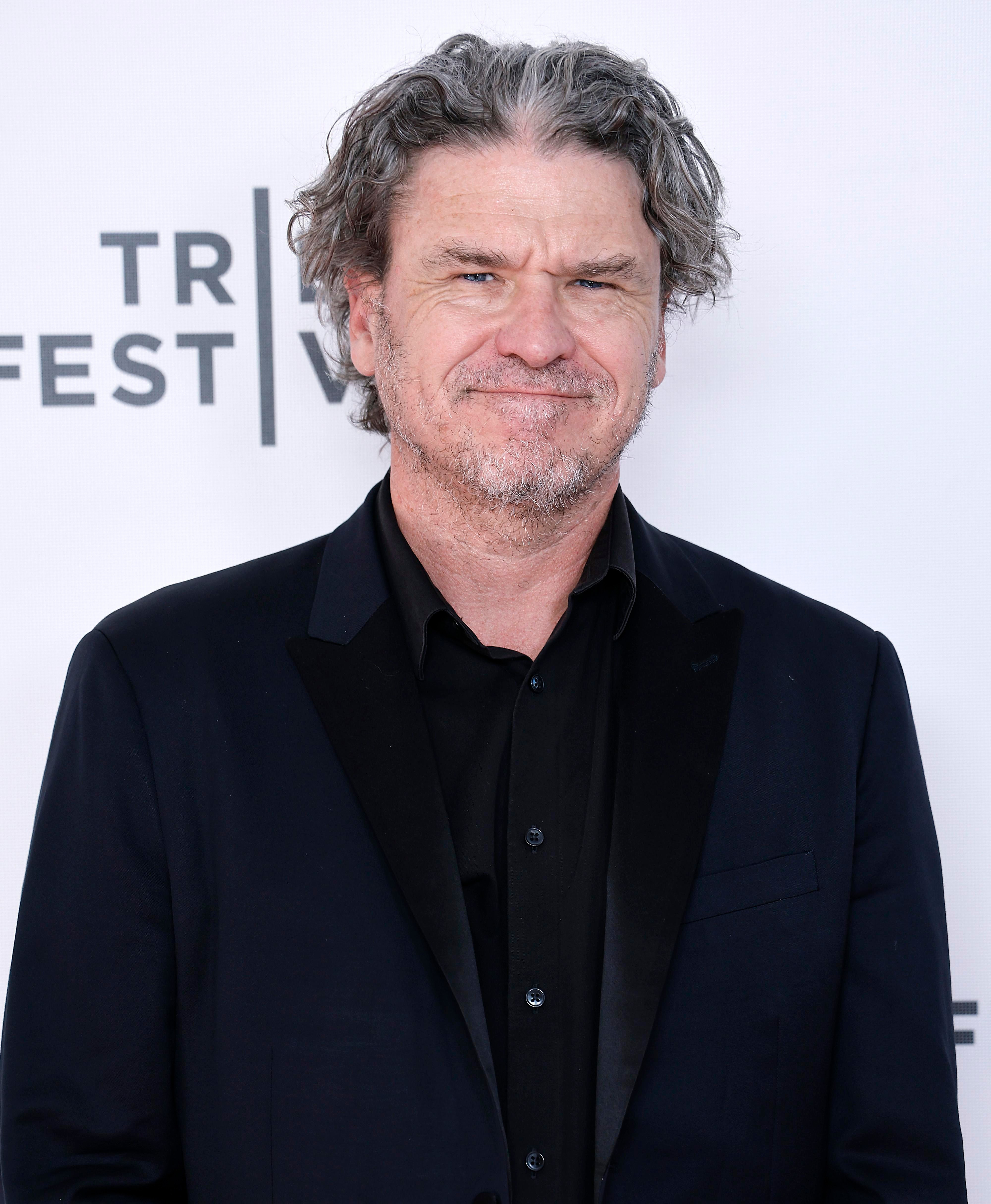
Dave Eggers used the keynote at this year's Bay Area Book Festival to deliver a verdict that the literary press has been circling for two years without quite naming: the machine that writes is here, and the contract has already been signed.
Speaking on 8 June at the Yerba Buena Center in San Francisco, the author of A Heartbreaking Work of Staggering Genius and The Circle told a room of roughly 1,200 publishers, editors and agents that large language models had moved past the uncanny-valley phase of prose generation and were now producing copy that most readers could not distinguish from work by paid writers. The marketplace, he argued, had stopped debating whether that mattered and started negotiating what it costs. "We're past the question of whether a machine can write," Eggers said. "We're in the question of who owns the sentence, and who gets paid when it's read."
A pattern the trade press has been slow to name
Eggers's warning lands inside a wider pattern the literary press has been slow to name: the absorption of generative prose into ordinary work is being negotiated by capital, not by writers, and the cost is being prepaid by readers who will not realise what they have signed away until the receipt comes due.
The pattern is not new in outline. Publishing has been here before, with each industrial shift: the paperback revolution of the 1930s, the bookstore chain consolidation of the 1990s, the Amazon wholesale-pricing wars of the late 2000s. Each time, the technology was sold as a liberation for readers and a windfall for authors, and each time the bargain quietly rearranged in favour of whoever owned the distribution. The current shift is faster, less visible, and more total. A model can draft a fifty-thousand-word manuscript in an afternoon. A platform can route that draft past an editor, a marketing team, and a cover designer before the credited author has finished lunch.
The trade publications that cover publishing have documented the symptoms. Publishers Weekly and The Bookseller have run a steady drumbeat of stories about advances being cut, midlist authors being dropped, and marketing budgets being redirected toward the small number of titles a platform's algorithm has decided to surface. None of those stories, taken alone, looks like a crisis. Read together, they describe a transfer.
The counter-narrative, taken seriously
There is a serious counter-narrative, and it deserves more than a paragraph. Publishers argue, with some justice, that generative tools are already cutting the cost of editorial work in ways that benefit authors and readers alike. A copy editor who used to spend six hours on a manuscript can now spend two, with the model handling the mechanical passes. A translator who used to bill by the thousand words can now produce more words in a week, at higher quality, than before. Marketing teams that used to write three pitches for a single book can now test thirty. None of that is nothing.
The honest version of the counter-narrative is that the productivity gains are real, and that some of them will accrue to writers. The dishonest version, which has begun to dominate the optimistic trade-press coverage, is that the gains will accrue to writers in proportion to the losses that publishers are quietly absorbing. They will not. Productivity gains in a concentrated industry accrue to the concentrated party, and the publishing industry is more concentrated than it has been in living memory. The Big Five publish roughly two-thirds of the trade titles sold in the United States. Their counterparties, the authors, are atomised, individual, and almost entirely without bargaining power at the contract stage.
Eggers is not against the technology. He made this explicit. He uses the tools himself, has used them for years, and was careful to say so on stage. The argument is not Luddite. The argument is about settlement.
What the structural picture actually looks like
Strip away the rhetoric, and the structural picture is straightforward. Three things are happening at once.
First, the cost of producing a competent manuscript has collapsed. A competent manuscript is not a good manuscript, and the gap between the two is the thing the literary press is supposed to protect. But the marketplace does not pay for the gap; it pays for the unit. When the unit gets cheap, the price of the gap gets negotiated down.
Second, the cost of training a model on copyrighted prose has been externalised. Authors whose work was scraped to train the systems now compete, as writers, against systems trained on their own work. The legal status of that arrangement is unsettled in the United States and largely unresolved in the European Union. Several class actions are working their way through the courts. Until they land, the publishers who hold the underlying rights are in the awkward position of suing the platforms whose tools their own editors now use daily.
Third, the cost of reading has been redefined. A reader who finishes a novel on a screen cannot tell, in most cases, whether the prose was drafted by a human, by a model, or by a human assisted by a model. The reader is not asked to consent. The reader is not asked to know. The author byline is the only signal, and the byline is now an act of faith.
The stakes, plainly stated
The stakes are not, as some commentary has framed them, the survival of the novel. The novel will survive in some form; humans have been telling each other stories for at least forty thousand years and will not stop because a transformer can also do it.
The stakes are about who decides what counts. If a platform's recommendation algorithm can be tuned to prefer one type of prose over another, and if the cost of producing the preferred type falls toward zero, then the marginal author of the unpreferred type is not being competed against. They are being priced out, and then forgotten. The history of the last thirty years of media is the history of that exact mechanism, applied to news, to music, to film. Publishing is the last industry where the mechanism still has a chance of being named before it lands.
Eggers named it, on a stage in San Francisco, to a room that included many of the people who will decide whether the naming changes anything. The audience, by every account from the festival, was attentive and largely silent. That silence is the story. The industry heard the warning, did not reject it, and has not yet decided what to do with it.
The next test will be the autumn 2026 catalogues, when the major houses announce their spring 2027 lists and the credits will, for the first time, have to disclose which titles were drafted with model assistance. Some houses have already committed to disclosure. Most have not. The receipt, when it comes, will be the difference between the two.
Sources
- Dave Eggers keynote, Bay Area Book Festival, Yerba Buena Center, San Francisco, 8 June 2026 (festival programme and on-stage coverage). https://www.baybookfest.org/
- Publishing industry concentration data, Publishers Weekly annual industry survey, 2025 edition. https://www.publishersweekly.com/pw/by-topic/industry-news/publisher-news/article/95000-the-big-five-s-steady-grip.html
- Active class actions over training data, Bookseller legal tracker, updated Q2 2026. https://www.thebookseller.com/news
- The Bookseller, trade coverage of midlist contraction, spring 2026. https://www.thebookseller.com/
- Publishers Weekly, editor productivity and tool adoption survey, January 2026. https://www.publishersweekly.com/
Desk note, This piece reframes Eggers's Bay Area keynote away from the literary-page wire, which treated it as a writerly lament, and toward the structural frame that Publishers Weekly and The Bookseller have been assembling in fragments: a transfer of value from atomised authors to concentrated platforms, with the reader's lack of disclosure as the mechanism.