Venezuela's Twin Quakes and the Inconvenient Question of Who Rebuilds
With the death toll above 1,450 and US Marines on the ground in La Guaira, the harder question is not who rescues Venezuela, it is who funds the rebuild, and on which sovereign terms.
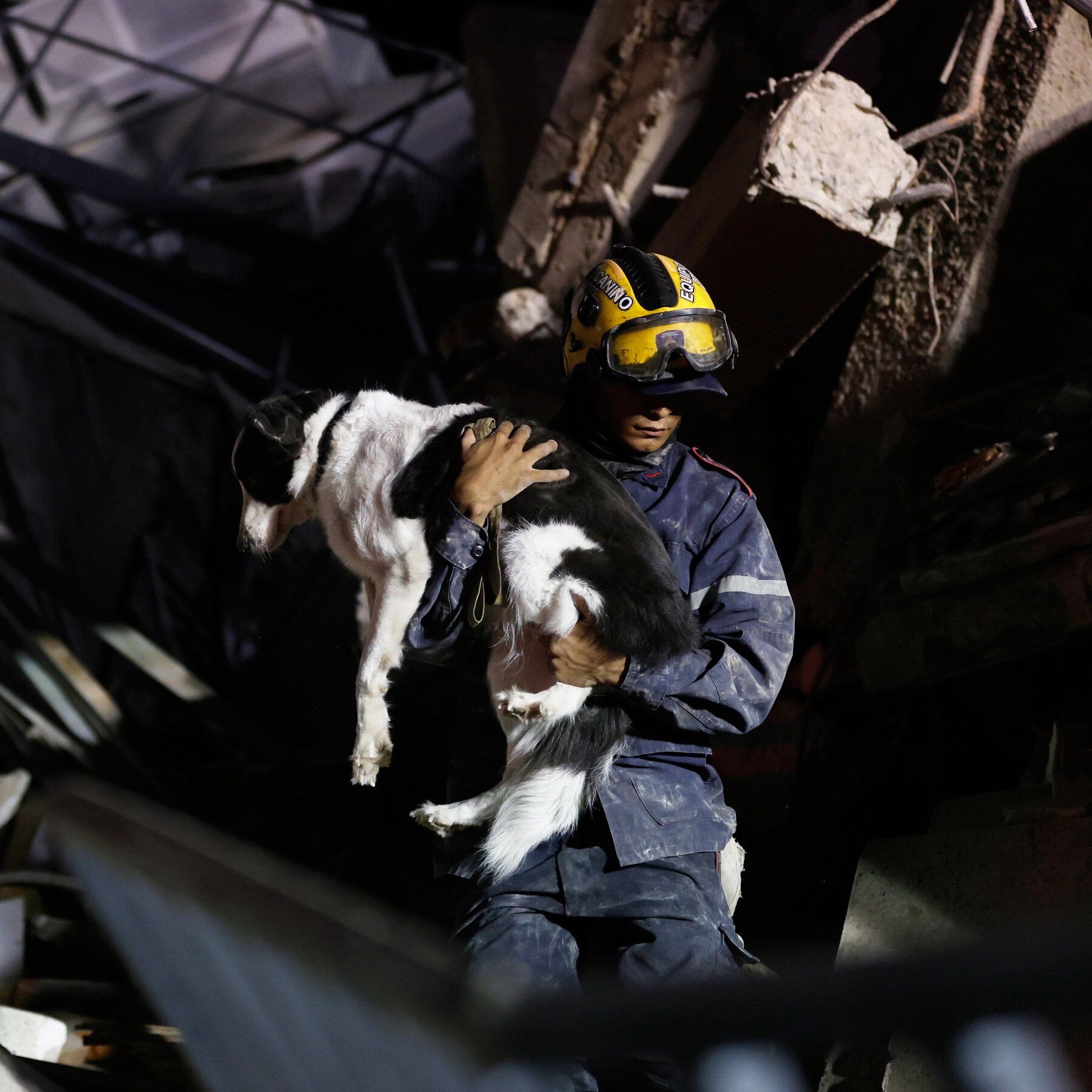
Four days after twin earthquakes struck Venezuela on June 24, a father and son were pulled alive from a collapsed building in La Guaira, a moment of relief in a country where the official death toll has climbed past 1,450 and roughly 50,000 more are feared trapped under rubble. National Assembly Speaker Jorge Rodriguez disclosed the updated figures on Sunday, with 3,150 people reported injured and a national mobilisation of more than 25,000 rescuers alongside nearly 8,000 volunteers still working through the debris. The rescues, the casualty counts, and the collection points now spread across Caracas all point to a country operating at the outer edge of its disaster-response capacity, even before the harder question begins: who pays to rebuild, and on whose terms.
That question is not abstract. It is the one Venezuelan authorities appear to be trying to pre-empt. Rodriguez announced the creation of a national commission to assess damaged homes and infrastructure, explicitly tasked with determining which families can safely return and which must be relocated, a process that will determine who qualifies for whatever reconstruction fund the state eventually assembles. Caracas has set up more than ten collection centres, including at the Central University of Venezuela, gathering nonperishable food and medicine. The architecture of relief is domestic, and so is the political control over who receives it.
The Marines arrive
Into this picture stepped a US military deployment that, while modest in scale, carries an outsized signal value. Telegram channels aligned with US Central Command broadcast footage of Marines operating alongside American and international first responders in the hardest-hit areas, framed by the Department of War as a humanitarian mission. US troops on Venezuelan soil, even for rescue work, are not a neutral image. They enter a political environment where Caracas reads the US posture through the history of sanctions, the 2019 recognition battle over Juan Guaidó, and the ongoing standoff over oil licences. The optics of an American flag in La Guaira four days after a disaster will be processed differently in Caracas than in Washington.
The presence of the US Marines is also a reminder that the disaster response is already international, even where the framing tries to keep it sovereign. Search-and-rescue teams, satellite damage assessments, and the eventual reconstruction financing will arrive through institutional channels that carry their own preferences about governance, conditionality, and transparency. Venezuela's western-backed wire coverage has foregrounded the domestic mobilisation: 25,000 rescuers, 8,000 volunteers, a rescue dog named Tsunami from the Simón Bolívar Humanitarian Task Force credited with locating more than 30 survivors. The hero of the story, in that telling, is a state that can still organise at scale.
The money has not moved yet
What is conspicuously absent from the public record is a reconstruction financing figure. The death toll is updated hourly; the estimate of the economic cost is not. Venezuela's oil revenue, even with the partial sanctions relief of recent years, is consumed by import substitution and servicing a sovereign debt stack that has been in default and selective-restructuring mode since 2017. Domestic banks do not have the balance-sheet depth to underwrite a reconstruction of this magnitude. The multilateral window, the Inter-American Development Bank and the World Bank, is closed to Caracas, blocked by the same US influence that has shaped the sanctions regime. China and Russia, the country's primary alternative creditors, can extend credit, but the terms and the timeline are not public, and reconstruction loans from Beijing have historically been tied to commodity pre-financing rather than to civilian infrastructure rehabilitation.
This is the structural question the wire cycle has not yet reached. When it does, the choices narrow quickly. A Venezuelan reconstruction funded by the IMF or the World Bank would carry governance conditions that the Maduro government has no incentive to accept. A reconstruction funded bilaterally by the United States would carry conditions of a different kind, and would require a political normalisation that neither side appears ready for. A reconstruction funded by Chinese policy banks would lock in another decade of oil-for-loans exposure. A purely domestic reconstruction, financed out of current revenue and debt rollover, would mean a recovery measured in decades rather than years.
Solidarity, and after solidarity
The early coverage is right to honour the solidarity. The collection centres in Caracas, the volunteer brigades, the 30 survivors located by a single rescue dog, these are the human facts of a disaster and they are not in dispute. But solidarity is the first week of a disaster, not the last. The first week is rescue, food, and shelter. The second week is triage and temporary housing. The third week is when the donor conferences get scheduled, and the donor conferences are where the political settlement gets renegotiated.
Watch the language coming out of Caracas in the next ten days. If the reconstruction commission's mandate is described in technical terms, building codes, seismic retrofitting standards, relocation zones, the government is preparing for a domestic, sovereign process. If the language shifts to partnerships, international support, and solidarity, the government is preparing to solicit external financing, and the architecture of that solicitation is already being negotiated. The rescues in La Guaira, the Marines on the ground, the 1,450 confirmed dead, none of these are going to recede. The question of who rebuilds is the one that outlasts the headlines.
Sources
- Reuters via X, 2026-06-28, Father and son pulled alive from La Guaira rubble; death toll above 1,400.
- Telegram: rnintel, 2026-06-28, US Marines supporting search and rescue in hardest-hit areas.
- Telesur English via X, 2026-06-28, National commission created to assess damaged homes and infrastructure.
- CGTN via X, 2026-06-28, At least 1,450 dead, per National Assembly President Jorge Rodriguez.
- Telesur English via X, 2026-06-28, More than 25,000 rescuers and nearly 8,000 volunteers mobilised.
- Ruptly via Telegram, 2026-06-28, Death toll 1,450, 3,150 injured, up to 50,000 feared under rubble.
- Telesur English via X, 2026-06-28, Rescue dog Tsunami credited with locating 30+ survivors.
Desk note: Monexus is framing the Venezuela quakes through the structural lens of reconstruction finance, who pays, on what terms, and through what architecture, rather than treating the disaster as a stand-alone natural event. Western wire coverage at the 36-hour mark is necessarily focused on casualty figures and rescue operations; the harder political-economy question follows once the search-and-rescue phase ends.