Twin earthquakes kill at least 235 in Venezuela as US deploys warships for relief operations
Caracas puts the death toll from twin coastal earthquakes at 1,450 with thousands injured and an estimated 50,000 still under rubble, while U.S. Marines deploy ashore in the largest American military footprint in Venezuela in years.
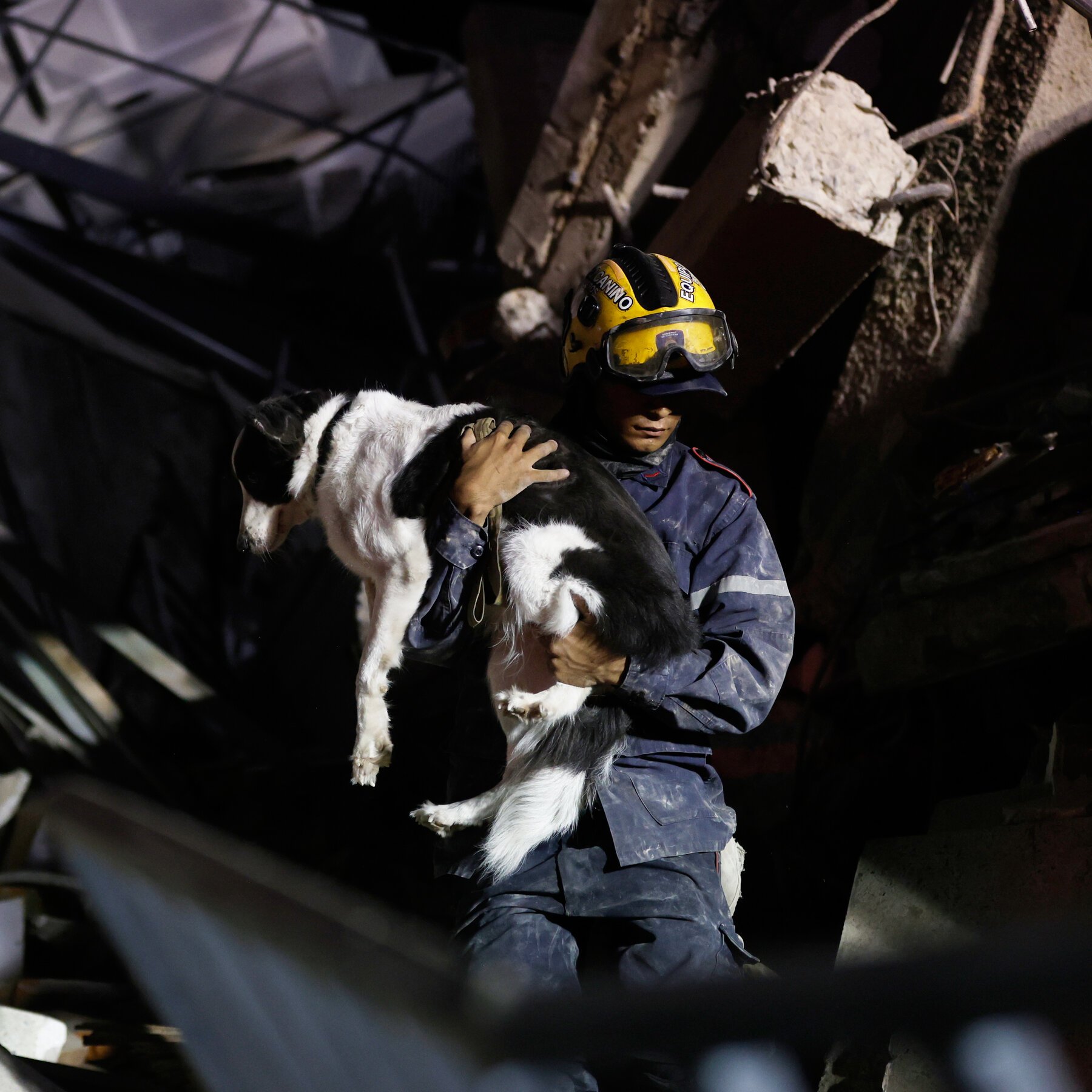
Rescuers in La Guaira pulled a father and his son alive from the wreckage of a collapsed building on Sunday, four days after twin earthquakes ripped through Venezuela's central coast and reduced neighbourhoods to broken concrete and twisted rebar. The rescue was one of dozens that Venezuelan authorities say have kept hope alive in a disaster whose official dimensions keep growing: National Assembly President Jorge Rodriguez put the death toll at 1,450 on Sunday evening, with 3,150 injured and an estimated 50,000 people still believed to be under the rubble.
The quakes struck on 24 June. By the time Caracas finished its fourth day of round-the-clock search operations, more than 25,000 rescuers and nearly 8,000 volunteers had been mobilised across the country. Collection points had opened at strategic locations including the Central University of Venezuela, where Caracas residents dropped off nonperishable food, medicine and water. A national commission was created to assess damaged homes and infrastructure and decide which families could safely return. Even the Venezuelan state's symbolic mascots had been pressed into service: Tsunami, a rescue dog from the Simón Bolívar Humanitarian Task Force, was credited with helping locate more than 30 survivors in the hardest-hit areas.
Into that effort stepped the United States, in the most visible American military footprint in Venezuela in years. The Department of War announced that U.S. Marines were on the ground supporting American and international first responders in search and rescue operations, framing the deployment around a single, deliberate phrase: "Marines on the ground, saving lives." Warships had been positioned offshore as staging platforms for the relief mission. The combination of troops, vessels and airlift capacity turned a bilateral disaster response into something closer to a regional operation, with the U.S. Southern Command's logistics spine running beneath the humanitarian headline.
The speed of the American deployment is itself part of the story. Within roughly 72 hours of the first tremor, Marines were disembarking, helicopters were lifting survivors out of cut-off coastal towns, and U.S. naval assets were riding at anchor off La Guaira and neighbouring ports. For a Caribbean basin where every great-power movement is read through the lens of sanctions, migration and contested legitimacy, the choreography matters as much as the tonnage. Caracas accepted the help. It did not, publicly, embrace the messenger.
The disaster's geography explains why. The tremors hit the country's central coast, the populated arc that runs from Caracas through La Guaira and the surrounding municipalities where centuries-old masonry met modern slab construction with predictably lethal results. Buildings folded pancaked-style; streets buckled; in coastal neighbourhoods, landslides took out access roads and isolated communities that might otherwise have been reached within hours. Recovery teams are now working the rubble by hand and with sniffer dogs because heavy equipment cannot reach many of the worst sites, and aftershocks continue to complicate every lift.
The numbers that keep moving
The official death toll has climbed in near-real-time, and the trajectory tells its own story. From a first figure circulating in wire reports of around 235 dead in the immediate aftermath, Caracas revised the count upward as rescue teams reached deeper into the rubble. Rodriguez's Sunday statement, carried by CGTN and Ruptly, put the toll at 1,450 with 3,150 injured. An estimated 50,000 remained unaccounted for under debris, a figure that conflates the missing, the trapped and those in areas rescue teams had not yet reached. Each revision has carried the same caveat: the count will move again, almost certainly upward, once collection efforts reach their full sweep.
The 3,150 injured are the second-order crisis. Hospitals along the central coast were already operating past capacity before the quakes; field medical units have been set up in stadiums and parking lots, but pharmaceutical supply chains have been disrupted and clean water is rationed in the worst-hit municipalities. The collection points now operating across Caracas are an attempt to backfill both pipelines at once.
A footprint that reads louder than the footprint
The U.S. deployment is being framed, on the American side, in pure humanitarian language: search and rescue, lifesaving, support to international first responders. The framing is deliberate, and it works for a domestic audience that reads "Marines in Venezuela" through two decades of sanctions policy and recurring standoff over the Maduro government.
But the optics on the ground are more complicated. American warships in Venezuelan waters, Marines in Venezuelan cities, and helicopters in Venezuelan airspace are not a neutral presence in a country where the United States has spent the better part of a decade enforcing sweeping economic measures against the sitting government. Caracas has not rejected the assistance; it has accepted it while emphasising that the operation runs through Venezuelan command structures. The two framings will coexist uncomfortably for the duration of the deployment, and both will be quoted at length when the relief phase ends and the political phase begins.
What comes next
The next 72 hours are about reach. Rescue teams are still working the rubble in La Guaira and adjacent municipalities, and the official toll will continue to move as collection points consolidate their data. The national commission's structural assessments will determine how many of the displaced can return to their homes and how many join what is already shaping up to be a significant internal displacement crisis along the central coast.
The international response is now the second variable. U.N. agencies are expected to publish a consolidated appeal within days; the U.S. footprint, which arrived first, will set a baseline that other donors will measure themselves against. Caracas will calibrate its public posture toward Washington accordingly, accepting what helps and resisting anything that looks like a precedent. The disaster is genuine. The politics around it are already running.