The Strait Tax That Isn't: Reading Rubio's Hormuz Warning
The Secretary of State has spent a week insisting no country on earth would back tolling the Strait of Hormuz. The warning is aimed at Tehran — but the audience is also Beijing, New Delhi, and Brussels.
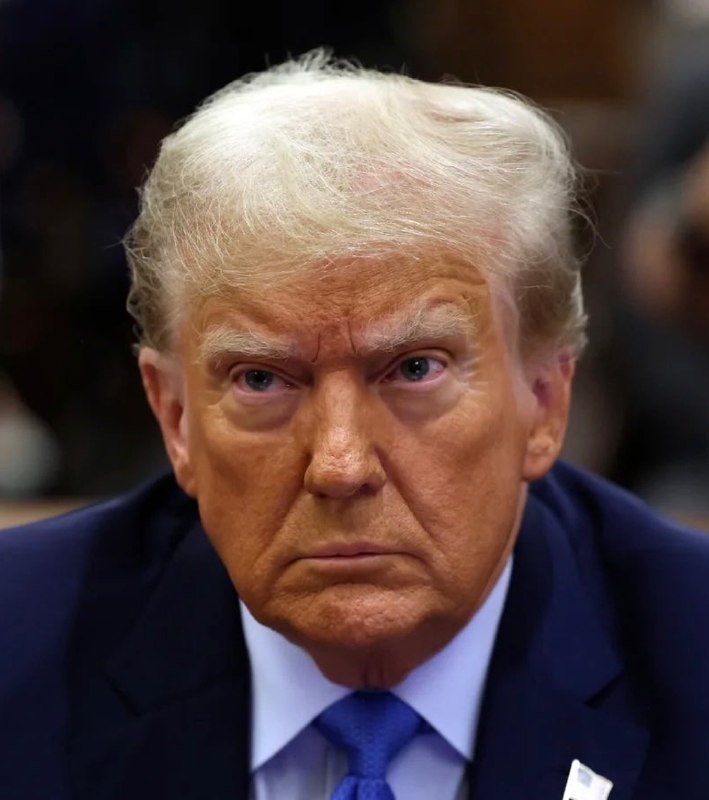
On 24 June 2026, Secretary of State Marco Rubio took a swing at one of the oldest assumptions in global energy politics. Asked about Iran and the Strait of Hormuz, he was blunt: "When we say open the straits, we mean open the straits free. They are international waterways. No country on the planet would support tolling in the straits." Minutes later, he sharpened the point: "The whole world will be against any mechanism that charges money to use an international waterway. It's that simple. The President has already said it — that's not going to happen." The remarks, distributed in transcript form by the Open Source IntelSec channel, were not a stray talking point. They were the outer frame of a US negotiating position now running on a 60-day clock.
What the US is actually asking for
Rubio is selling a temporary arrangement, not a permanent one. The setup, as he described it on the same day, is a "process of give-and-take" running for sixty days, during which Washington expects Tehran to live up to specific commitments. The Strait of Hormuz sits inside that envelope. The implicit American ask: a window of free passage, no Iranian extraction payment, no permanent Iranian veto over a chokepoint through which roughly a fifth of seaborne oil normally moves. In return, the United States is offering, in Rubio's phrasing, a diplomatic process rather than a kinetic one. The threat of force is the silent term in the contract.
The counter-narrative from Tehran — and from the Gulf
The Iranian position is older than the Islamic Republic. Closing, or threatening to close, the Strait of Hormuz is the country's most credible strategic lever, the one weapon a sanctioned, conventionally inferior navy can deploy against a much larger fleet. From Tehran's vantage, any "open straits" demand is a request for unilateral Iranian disarmament while the maximum-pressure architecture stays in place. There is also a Gulf reading worth taking seriously: that Iran's leverage in the strait is not a bug but a feature of the regional order, and that a permanent American guarantee of free passage is, in effect, a request for the US Navy to convert its presence in the Gulf from a balancer into a customs service. Neither view is unreasonable on its own terms, and the Rubio line is most useful when it forces readers to take them seriously.
Why "the whole world" is a stretch
The strongest part of Rubio's argument is also the most fragile. "No country on the planet would support tolling in the straits" is true of a tariff, but the world is not actually unified on the politics of the waterway. China is the single largest buyer of Gulf crude, and Beijing has spent the last decade building alternative routings and a naval presence that does not depend on American escorts. India imports heavily through Hormuz and has its own equities in any chokepoint regime. European capitals would, in private, tolerate a great deal of Iranian-imposed friction if it kept the US Navy focused east and kept oil prices from spiking. The honest version of the claim is narrower than Rubio's rhetoric: most governments, including most Western ones, will oppose an Iranian transit fee; almost none of them will commit warships, sanctions relief, or sustained diplomatic capital to prevent one if the cost of preventing it rises.
What the 60-day clock is doing to the market
Oil traders are not waiting for a treaty. The 60-day window, as Rubio described it, is a deadline with a built-in escalation path: either Iran moves on the unspecified "commitments" Washington is demanding, or the temporary arrangement expires and the political language of the last week gets cashed in. Insurance and freight markets for Gulf-flagged tankers are already pricing a non-trivial probability of disruption. The risk premium embedded in Brent is no longer a story about supply and demand; it is a story about a single negotiator's calendar. If the deal lands, the premium comes out and the strategic picture resets. If it doesn't, the same rhetoric Rubio used to define red lines in June becomes the talking points for an American naval posture in July.
Stakes and what to watch
The immediate losers, in the no-deal scenario, are the importers who cannot route around Hormuz in time: parts of South Asia, Japan, South Korea, and a long tail of European refineries without diversified crude slates. The immediate winner is whichever side is best at signalling resolve without crossing a line — and on the available evidence, that is currently the United States, simply because it is naming the price of failure. The medium-term stakes are larger. A confirmed Iranian transit fee, however small, would set the precedent that a sanctioned state can monetise a chokepoint. A confirmed American guarantee of free transit, backed by a working deal, would set the precedent that the US Navy is the standing customs authority of the global oil trade. Both precedents are still avoidable in the next eight weeks. The sources do not specify what Iran's reciprocal commitments are, and the bilateral track is opaque enough that a deal is plausible on the same day a strike is. The 60-day clock is the only thing the public can actually read.
Wire provenance
This editorial synthesis draws on the following public wire/social posts:
- https://t.me/s/osintlive
- https://t.me/s/osintlive
- https://t.me/s/osintlive
- https://t.me/s/osintlive
- https://t.me/s/osintlive