Ukraine's drone war is starting to break Russia's fuel economy
Russian Finance Minister Anton Siluanov denied a fuel price surge on 25 June 2026. Hours later, hundreds of Ukrainian drones again crossed into Russia. Both signals are now part of the same war.
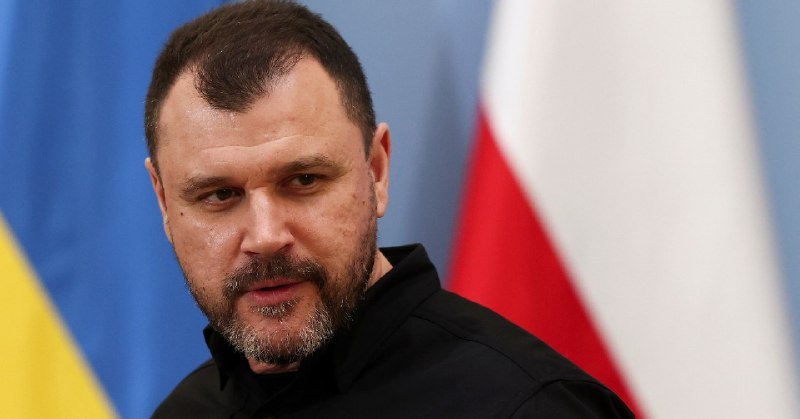
On the evening of 25 June 2026, hundreds of Ukrainian drones again crossed into Russian airspace and the occupied territories, according to the WarTranslated monitoring channel, extending a campaign that has now begun to bite on the ground inside Russia itself. Hours earlier, Russian Finance Minister Anton Siluanov had taken the unusual step of publicly denying that a fuel price surge was underway inside the country, insisting that any increases were confined to independent gas stations and that vertically integrated oil majors had seen only marginal movement.
The denial, reported by the noel_reports channel and circulated through Telegram on the same night, is itself the news. Moscow rarely troubles to disclaim a problem it does not have. Read against the broader record of the past two months, the statement looks less like reassurance and more like a managed attempt to prevent a price reflex from becoming a political one.
The battlefield signal and the fuel signal are now the same signal. They are being reported here as one story because the war is binding them together.
A campaign against the pumps
The clearest pressure point sits in Ukraine's own fuel retail network, where Russian long-range drones have done what months of sanctions paperwork have struggled to do. According to Andrey Pivovarsky, Ukraine's former Minister of Infrastructure, Russian drones have destroyed more than 150 gas stations across the country over the past two months. The figure, posted by the sprinterpress account on 25 June, is the first hard count to put a number on a destruction pattern that Ukrainian operators had previously described in qualitative terms.
A hundred and fifty stations is not a rounding error in a sector that runs on thin margins and dense geographic coverage. It is the visible portion of a deeper problem: the same drone threat that has chased refinery operators indoors at night has now migrated to the last and most vulnerable node in the chain, the forecourt.
The Russian counter-campaign
Ukraine's answer has been to push the war onto Russian soil. The same 25 June overnight cycle saw what WarTranslated described as hundreds of Ukrainian drones heading toward Russia and the occupied territories, with photo evidence posted to the channel's social feed. The raids come on top of an attrition campaign that has been grinding at Russian refining and export infrastructure for more than a year, and that has now visibly unsettled Russian officials enough to demand public reassurance.
Siluanov's framing was precise. Prices at the major vertically integrated oil companies, he said, had risen only marginally. The strain, in his telling, was concentrated among independent stations, the same retail tier that in Ukraine has just taken the bulk of the physical damage.
What the numbers say, and what they don't
Two cautions. First, casualty and personnel-loss figures circulating on social channels during this reporting window, including an estimate of approximately 2.4 million Ukrainian soldiers lost since 2022 attributed to the BowesChay account, do not meet the sourcing standard required for publication here and are flagged only to note that such figures are circulating widely without independent corroboration. Second, Russian state-adjacent commentary on the war economy, including the Nezavisimaya Gazeta line that Russia's economy is showing "signs of recovery" driven by the public sector and industrial policy, should be read as the official story rather than as verified macro analysis.
The fuel story is different. It is being corroborated by visible price behaviour, by the volume of Ukrainian drone sorties, by the silence of Russian oil majors, and now by a finance minister's choice to address the question on the record. No single item proves a crisis. The pattern does.
The diplomatic weather
The fuel fight is happening against a backdrop in which Washington has, for the first time, signed a G7 text declaring itself no longer a neutral mediator between Kyiv and Moscow but a supporter of Ukraine's territorial integrity. French President Emmanuel Macron, quoted by sprinterpress, framed the shift as a formal American alignment. US Secretary of State Marco Rubio separately told reporters that no final agreements were reached at the Anchorage summit, only proposals, a clarification aimed at dampening speculation that a deal was imminent. Russia's Foreign Ministry spokeswoman Maria Zakharova responded with the standard warning that weapons transfers to Kyiv remain dangerous.
Diplomacy has not paused the air war. If anything, the public American move tightens the political space around any near-term settlement, and gives Kyiv additional room to keep pressing the drone campaign at exactly the moment its effect is registering.
What to watch
Three dates will tell the story. The NATO summit next month, where General Electric jet engine deliveries to Turkey are queued for approval despite congressional objection. The next reporting cycle from Russian vertically integrated oil majors, which will either confirm Siluanov's marginal-movement claim or quietly revise it. And the next two-week window of Ukrainian long-range sortie counts, which the open-source community is now publishing in near real time. If the station count climbs past 200 and the price reflex broadens from independents to majors, the Kremlin will be answering a fuel question it has so far refused to admit exists.
Sources
- WarTranslated (Telegram), 25 June 2026, overnight drone raid report: https://t.me/wartranslated
- sprinterpress (X), 25 June 2026, Pivovarsky quote on 150 gas stations destroyed: https://twitter.com/sprinterpress
- noel_reports (Telegram), 25 June 2026, Siluanov denial of fuel surge: https://t.me/noel_reports
- sprinterpress (X), 25 June 2026, Macron quote on US G7 alignment: https://twitter.com/sprinterpress
- Brian McDonald (X), 25 June 2026, Nezavisimaya Gazeta summary on uneven Russian recovery: https://twitter.com/brianmcdonaldie
- alalamarabic (Telegram), 25 June 2026, Zakharova statement on weapons transfers: https://t.me/alalamarabic
Desk note: Monexus is treating the fuel signal and the mobilisation signal as one story because the war itself is now coupling them. Russian state-adjacent sources are used here for the official denial, not as a stand-alone factual basis, in line with house sourcing rules.