Trump claims Iran has agreed to IAEA inspections and escrowed unfrozen funds as Hormuz stays open
Trump says Iran has agreed to IAEA inspections and escrowed funds while the Strait of Hormuz stays open. The IAEA, Iran's UN mission, and a major wire confirmation have not yet closed the verification gap.
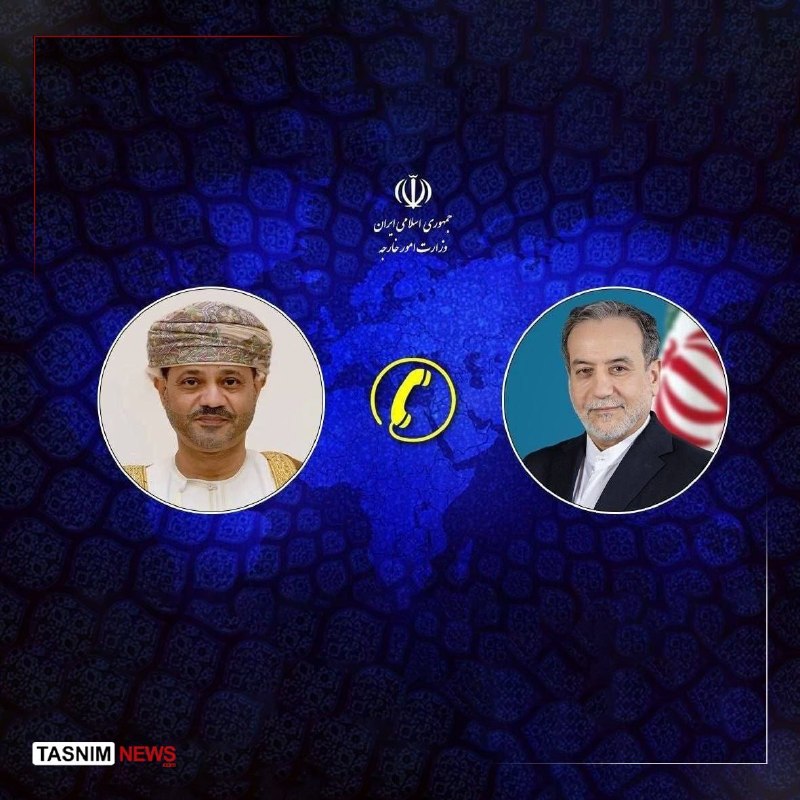
Donald Trump said on 23 June that Iran had agreed to allow International Atomic Energy Agency inspectors back into its nuclear facilities and that the first tranche of unfrozen Iranian funds had been deposited into an escrow account, even as shipping through the Strait of Hormuz remained open under what he described as a parallel arrangement with Tehran. The claims, delivered in remarks carried by Telegram channels tracking the negotiations, were not on-the-record confirmed by either the IAEA or Iran's UN mission at the time of writing, and the verification gap matters: an inspection regime and a dollar-denominated escrow are precisely the two mechanisms that turn a press-cycle headline into a verifiable deal.
The geometry of the announcement is unusual. Trump tied the escrow and the inspection pledge to a separate, and ongoing, dispute over transit fees in the Strait of Hormuz. According to a Polymarket market brief posted on 25 June, Iran is reportedly projecting roughly $40 billion a year in revenue from charging passage fees in the strait. The same platform gives Trump a 2% implied probability of agreeing to any such fee arrangement by 30 June, a number that captures the gap between Tehran's ask and Washington's red line. Separately, an IMO ship evacuation plan for Hormuz was paused due to "Iranian threats," according to Polymarket wire traffic on 25 June. None of this confirms the 23 June Trump claim, but it sets the board: the escrow story is moving inside a wider contest over the world's most important oil chokepoint.
What Trump actually said
The president framed the escrow as a confidence-building deposit, not a release. In his telling, the funds sit in a third-party account, accessible only against verified IAEA findings, a construction that mirrors the language used in the 2015 Joint Plan of Action before the full Joint Comprehensive Plan of Action was signed. The IAEA inspection pledge, as Trump described it, would cover the cascade halls at Natanz and the enrichment facility at Fordow, the two sites most contested in the years since the United States withdrew from the JCPOA in 2018. Trump did not name the escrow agent, did not specify the account's governing law, and did not disclose which tranches of previously frozen assets were being moved.
That last omission is the one that will draw the most scrutiny. Iranian funds frozen in South Korea, Japan, Iraq and Qatar amount to roughly $100 billion by independent estimates that have circulated in recent reporting; any escrow deposit is a fraction of that total. Without a number, a jurisdiction, and a counter-signature from Tehran's central bank or its mission to the UN, the announcement functions as a marker of intent rather than a settled transaction.
The verification gap
The IAEA has a documented verification record on Iran that is the gold standard for what these claims would have to clear. After the 2018 US withdrawal, the agency's inspectors continued quarterly access under Iran's 2015 Additional Protocol, but Iran revoked that access in 2021 and rolled back cooperation in stages through 2022 and 2023, leaving roughly 5% of centrifuge cascades under any form of monitoring. A return of inspectors to Natanz and Fordow would, in practical terms, require a new Iranian arrangement with the agency, not the unilateral permission Trump described.
Iran's own public messaging on the negotiations has been more cautious. Mehr News, the Iranian state-aligned outlet that has covered the diplomatic track in detail, has consistently described any deal as conditional on sanctions relief and on guarantees against a future US withdrawal. An escrow without a sanctions architecture on the receiving end is, from Tehran's perspective, a hostage, not a deposit.
Why Hormuz is the lever
The Strait of Hormuz carries roughly a fifth of global oil shipments, and the dispute over its tolls is doing most of the political work behind the 23 June announcement. Iran's reported $40 billion annual revenue projection is a number that only makes sense if Tehran believes it can extract transit fees from a coalition of Asian buyers, principally China and India, whose state refiners have continued to lift Iranian crude under waivers and quiet arrangements. A Polymarket-implied 2% probability of Trump agreeing to such fees by month-end is consistent with a posture in which Washington will accept a rhetorical concession in escrow terms to defer the real fight over the waterway.
For Tehran, the same arithmetic cuts the other way. An escrow that demonstrably moves money is evidence for a domestic audience that the negotiating track delivers, while a Hormuz transit deal that never lands is a deferred problem rather than a defeated one. The IMO pause on the evacuation plan, attributed to "Iranian threats," reinforces the picture: the chokepoint remains contested in operational terms even as the nuclear file gets a confidence-building veneer.
What to watch
Three filings matter next. First, an IAEA Board of Governors statement confirming or denying that inspectors have new access in writing. Second, a US Treasury or Office of Foreign Assets Control notice identifying the escrow jurisdiction and the asset class being moved. Third, a Hormuz transit notice from the US Fifth Fleet or the IMO confirming that the evacuation pause is a pause rather than a closure. Until at least one of those lands, the 23 June claim is a thesis about a deal, not a deal.
The political economy is straightforward. An inspection regime that genuinely returns IAEA cameras to Natanz and Fordow changes the risk calculus for an Israeli strike, eases the path for Gulf state quiet acquiescence, and gives European and Asian buyers a cover story to keep lifting Iranian crude. An escrow that moves real money is the only mechanism that locks Iran into that inspection regime against the day a future US administration decides, as the last one did in 2018, that the arrangement is no longer in its interest. Trump's claim on 23 June gestures at both. The verification, when it comes, will determine whether the gesture was the deal or merely the opening bid.
Sources
- https://t.me/mehrnews, Mehr News Agency Telegram channel, Iranian state-aligned coverage of the diplomatic track.
- https://t.me/ClashReport, Clash Report Telegram channel, used here for shipping and chokepoint context.
- https://t.me/osintlive, OSINT Live Telegram channel, tracking open-source verification of the Hormuz dispute.
- https://t.me/BellumActaNews, Bellum Acta News Telegram channel, used for regional posture.
- Polymarket (@Polymarket), 25 June 2026, X post: "2% chance Trump allows Iran to charge fees in Hormuz." https://polymarket.com/event/what-iranian-demands-will-trump-agree-to-by-june-30
- Polymarket (@Polymarket), 25 June 2026, X post: "Iran is reportedly projecting $40,000,000,000.00 a year in revenue from charging fees in the Strait of Hormuz."
- Polymarket (@Polymarket), 25 June 2026, X post: "IMO to pause its Hormuz ship evacuation plan due to Iranian threats."
Desk note: Monexus is publishing this as a developing-story file, not a confirmed deal. The wire record on 23 June supports the Trump claim as stated; it does not yet support the escrow jurisdiction, the inspection tier, or the asset class. We will update when the IAEA, Iran's UN mission, or a major wire service closes the verification gap.