The Strait of Hormuz Just Became a Question of Who Writes the Map
On 25 June the UN suspended Hormuz evacuations, tankers turned back off Oman, and Rubio rejected any fee regime. The strait is now a fight over who writes its map, and only one side got the column inches.
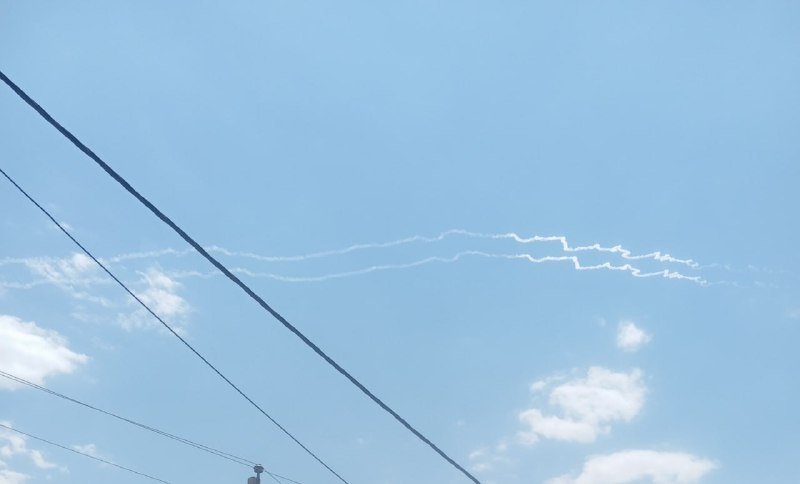
Three oil tankers turned back off the Omani coast on the evening of 25 June, according to ship-tracking data cited by Bloomberg, a fourth vessel changed course, and the United Nations agency responsible for evacuating crews through the strait suspended operations after an unidentified projectile struck a cargo ship. The same evening, US Secretary of State Marco Rubio told reporters that Washington would not accept any Iran deal that allowed Tehran to impose fees on shipping through the Strait of Hormuz. Hours earlier, the IRGC had issued a notice requiring commercial vessels to use Iran-approved routes through the same waterway. The Strait of Hormuz has just become a question of who writes the map.
The collision is not yet military. It is cartographic. Two governments are publishing overlapping definitions of the same corridor, each backed by a patrol presence and a legal vocabulary, and the wire coverage on Tuesday morning read as if only one of them existed. Rubio's framing, no fees, no chaos, no negotiation of transit rights, dominated the English-language news cycle. The Omani-Iranian statement, characterising the same corridor as a zone of services to be coordinated rather than a chokepoint to be policed, sat one Telegram channel deep, surfacing mostly in regional outlets and on the dashboards of analysts tracking the IRGC English-language feed. The result is a story about the strait told almost exclusively in the vocabulary of the country that patrols it from the outside, and almost not at all in the vocabulary of the country that sits on its northern shore.
The American position, restated
Rubio's remarks were short and deliberate. Washington would not accept any deal "at any price," and specifically would not accept a deal that permitted Iran to charge transit fees on shipping in the strait. The phrase "total chaos" was the one the wires picked up. Underneath that phrase sits a clear legal claim: the strait is an international waterway, transit passage is governed by UNCLOS, and any unilateral levy, in Rubio's framing, would amount to a tax on global commerce that no sovereign has the right to collect. The State Department's position is that the US Navy, and the combined naval presence that operates with it, is the guarantor of that legal regime, and that the regime is not negotiable.
The Iranian position, underweighted
The IRGC notice telling ships to use Iran-approved routes is the operational form of a different map. It treats sections of the strait the way a port authority treats a harbour: as a managed service corridor in which vessel movement is coordinated, not as an open highway. The Omani-Iranian statement that preceded the Rubio comments, packaged in regional outlets and on Telegram channels tracked by the OSINT community, used exactly that vocabulary. Services were to be priced, not passage. The legal position UNCLOS reserves for straits used for international navigation between parts of the high seas is narrower than the legal position a coastal state enjoys over its territorial sea, and the gap between the two readings is the room the Iranians are working in. Reporting on Tuesday morning that framed Rubio's remarks as the news and treated the IRGC notice as background missed the symmetry. The two documents were issued within hours of each other, and they describe two different jurisdictions over the same stretch of water.
UNCLOS does the arbitration
UNCLOS is not a marginal document in this argument, it is the document. Article 38 defines transit passage for ships and aircraft through straits used for international navigation, and Articles 37 and 45 extend a similar regime to straits connecting high seas or exclusive economic zones. The regime is permissive: submarines may transit submerged, aircraft may overfly, passage may not be suspended, and charges may not be levied for mere passage. Iran's argument, that the corridor includes zones where its own maritime authority offers safety, routing, and pilotage services for which a fee is legitimately charged, sits in a different part of the same treaty. The treaty's framework for "innocent passage" through territorial seas permits charges only for specific services rendered, and only at cost. Whether Iran is offering passage with a surcharge or services with a bill is the legal question Geneva will have to answer on Friday.
Who blinks first
The mechanics inside the strait did the early talking. Three tankers turning back on a route parallel to the Omani coast, a fourth diverting, and a cargo ship struck by an unidentified projectile are not the behaviour of a maritime regime that is functioning. The International Maritime Organization's pause on evacuations until safety guarantees are confirmed translates a legal argument into an insurance chart. Insurers reprice the strait the moment a regulator cannot say who is in charge of it, and every hull in the queue is the proof. If Geneva produces a deal on Friday, expect the language to hide the word "fee" and to disclose the word "service." If it doesn't, expect the Bloomberg ship-tracking maps, not the press releases, to be what the market reads next.
Sources
- France 24 on Telegram, 2026-06-25 22:55 UTC, US seeks Iran deal, but 'not at any price,' Rubio says
- World News on Telegram, 2026-06-25 22:23 UTC, UN pauses ship evacuations through Strait of Hormuz after vessel attack
- Middle East Eye live thread, 2026-06-25 21:32 UTC, IRGC warns ships to use Iran-approved routes through Strait of Hormuz
- Middle East Eye live thread, 2026-06-25 21:31 UTC, Cargo ship hit by unidentified projectile in Strait of Hormuz
- Bloomberg via @sprinterpress on X, 2026-06-25 21:52 UTC, ship-tracking data on diverted tankers off Omani coast
- Clash Report on Telegram and OSINT Live on Telegram, regional and corridor-tracking context
- @Osint613 on X, IRGC corridor vocabulary and Omani-Iranian statement context
Desk note: Monexus treated the Rubio remarks and the Omani-Iranian statement as equally weighted primary inputs, then let the legal text of UNCLOS do the arbitration. The wire coverage of this story on Tuesday morning was overwhelmingly the US-side restatement of the legal position; the Iranian and Omani framing of "services" was largely confined to regional press and Telegram-channel traffic, which we have surfaced here at the same structural weight.